Nissan X-Trail from Japan: engines, hybrids and differences from Russian versions
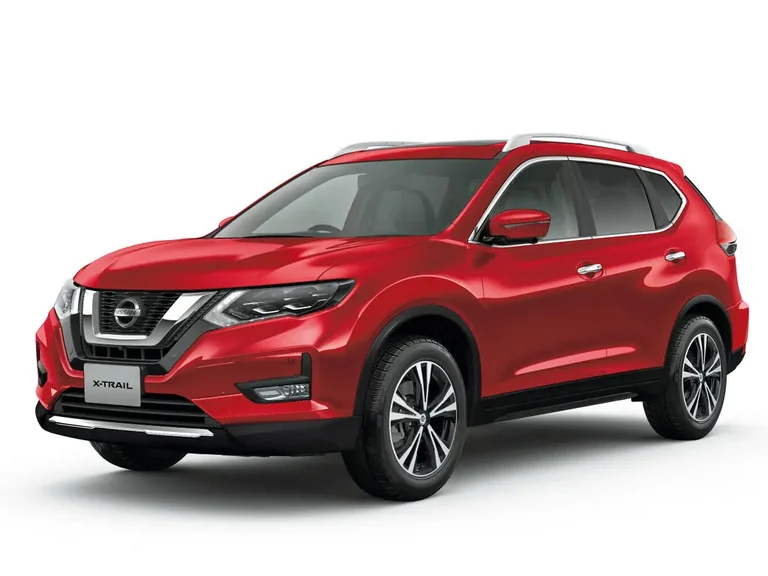
The X-Trail is familiar on both sides of the border: it has been officially sold in Russia for many years, and therefore it is easy to confuse a Japanese car with a Russian, European or Chinese car under the same name in the ads. The Japanese X-Trail is four generations with the codes T30, T31, T32 and T33, and each has its own set of engines, which does not coincide with the set for other markets. The most noticeable difference is in the fourth generation: the Japanese T33 is only an e-POWER hybrid, while the petrol X-Trail, which has a 1.5 turbo engine that turns the wheels through a CVT, is in the catalog entries for Europe and China, but not for Japan.
T30, 2000–2007: 2.0 all and 280 hp GT
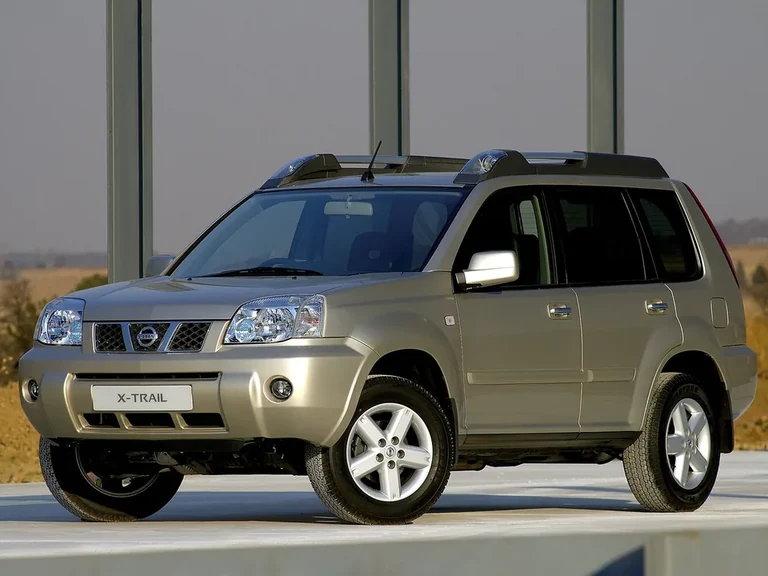
The first X-Trail went on sale in Japan on November 13, 2000 with one base engine – a two-liter QR20DE with 110 kW (150 hp) and 200 Nm, with a four-speed automatic transmission in front or all-wheel drive and a five-speed manual in the all-wheel drive version of the S. All-wheel drive here – the proprietary ALL MODE 4×4 with 2WD, AUTO and LOCK positions – is divided between the axles at the last moment in a fixed ratio of 57:43. The GT version, added in February 2001, stands apart: a two-liter turbo engine SR20VET with 206 kW (280 hp) and 309 Nm, only all-wheel drive and only automatic, body code PNT30 instead of T30 and NT30 for conventional cars. There is no such version in the catalog records for Russia and Europe: there the first X-Trail was sold with the 2.0 and 2.5 without forced induction and with the 2.2 diesel. The update of June 2003 changed the appearance and equipment, but the engine range remained the same until production ended in 2007.
T31, 2007–2013: CVT, 2.5 and diesel for 173 horsepower
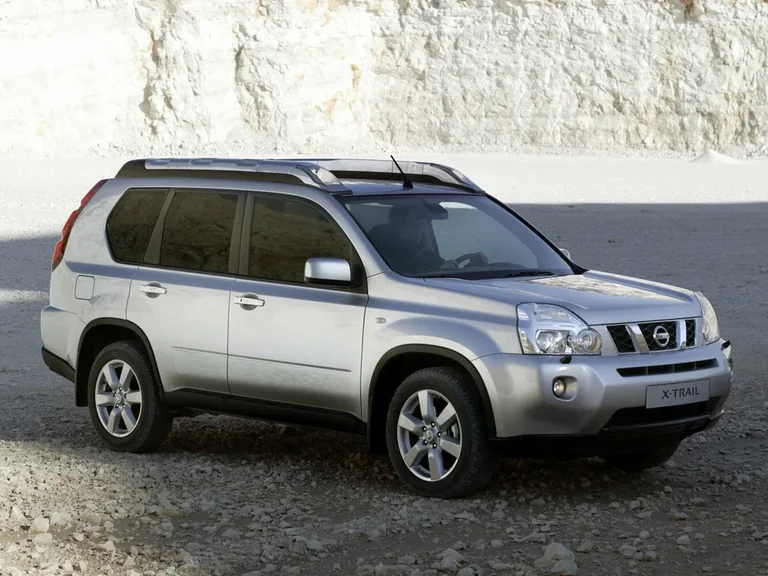
The second generation was sold in Japan on August 22, 2007. The base engine was replaced by the MR20DE – 101 kW (137 hp) and 200 Nm – with a CVT, some all-wheel drive 20X still have a six-speed manual. All-wheel drive versions additionally relied on a 2.5-liter QR25DE with 125 kW (170 hp) and 230 Nm, also with a CVT; there is no front-wheel drive 2.5 in Japanese records. The third version appeared in September 2008: a diesel 20GT with a two-liter M9R with 127 kW (173 hp) and 360 Nm, At first, only with a six-speed manual, and after the July 2010 update, with a six-speed automatic transmission. The diesel X-Trail was also in Russia, but, according to catalog records, in a different setting – for 150 hp, so the numbers from the Russian ads do not fit the Japanese 20GT. The body code of the diesel is DNT31, the 2.5 is TNT31, the two-liter is T31 and NT31.
The Russian X-Trail of this generation was completed in its own way – according to catalog entries, it has different settings for the same engines – so it is useless to compare the Japanese and Russian cars by model name: they have different numbers in the documents. How to read the generation taking into account the market is analyzed in the article “One generation, different markets”.
T32, 2013–2022: one petrol engine, seven seats and a hybrid with one electric motor
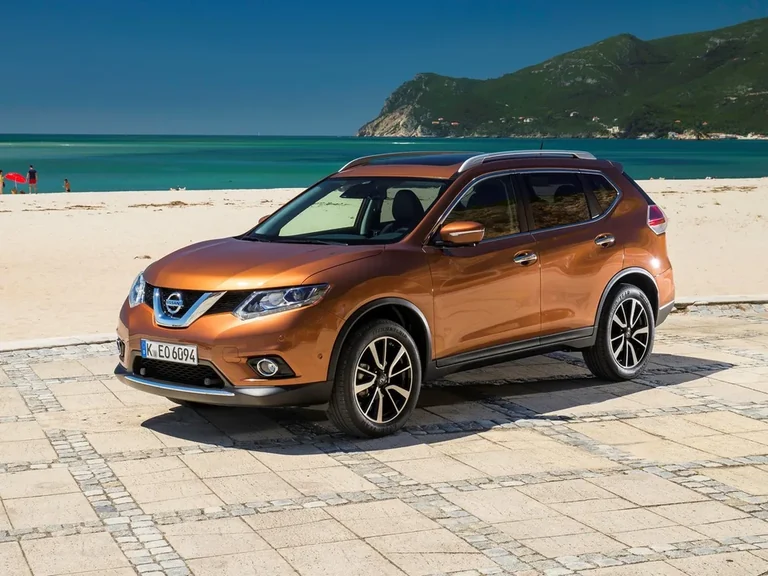
The third generation went on sale in Japan on December 16, 2013, and for the entire period of production it had one petrol engine – MR20DD with direct injection at 108 kW (147 hp) and 207 Nm, with Xtronic CVT, front or all-wheel drive. The Japanese T32 did not receive either a 2.5-liter engine or a diesel, although the Russian X-Trail of the same generation, according to catalog records, was sold with both 2.5 and 1.6 diesel. But the Japanese car has a third row: petrol versions of the 20X are five- and seven-seater, and this is recorded in the documents as the number of seats.
In May 2015, the X-Trail Hybrid was added to the range. This is not e-POWER: here the same MR20DD works together with one RM31 electric motor for 30 kW (41 hp) and 160 Nm through a CVT, there is no torque converter, and one of the two clutches completely disconnects the engine so that the car can start and drive on electric traction. The hybrid comes with front-wheel drive and all-wheel drive, but only five-seater, the battery is lithium-ion, it has a ground clearance of 200 mm versus 205 for a petrol car, and the tank of both versions is 60 liters. The body codes distinguish them immediately: T32 and NT32 are petrol with front-wheel drive and all-wheel drive, HT32 and HNT32 are hybrids. The June 2017 update brought a new front end with an enlarged V-Motion grille and projector headlights, as well as ProPILOT as a factory option for the 20X and 20X HYBRID; the motors and gearboxes remained the same. In Nissan specification sheets the power of the engine and of the motor for this hybrid are recorded as separate lines, there is no combined figure, so the “188 hp” from an advertisement is the seller’s arithmetic and not the manufacturer’s data.
T33, from 2022: only e-POWER in Japan
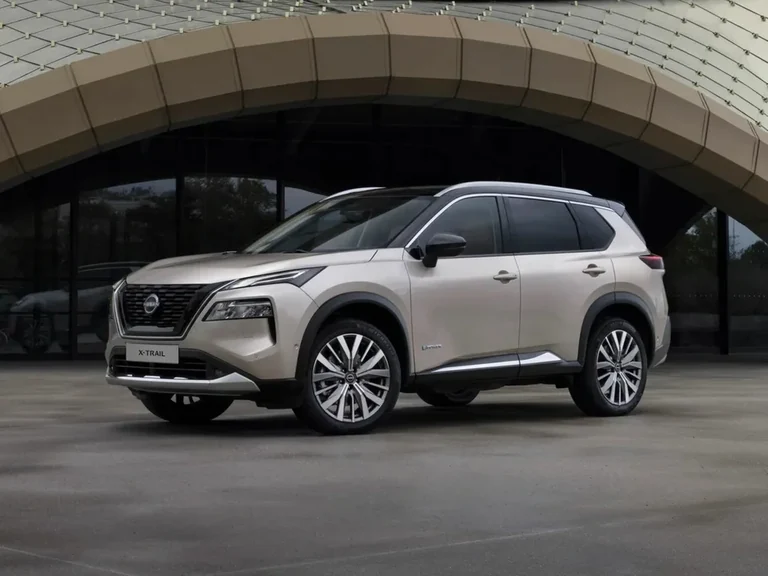
Nissan introduced the fourth generation on July 20, 2022: all-wheel drive versions went on sale on July 25, front-wheel drive versions in the fall. This is later than the Chinese version, which begins in the catalog in April 2021, and unlike it, the Japanese car comes exclusively with e-POWER. The device is fundamentally different from that of the T32 hybrid: a one-and-a-half-liter three-cylinder turbo engine KR15DDT with a variable compression ratio (from 8.0 to 14.0) at 106 kW (144 hp) and 250 Nm is not connected to the wheels in any way and works only for a generator, and the car is driven by a BM46 front electric motor with 150 kW (204 hp) and 330 Nm. The all-wheel drive version of the e-4ORCE adds a rear MM48 motor with 100 kW (136 hp) and 195 Nm – there is no driveshaft here, the drive to the rear axle is purely electric. Fuel according to the list of characteristics – ordinary petrol, a tank of 55 liters, a lithium-ion battery. Body codes: 6AA-T33 for a front-wheel drive car and 6AA-SNT33 for the e-4ORCE.
The third row remained, but with a caveat: only the all-wheel drive X e-4ORCE is seven-seater in this generation, all other versions are five-seater. The update, introduced on August 21, 2025 and on sale on September 18, added the ROCK CREEK off-road version and updated AUTECH versions, and Nissan showed the X-Trail NISMO separately on the same day. The body has become longer – 4,690 mm against the previous 4,660 (NISMO has 4,705), and the engines and generator engine have remained the same.
Why e-POWER does not add horsepower
In the T32 hybrid, the engine and engine can spin the wheels together, and Nissan still does not publish the total figure. The e-POWER has nothing to add up at all: 144 hp of the engine is the power of the generator, and 204 hp of the front engine and, in the case of the e-4ORCE, another 136 hp of the rear engine are used for asphalt. Therefore, “X-Trail 144 hp” and “X-Trail 204 hp” in the ads are the same car, described on different lines of the table. For documents and calculation, it is the specification lines that are important; why the hybrid numbers are arranged this way is analyzed in the article “Hybrid Power from Japan”.
What does this mean when choosing
If you need an X-Trail with a petrol engine without an electric part, the Japanese market offers the 2013-2022 T32 with a single 2.0 engine or older T31s with a choice of 2.0, 2.5 and diesel. The seven seats are only the T32 and T33, and the T33 has the third row tied to the all-wheel drive X e-4ORCE, and the T32 is tied to the petrol versions: the T32 hybrid is not seven-seater. Those who want electric traction choose between two different schemes: the T32 hybrid with a single 30 kW motor, where the main work is still done by the engine, and the e-POWER T33, where the motor is not connected to the wheels at all.
What to check for a specific car
The body code answers most questions. The letter before the T names the drive and version: T30/T31/T32/T33 – front-wheel drive, NT – full-wheel drive, PNT30 – turbocharged GT, TNT31 – 2.5, DNT31 – diesel, HT32 and HNT32 – third-generation hybrid, SNT33 – e-4ORCE. The prefix (TA-, UA-, CBA-, DBA-, LDA-, DAA-, 6AA-) speaks about the environmental category, how the code is arranged as a whole – in the article “Japanese car body code”. The number of seats – five or seven – is recorded in the documents, and is not guessed by generation. The T32 has a separate look at whether it is a hybrid or petrol: according to the code, this is the letter H before the T32 or NT32.
Versions by year are collected in the Nissan X-Trail catalog: 2009 – T31 with diesel, 2016 – T32 with hybrid, 2022 – the first e-POWER; summary characteristics – on the characteristics page. The condition of the selected car is checked separately, the procedure is described in the article “What we check before bidding”, and the service of ordering a car from Japan helps to choose a car.