Mitsubishi Outlander: generations, body codes and the choice between petrol and PHEV
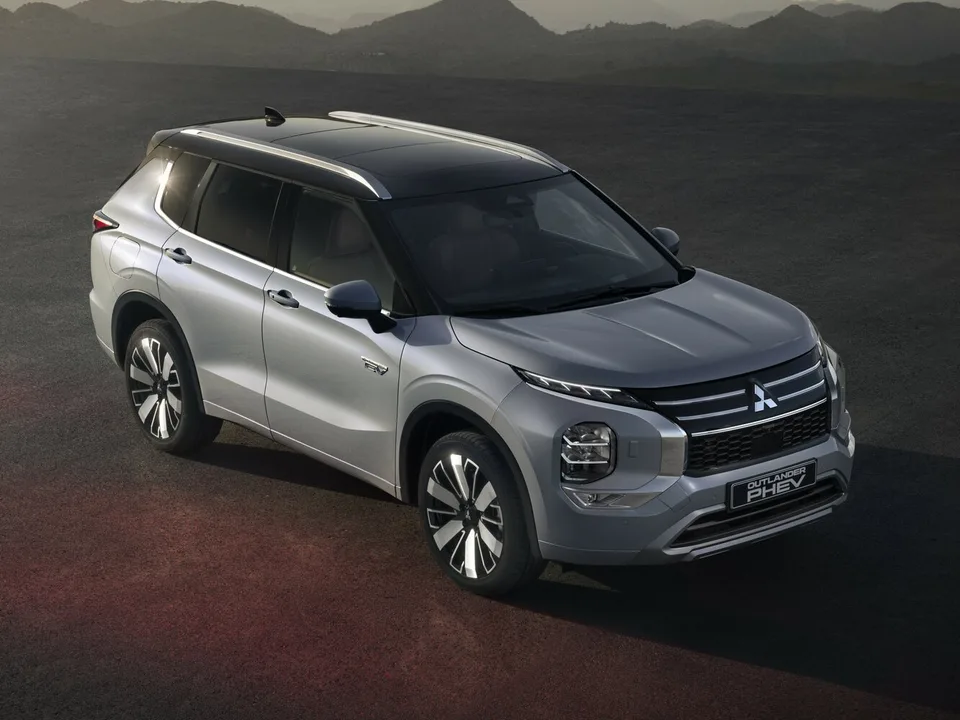
The Mitsubishi Outlander under this name has been sold in Japan since October 2005: the brand’s first crossover in the 2001 domestic market was called Airtrek, and the first-generation lines (CU0W) in the Outlander catalog refer only to export versions from 2002 to 2009. There are three Japanese Outlanders: CW (2005-2012), GF and its plug-in hybrid GG (2012-2021) and the current GN, from 2021, which only exists as PHEV in Japan. Hence, the main question when choosing – petrol or a rechargeable hybrid – is solved by the generation: the CW does not have a hybrid, the third generation has both, and the fourth Japanese petrol version does not exist. The body code helps here more than in many models: it distinguishes not only the volume of the engine, but also, in the third generation, the drive, and the letters GF and GG breed petrol and PHEV. Below is what has changed for Mitsubishi releases, how to read the code and what to check for a particular car. All generations, codes and versions are collected in the Outlander catalog.
Outlander Generations & Body Codes
| Series and years | Body codes | Engines | Transmission | Drivetrain |
|---|---|---|---|---|
| CW, 2005–2012 | CW5W, CW6W, CW4W | 2.4 l 4B12 MIVEC, 170 hp; 3.0 l V6 6B31, 220 hp (2007–2009); 2.0 l 4B11, 148 hp (2010–present) | CVT INVECS-III; V6 – 6AT | electronically controlled 4WD; 2.4 and 2.0 liters also have front-wheel drive |
| GF, 2012–2021 | GF7W, GF8W | 2.0 l 4J11, 150 hp; 2.4 l 4J12, 169 hp | CVT INVECS-III | GF7W – front-wheel drive; GF8W — 4WD |
| GG, PHEV, 2013–2021 | GG2W, GG3W | 2.0 l 4B11, 118 hp, two 60 kW electric motors, 12 kWh battery; from 2018 – 2.4 l 4B12, 128 hp, 13.8 kWh battery | Reducer | Twin Motor 4WD |
| GN, PHEV, since 2021 | GN0W | 2.4 l 4B12, 133 hp, two electric motors, 20 kWh battery, from 2024 – 22.7 kWh | Reducer | Twin Motor 4WD, S-AWC |
How to read the Outlander body code
In the documents, the code comes with the prefix of the emission class – DBA-CW5W, DBA-GF8W, DLA-GG2W, 5LA-GG3W, 5LA-GN0W; the prefix changes with the standards, and you need to disassemble the part after the hyphen. Outlander has a four-character prefix: two letters of the series, a number and the letter W, which all model codes have and does not distinguish between versions. According to the catalog, the correspondence is as follows. Second generation: CW5W – 2.4 l, CW6W – 3.0 l V6, CW4W – 2.0 l; CW5W and CW4W had both all-wheel drive and front-wheel drive versions, so the drive is not readable by CW code. Third generation: GF7W – 2.0 liters with front-wheel drive only, GF8W – 2.4 liters only with full drive, that is, here the number names both the engine and the drive at the same time; GG2W is a rechargeable hybrid with 2.0 liters, GG3W is a hybrid with 2.4 liters after the 2018 update, and the letter G in second place is the simplest PHEV sign in this generation. Fourth: GN0W is the only Japanese code, always PHEV with 2.4 liters. Pages of codes in the catalog: CW5W, CW6W, CW4W, GF7W, GF8W, GG3W, GN0W; where to look for the field with the code in the auction sheet, a separate article explains.
CW, 2005–2012: Airtrek change, 2.4 MIVEC and V6
The second-generation Outlander went on sale on October 17, 2005 as a “true road SUV” on a new platform: a new 2.4 L MIVEC with an aluminum block, a six-speed sport mode at the INVECS-III CVT, electronically controlled all-wheel drive with a washer of 2WD, 4WD Auto and 4WD Lock modes, an aluminum roof and single-tube rear shock absorbers, which Mitsubishi directly associated with the experience of the Lancer Evolution. There were two trim levels, M and G, each with five or seven seats – the third row folded into the floor, and the tailgate opened in two parts, and the lower one could withstand 200 kg; the sales plan is 2000 cars per month. According to the catalog, the engine is recorded as 4B12 for 170 hp, code CW5W, and in the first years, along with the 4WD, a front-wheel drive version was also produced. On October 17, 2007, the 30G and 30MS trim levels were added with a new 3.0 L V6 MIVEC with 162 kW (220 hp) and a six-speed automatic transmission with a sports mode, designed, like the 2.4 L for regular petrol; in the catalog it is 6B31 and the code CW6W. The 2.4 L line was then expanded to 24M, 24MS and 24G. After an update at the end of 2009, the V6 left the program, and since January 2010, a 2.0 liter 4B11 with 148 hp has appeared under the code CW4W – according to the catalog, it was both front-wheel drive and all-wheel drive, while 2.4 liters remained with all-wheel drive versions. Phases in the catalog: 2005-2009 and 2009-2012.
GF and GG, 2012–2021: petrol and the first PHEV
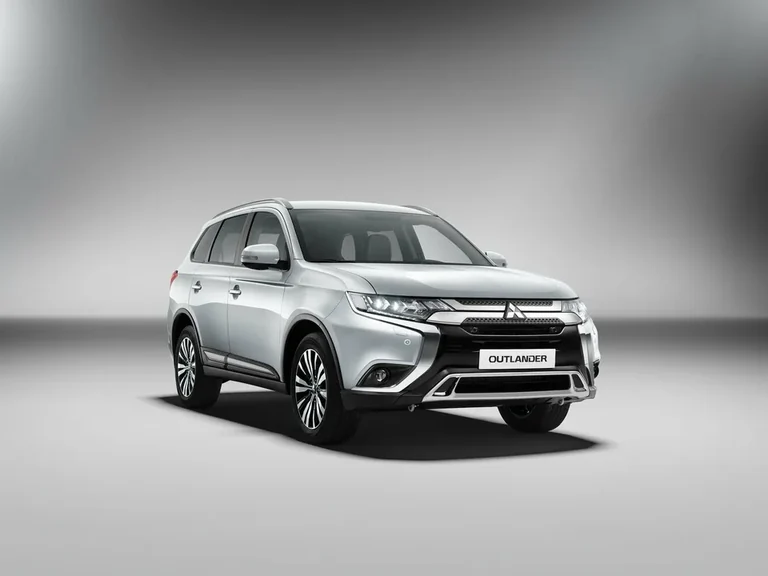
The third generation was released on October 25, 2012 as a “premium touring SUV” with four trim levels: 20G with 2.0 liters and front-wheel drive and 24G, 24G Safety Package and 24G Navi Package with 2.4 liters and all-wheel drive. The engines of the new J series – 4J11 150 hp and 4J12 169 hp according to the catalog – with the new MIVEC mechanism and start-stop system gave, according to Mitsubishi, savings of up to 22% compared to the previous generation; all-wheel drive versions had 4WD ECO instead of 2WD mode, and the S-AWC system was offered as an option. For the first time, Mitsubishi had an e-Assist complex with automatic braking, lane departure warning and radar cruise control; the third row became wider by 120 mm and received tilt adjustment. The codes differed in motors and drive: GF7W – 2.0 L front, GF8W – 2.4 L full. On December 26, 2012, Mitsubishi announced the Outlander PHEV with sales from January 24, 2013 – according to Mitsubishi, the world’s first rechargeable hybrid among SUVs: 2.0 l 4B11 at 87 kW (118 hp), two 60 kW electric motors on the front and rear axles, a 12 kWh lithium-ion battery, 60.2 km on electric traction on the JC08 cycle and a total range of 897 km; the system itself chooses electric, serial or parallel mode, and the optional 100 V outlet delivers up to 1500 W. In the catalog, the code is GG2W. The first update on January 31, 2014 affected the appearance and noise insulation, and on June 18, 2015, the entire generation received a Dynamic Shield front end, LED optics and a reinforced body – petrol versions from that day, PHEV from July 9. The August 23, 2018 update replaced the hybrid’s 2.0 liters with a 2.4 liter Atkinson cycle, increased the battery to 13.8 kWh and electric travel to 65 km, added SNOW and SPORT modes; according to the catalog, these are 4B12 with 128 hp. and the code GG3W. Petrol 2.0 liters with front and 2.4 liters with all-wheel drive continued in parallel, and from September 12, 2019, S-AWC became standard for all all-wheel drive versions; by August 2019, Mitsubishi counted about 1.08 million Outlanders of this generation sold in about 90 countries. Phases in the catalog: 2012–2014, 2014–2015, 2015–2018 and 2018–2021.
GN, since 2021: only PHEV in Japan
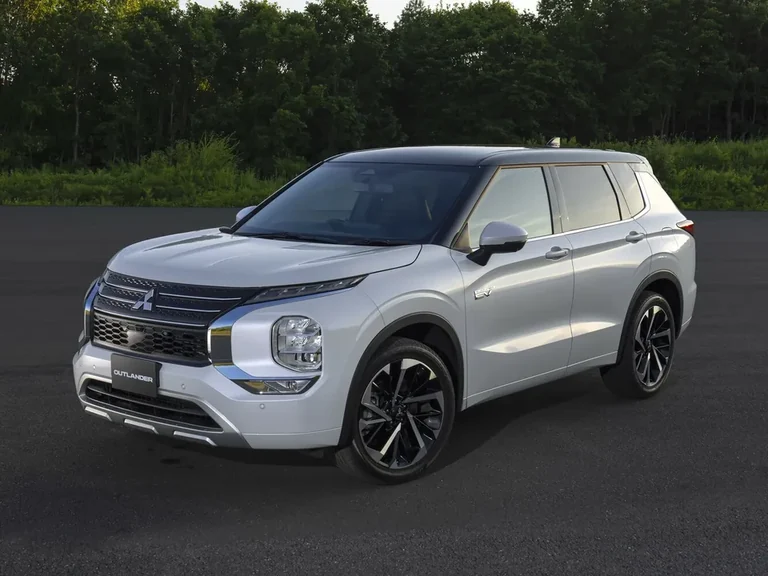
Mitsubishi first showed the fourth generation for North America – on February 17, 2021, with a new 2.5 liters and a CVT – and announced the Japanese version on October 28, 2021 only as a PHEV with sales from December 16. Therefore, there is one code in the catalog, GN0W, and it is impossible to confuse a Japanese car with petrol Outlanders from other markets. The platform is new, developed in the alliance; the power of the motors and battery increased by about 40%, the battery – up to 20 kWh, electric travel – up to 87 km WLTC for the base M and 83 km for the G and P; the rear motor is combined with the control unit so that for the first time the PHEV has a third row and seven seats. Twin Motor 4WD all-wheel drive is complemented by S-AWC with brake vectoring already on the rear axle. For a month and a half of pre-order, Mitsubishi received 6915 applications with a plan of 1000 cars per month, with more than seven out of ten buyers choosing the top trim level P. A major update was announced on October 9, 2024 with sales from October 31: a new 22.7 kWh battery and 106 km on electric traction for the M (102 km for the rest), the power of the hybrid system is about 20% higher, fast charging to 80% in 32 minutes, a Yamaha audio system in all versions, a new top trim level P Executive Package and still a seven-seater cabin. Orders by the start were about 3400 with the same plan of a thousand. On June 25, 2026, another improvement followed; according to Mitsubishi, in fiscal years 2024 and 2025, the Outlander PHEV was the best-selling plug-in hybrid in Japan. Phases in the catalog: 2021-2024 and from 2024.
PHEV or petrol: what to choose
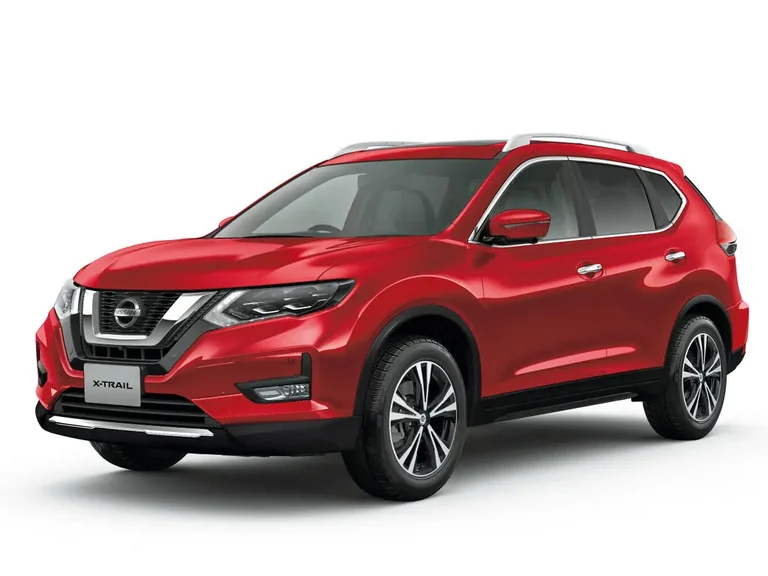
Petrol Outlander is CW and GF: a simple CVT, regular petrol, 2.4 liters have all-wheel drive with modes, 2.0 liters of the third generation have only front. Seven seats were available in both petrol generations, but the GG hybrid did not: the seven-seater PHEV appeared only in GN. A rechargeable hybrid makes sense if there is somewhere to charge it: according to Mitsubishi releases, a full charge from a 200 V mains took up about four hours for the first PHEV and about seven and a half for the current one with a large battery, and without an outlet, the car works like a regular hybrid with an engine-generator. When inspecting any PHEV, the main question is the condition of the traction battery, and the difference between GG2W and GG3W by code immediately tells whether there is a 2.0 liter under the hood or a later 2.4 liter with an enlarged battery. For petrol CWs, it is useful to clarify whether the car is all-wheel drive, because the code does not show this. Neighbors in the catalog are Mitsubishi Eclipse Cross, Mitsubishi Delica D:5 and Nissan X-Trail, about which there is a separate analysis; how to read the generation and market in the description of the Japanese lot, explains the article about the generation and the market, and the selections are collected on the pages of hybrids and all-wheel drive from Japan.