Subaru Levorg: generations, body codes and turbo engines
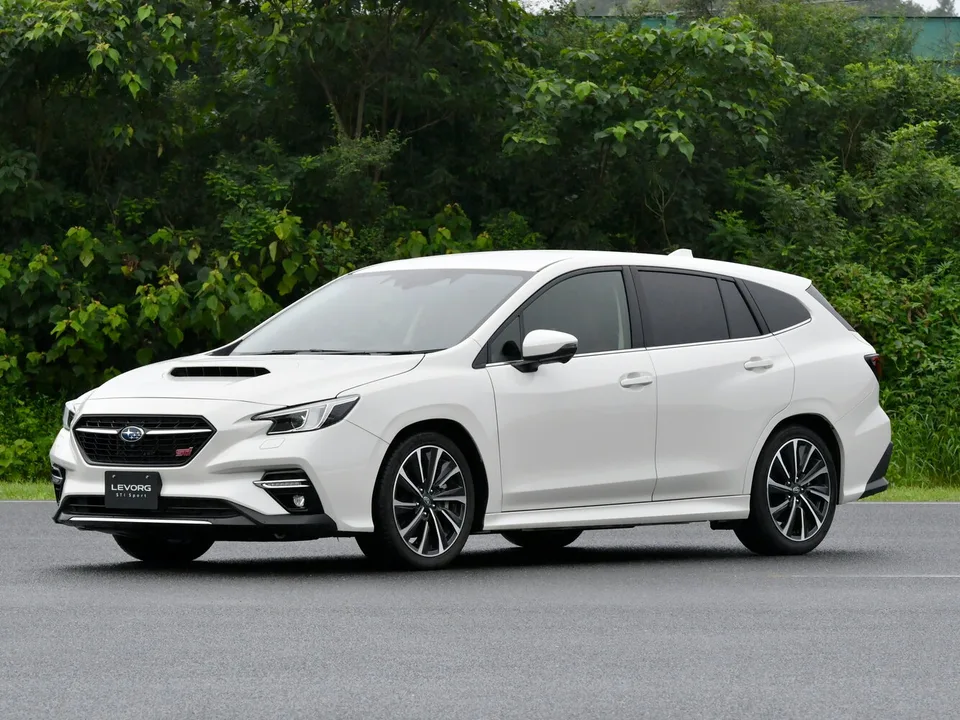
The Subaru Levorg arrived in Japan in June 2014 as a compact sports station wagon in place of the Legacy Touring Wagon and has since changed two generations: VM (2014-2020) and the current VN, from 2020. All Japanese Levorgs are turbocharged and all-wheel drive, with a boxer engine and a Lineartronic CVT; the choice comes down to four engines, and each of them corresponds to its own body code: VM4 – 1.6 liters, VMG – 2.0 liters for 300 hp, VN5 – 1.8 liters, VNH – 2.4 liters.
Levorg Generations and Body Codes
| Series and years | Body codes | Engines | Transmission | Drivetrain |
|---|---|---|---|---|
| VM, 2014–2017 | VM4, VMG | 1.6 l turbo FB16E, 170 hp; 2.0 l turbo FA20E, 300 hp | Lineartronic; 2.0 l — Sport Lineartronic | AWD |
| VM after update, 2017–2020 | VM4, VMG | The same | The same | AWD |
| VN, since 2020 | VN5, VNH | 1.8 l turbo CB18, 177 hp; 2.4 l turbo FA24, 275 hp (STI Sport R, from 2021) | Lineartronic; 2.4 L – Subaru Performance Transmission | AWD |
| VN Layback, since 2023 | VN5 | 1.8 l turbo CB18, 177 hp | Lineartronic | AWD, clearance 200 mm |
How to read the Levorg body code
In Japanese documents, the code is written with the prefix of the emission class – DBA-VM4, DBA-VMG, 4BA-VN5, 3BA-VN5, 5BA-VNH; the prefix changes with the norms, not with the generation, so you need to compare the part after the hyphen. Levorg has a short one: two letters of the series and one engine sign. According to the catalog of correspondence, the following are as follows: VM4 – 1.6 L FB16E of the first generation, VMG – 2.0 L FA20E of the first generation, VN5 – 1.8 L of CB18 of the second generation, including Layback, VNH – 2.4 L of FA24 of the second generation. All four have all-wheel drive, so there is no separate drive sign in the code and there is no need to look for it; The transmission of all is a CVT, and it is also not readable by the code. It is not worth deducing from this rule for other Subaru: Levorg simply does not have front-wheel drive and atmospheric versions, and neighboring models of the brand have them. The European Levorg code was written without a prefix, like VM4, and under it there were both a turbo 1.6 liters and an atmospheric 2.0 liter FB20 with 150 hp, so the European table does not apply to the Japanese car – in the catalog these lines are divided by market. Code pages: VM4, VMG, VN5, VNH; where to look for the code field in the auction sheet, is discussed in a separate article.
VM, 2014–2020: 1.6 DIT on regular petrol and 2.0 DIT on 300 hp
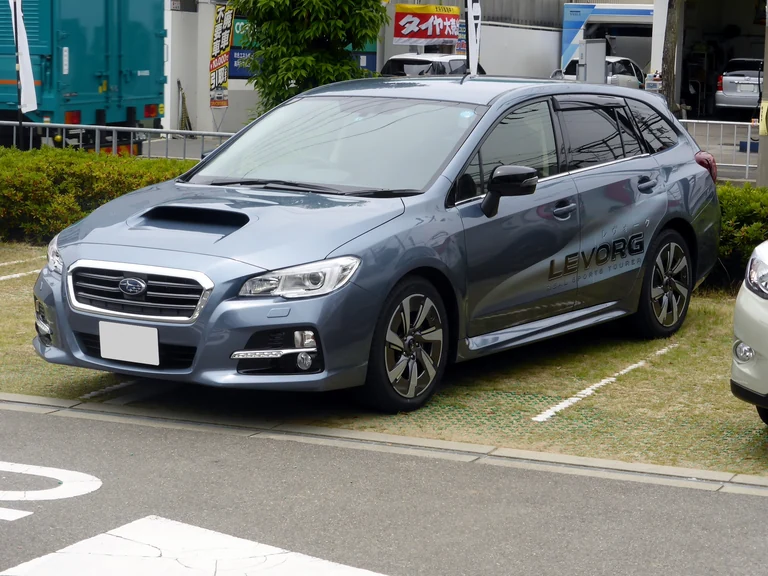
Levorg was introduced on April 15, 2014, and sales of all versions began on June 20 – Subaru postponed the launch to allow the release of the EyeSight units of the third version – Subaru’s own driver assistance complex, which was installed on this model for the first time. There were two engines, both with direct injection and turbocharging, Subaru calls it DIT. The new 1.6 l, according to the FB16E catalog for 170 hp, is designed for regular petrol and showed 17.4 km / l on the JC08 cycle; The 2.0 l FA20E developed 221 kW, that is, 300 hp, and 400 Nm already from 2000 rpm, worked in tandem with a Sport Lineartronic CVT and consumed 13.2 km / l according to JC08. Trim levels were called 1.6GT, 1.6GT-S, 2.0GT and 2.0GT-S, all with EyeSight. In June 2016, the model was improved, and on July 21, 2016, the flagship STI Sport trim level was added with tuned suspension on Bilstein shock absorbers – both for 1.6 liters and for 2.0 liters.
On July 3, 2017, Subaru showed a major update with sales from August 7: a new grille, bumper and LED headlights, and most importantly – the EyeSight Touring Assist complex, for the first time in the brand, on all trim levels; automatic braking when moving backwards, a front camera and a mirror with a screen were added, the suspension and electric power steering were reconfigured, the calibration of the 1.6 liters was changed for the sake of real consumption. The May 2019 update with sales from June 27 brought special versions of the Black Selection and Advantage Line. Externally, cars after 2017 differ in the front end, and the body codes remained the same – VM4 and VMG. The page of the second phase is in the catalog.
VN, from 2020: new platform, 1.8 CB18 and 2.4 STI Sport R
Subaru introduced the second generation on October 15, 2020, orders opened in August, so the generation in the catalog begins in August 2020. The car switched to the Subaru global platform with a body according to the full internal frame scheme and received a new 1.8-liter DIT engine – according to the CB18 catalog for 177 hp. – with a high torque of 300 Nm from low revs and lean combustion in some modes. For the first time, Subaru has the EyeSight X complex with map data and satellite positioning, and in the older trim levels – Drive Mode Select mode, which reconfigures the engine, all-wheel drive, electronic shock absorbers and power steering with one switch. There are three trim levels at the start – GT, GT-H and STI Sport, each has an EX version with EyeSight X; Release prices range from 3,102,000 to 4,092,000 yen, the sales plan is 2200 cars per month. On November 25, 2021, the STI Sport R was added with a new 2.4 liter DIT – in the FA24 catalog for 275 hp – and a Subaru Performance Transmission CVT; so the Levorg again has two engines, and the body code again distinguishes them: VN5 for 1.8 liters, VNH for 2.4 liters. The generation page is in the catalog.
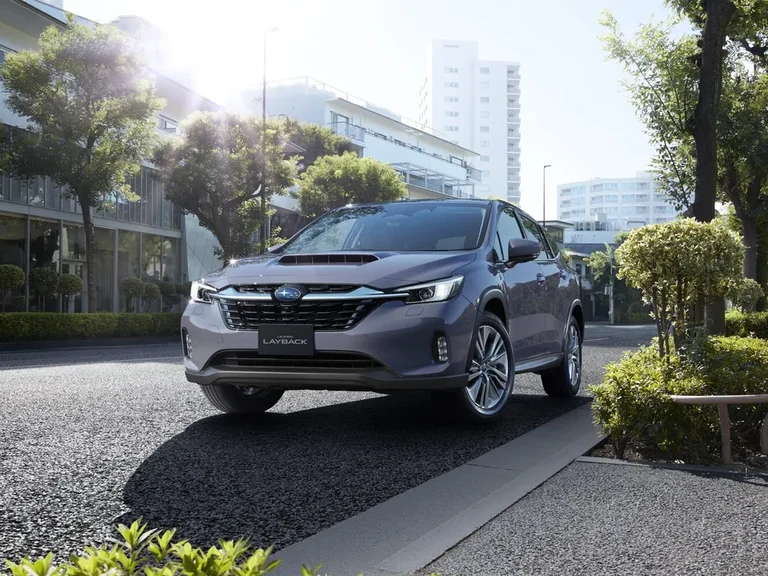
Levorg Layback is a separate branch of the second generation, announced on October 25, 2023: the same VN5 station wagon with 1.8 liters, but with a ground clearance of 200 mm, a different design and dimensions of 4770×1820×1570 mm with a base of 2670 mm, in one Limited EX trim level with EyeSight X. On July 2, 2026, Subaru announced a version of the Layback with a full-fledged e-BOXER hybrid based on 2.5 liters – this is already a new technique, it is not in the catalog at the time of publication.
Which engine to choose
The 1.6 L FB16E is the most common variant of the first generation in terms of the number of entries in the catalog: it is designed for regular petrol, and it was with it that Levorg was conceived as an economical family station wagon. The 2.0 L FA20E with 300 hp is a completely different car in character and consumption, and it has its own CVT; at auction it is issued by the code VMG and trim levels 2.0GT-S or 2.0 STI Sport. In the second generation, the 1.8 L CB18 replaced both previous engines as the main one, and the 2.4L FA24 is only available in STI Sport R from 2021. You don’t have to choose the type of gearbox and drive – all Levorgs have a CVT and all-wheel drive, so when inspecting, the service history of the turbo engine and the condition of the CVT are more important than finding the “right” version. The neighbors in the catalog are the Subaru Legacy, which Levorg replaced as a station wagon, and the Subaru Impreza; a separate article tells how to read the generation and market in the description of the Japanese lot, and a selection of all-wheel drive cars is collected on the page of all-wheel drive from Japan.