Toyota Allion: how to distinguish the T240 and T260 generations by body code
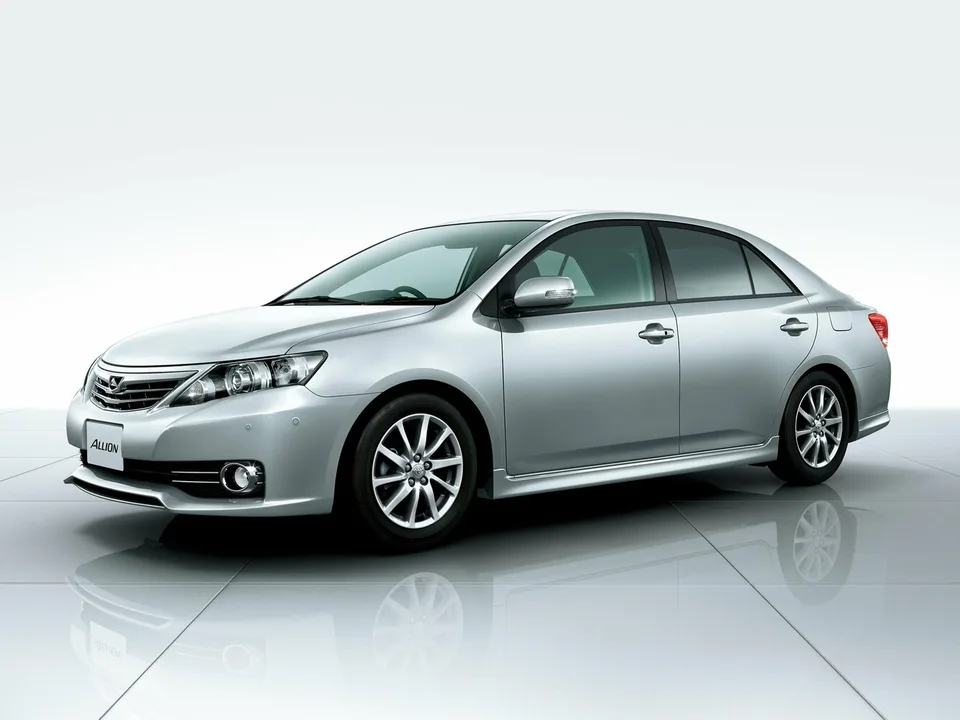
The Allion is a Toyota sedan for the Japanese market: it appeared at the end of 2001, has changed two generations in its history, and the last Japanese entries in the Toyota catalog and manuals date back to the spring of 2021. In ads, its version is usually described by the year of manufacture, but the year is the most unreliable part of the description: Toyota produced the same body for five or six years, and within the generation, both the power and the gearbox changed. The most accurate description of the car is the body code from Japanese documents: it is directly related to the engine size and drive. Below is how the first generation T240 differs from the second T260, why “Allion always has a CVT” is wrong, what the body code says and what it doesn’t, and why the sedan with the same name from China is not a continuation of the Japanese lineup.
Two Japanese cars and one twin
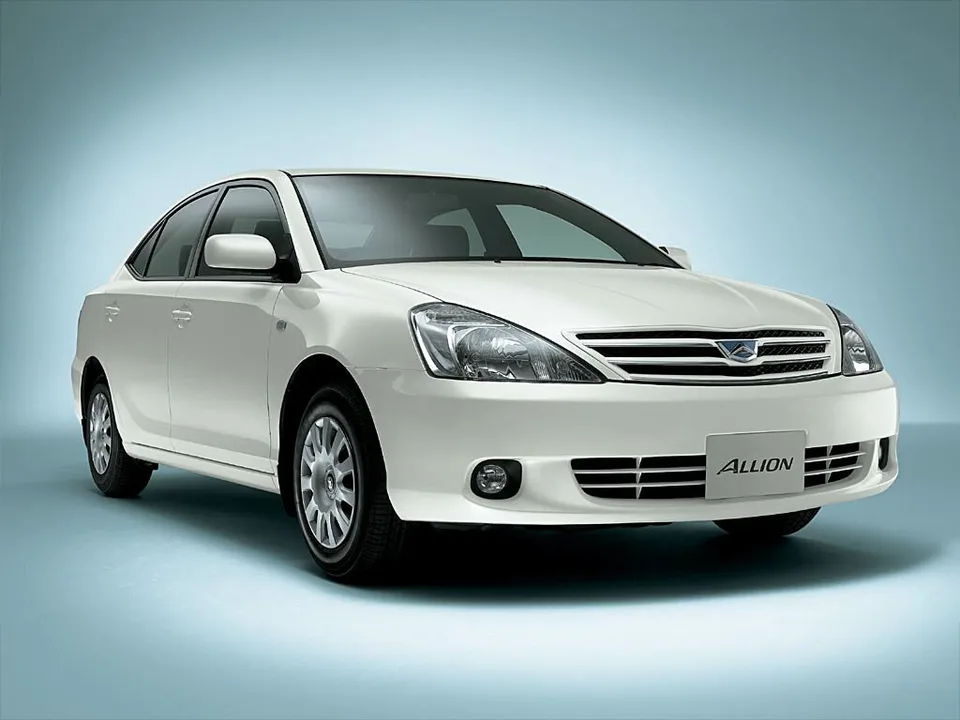
Allion Toyota introduced on December 25, 2001 along with the Premio: these are twin models of the same family, which differed in design and were sold through different dealer networks in Japan. Therefore, in the ads, they are constantly side by side, and technically in many respects coincide – when choosing, it makes sense to look at both models at once.
There are only two Japanese generations: the T240 from December 2001 and the T260 from June 2007. The second generation lived for almost fourteen years and went through several updates; according to the version catalog, the Japanese entries end in March 2021, and the last period includes cars with the prefix 3BA- before the body code. Toyota’s list of manuals for the Japanese Allion ends with the same period – “June 2016 – April 2021”.
T240 (2001–2007): where is the automatic and where is the CVT
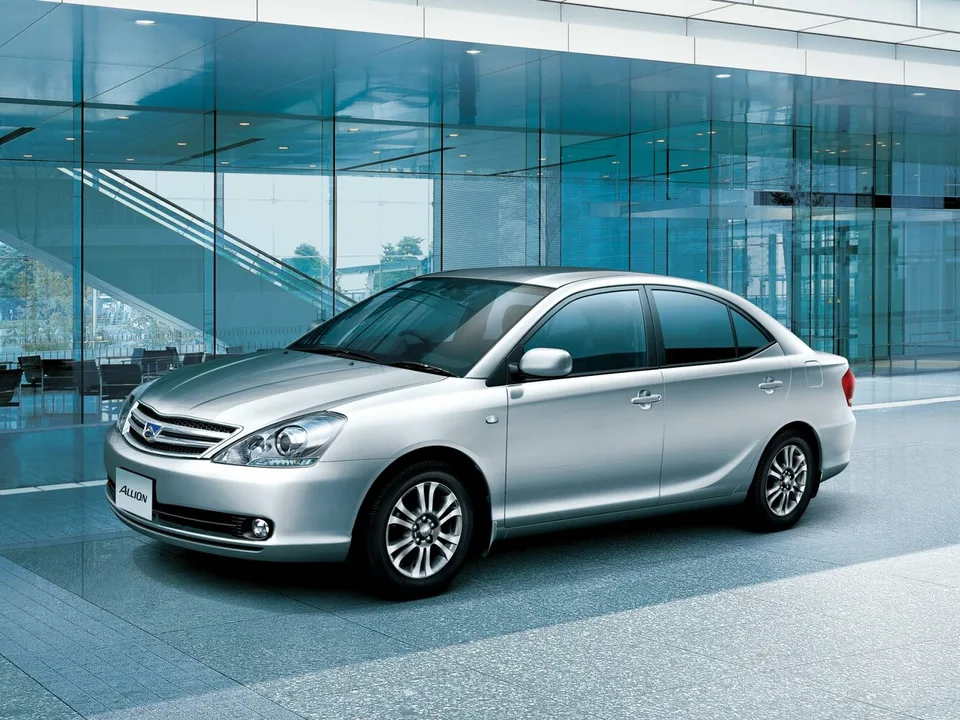
The main mistake that wanders according to the descriptions of Allion is the phrase “it always has a CVT.” It does not belong to the first generation. In the release of the model, Toyota listed both gearboxes at once: a four-speed Super ECT automatic transmission and a Super CVT CVT. According to the catalog of versions, they are distributed among the engines, and not mixed: 1.5 and 1.8 come with an automatic transmission, the CVT is only on the two-liter version.
There are three engines in the first generation. The one-and-a-half-liter produces 109 hp. and can only be front-wheel drive. The 1.8-liter engine has 132 hp on front-wheel drive and 125 hp on full-wheel drive: the all-wheel drive version has its own body code, ZZT245, and it is impossible to confuse it with the front-wheel drive ZZT240 on paper. The two-liter version (AZT240) is 152 hp, and after the December 2004 update, it has 155 hp in the catalog; it does not have all-wheel drive.
T260 (2007–2021): CVT in all versions
Toyota announced the second generation on June 4, 2007, and here the CVT really became the only gearbox: the release indicates Super CVT-i, and in the catalog of versions, all T260 entries are with a CVT, without a single manual or classic automatic transmission. It is because of this that the statement about the “Allion’s CVT” diverged: it is true for exactly half of the history of the model.
The motors remained the same in volume, but the power within the generation changed. At the start, these are 1.5 liters – 110 hp, 1.8 liters – 136 hp on front-wheel drive and 125 hp. on full-wheel drive, 2.0 liters – 158 hp. After the April 2010 update, 143 and 144 hp for 1.8 liters of front-wheel drive, 131 and 133 hp for full-wheel drive, 109 and 110 hp for 1.5 liters, 152 and 158 hp for 2.0 liters.
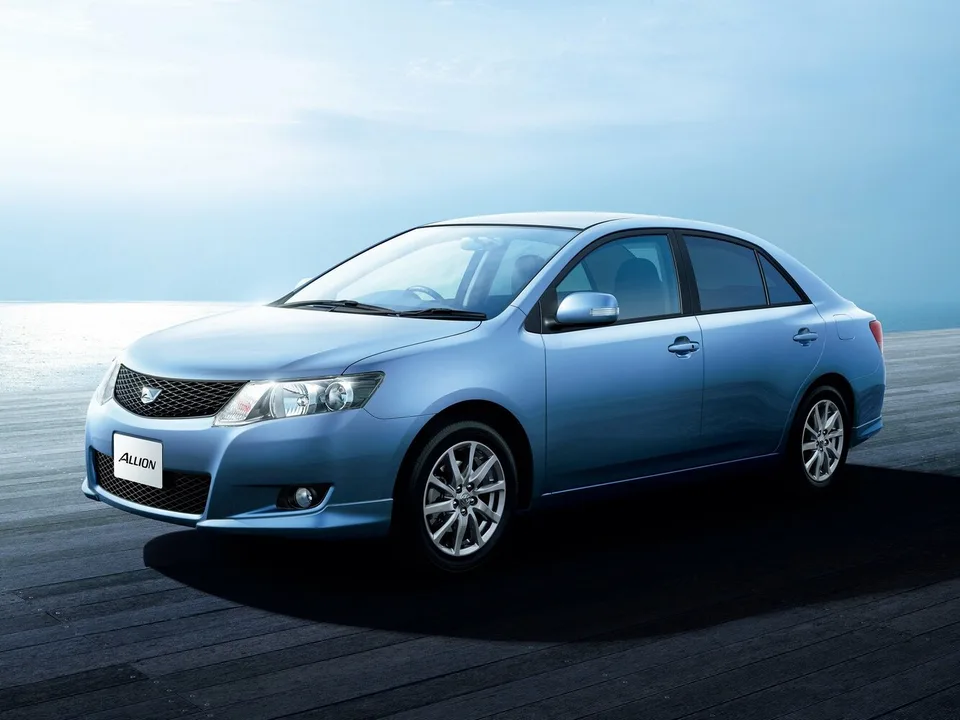
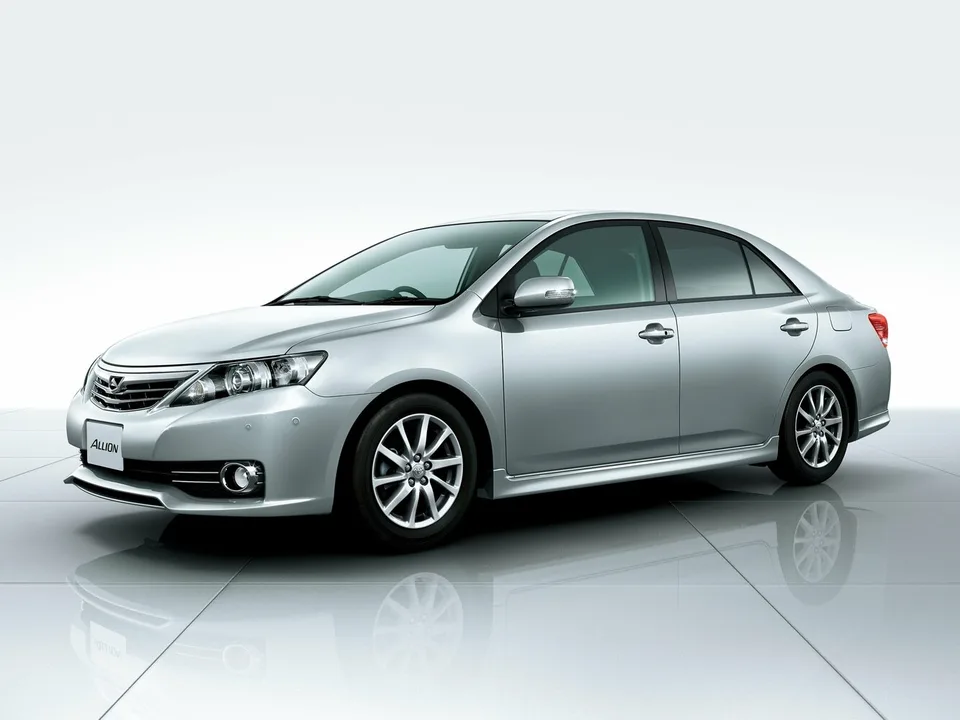
The T260 had more updates than periods in the catalog: Toyota announced partial changes on September 29, 2014 and June 13, 2016. In 2014, the front-wheel drive version of the 1.5-liter received a hitchhiking system, in 2016 the design of the front end and optics changed. At the same time, the catalog period of 2010-2016 unites cars before and after the changes of 2014. The practical conclusion is simple: “restyling” in the ad is the word of the seller, not a characteristic from the documents, and you need to check it by external signs and the date of the first registration, and not by the name of the period.
What is read in the body code and what is not
The body code is the most useful string in Japanese documents: it is used to unambiguously determine the engine size and drive. The table shows all the codes of the Japanese Allion according to the version catalog.
| Code | Engine | Drivetrain | Transmission |
|---|---|---|---|
| First generation T240, 2001–2007 | |||
| NZT240 | 1.5 l, 109 hp | front-wheel drive | automatic transmission |
| ZZT240 | 1.8 l, 132 hp | front-wheel drive | automatic transmission |
| ZZT245 | 1.8 l, 125 hp | all-wheel drive | automatic transmission |
| AZT240 | 2.0 l, 152-155 hp | front-wheel drive | CVT |
| Second generation T260, 2007–2021 | |||
| NZT260 | 1.5 l, 109-110 hp | front-wheel drive | CVT |
| ZRT260 | 1.8 l, 136-144 hp | front-wheel drive | CVT |
| ZRT265 | 1.8 l, 125-133 hp | all-wheel drive | CVT |
| ZRT261 | 2.0 l, 152-158 hp | front-wheel drive | CVT |
But what the code does not say is the year of manufacture and “restyling”. All eight basic codes of the Japanese Allion are found in the catalog in several periods at once: ZRT260 is on both the 2008 car and the 2020 car. Only the prefixes before the code differ – UA-, TA-, CBA-, DBA-, 3BA-: they refer to the environmental classification and the date of type approval, and not to a specific car. Therefore, you can confidently determine the engine and drive by the code, but the year and version of the update will have to be checked by documents and external signs. How the Japanese body code works in its entirety is analyzed in a separate article “Japanese Car Body Code“.
Allion from China is a different car
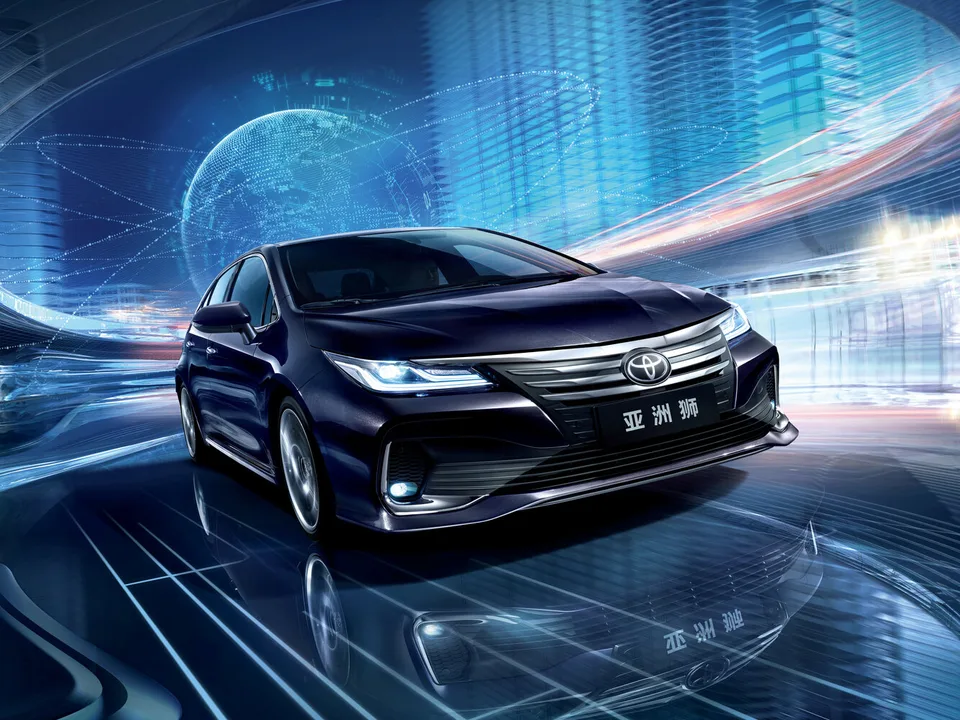
Since November 2020, the Allion has been called a sedan, which in the catalog is attributed to the Chinese market: body codes MZEA12 and MZEH16, a two-liter engine with 171 hp. and a hybrid version, which has 152 hp. In the catalog, this car is a separate generation of E210 for the Chinese market: it has its own body codes, a set of versions and a market, and it is impossible to compare it with the Japanese T240 and T260 by the same name.
It is important to honestly identify the gap here: we did not find confirmation of this Chinese model on the official resources of Toyota – in the Japanese and global news feed, so we provide data about it only in the catalog of versions and do not pass it off as a manufacturer’s statement. In practice, this means one thing: if the ad says “Allion 2021” with a two-liter engine and an unfamiliar body code, first check the car market. How the Japanese and Chinese versions of the same model differ from each other and why this is important when ordering is analyzed in the article “One generation, different markets“.
What to check in the ad
First the body code, not the year: NZT is 1.5 liters, ZZT and ZRT are 1.8 liters, AZT and ZRT261 are 2.0 liters, and the ending 245 or 265 means all-wheel drive. Then the gearbox: if the code refers to a T240 and it’s not a two-liter AZT240, an automatic transmission, not a CVT; all T260s have a CVT. Next is the date of first registration: it limits the production period more accurately than the name of the generation in the ad. And finally, the market: Japanese cars come with the codes T240 and T260, and the MZEA12 and MZEH16 are not Japan.
It is worth seeing the Premio separately: this is the same car with a different design, and the right lot often ends up there. The condition of the CVT and all-wheel drive transmission is checked before the bid – what exactly we look at in the auction sheet and at the inspection is described in the article “What we check before the bid“.
Where to look next
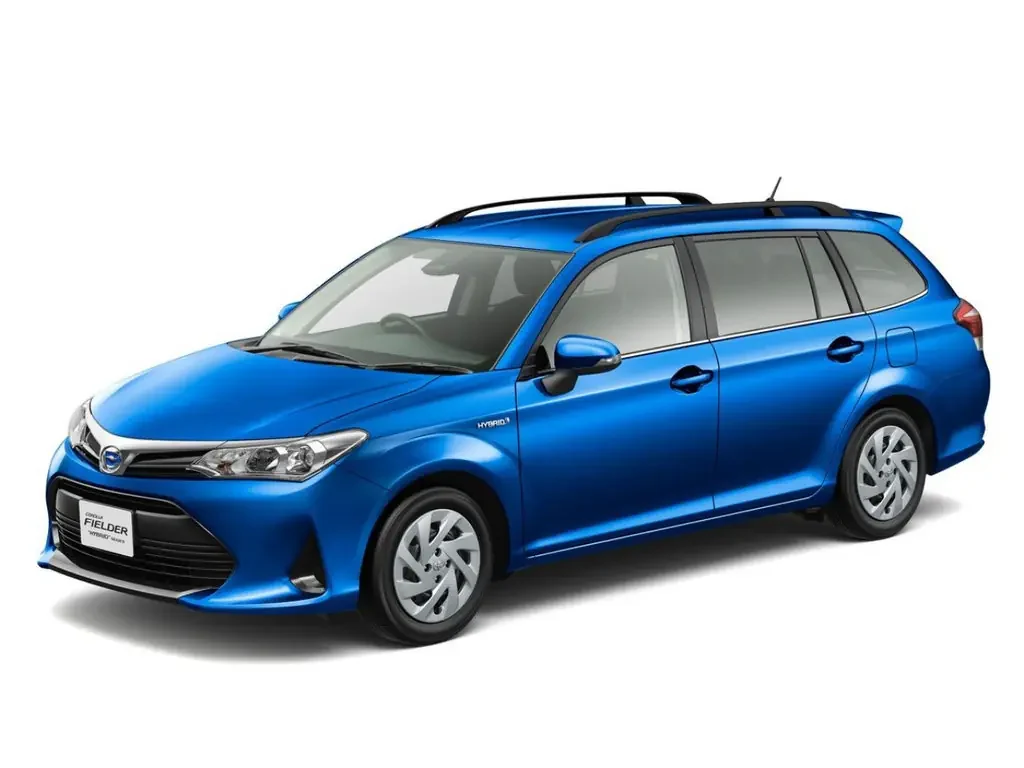
All Japanese versions of the Allion by year, body code and trim level are collected on the Allion catalog page, the twin is on the Toyota Premio page. If you need not a sedan, but a station wagon of the same class, look at the analysis “Toyota Corolla Fielder: petrol or hybrid“. The service of ordering a car from Japan helps to choose a specific car and carry it from the auction to Vladivostok, and the turnkey cost is calculated in the calculator.
Version, body code, and power data — GTYRES version catalog; generation and update dates — Toyota publications.