Toyota Aqua: how to choose between the first and second generation
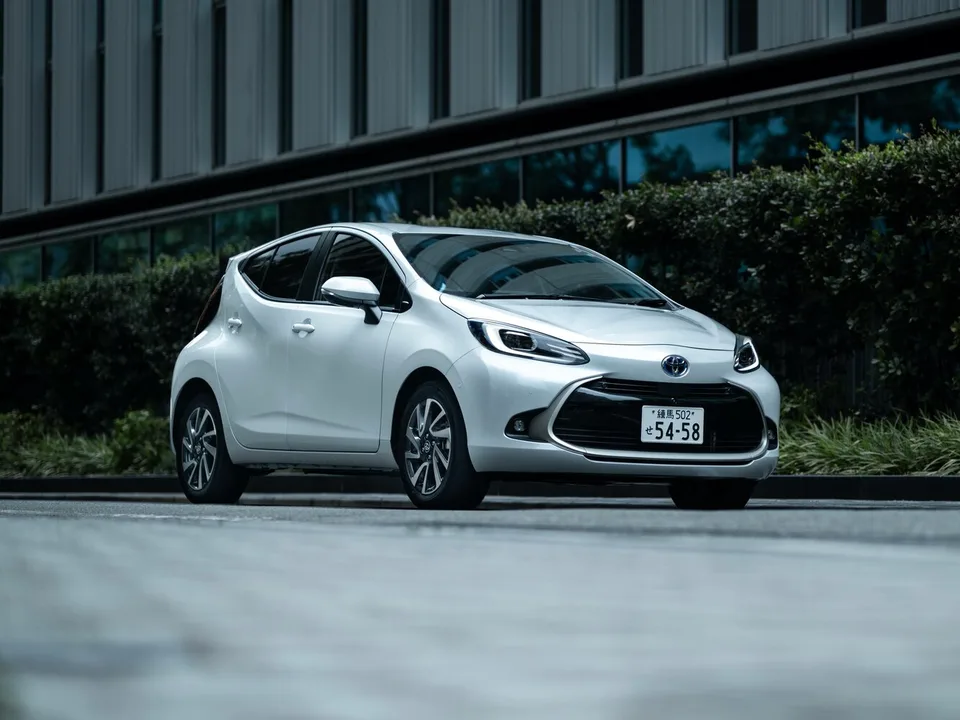
From the very beginning, the Aqua was produced only as a hybrid: it did not have a regular petrol version in any generation. Therefore, the choice here is not by the type of motor, but by generation, drive and, in the second generation, by battery type. The differences between the two generations are larger than it seems from a similar silhouette.
P10: one installation for ten years
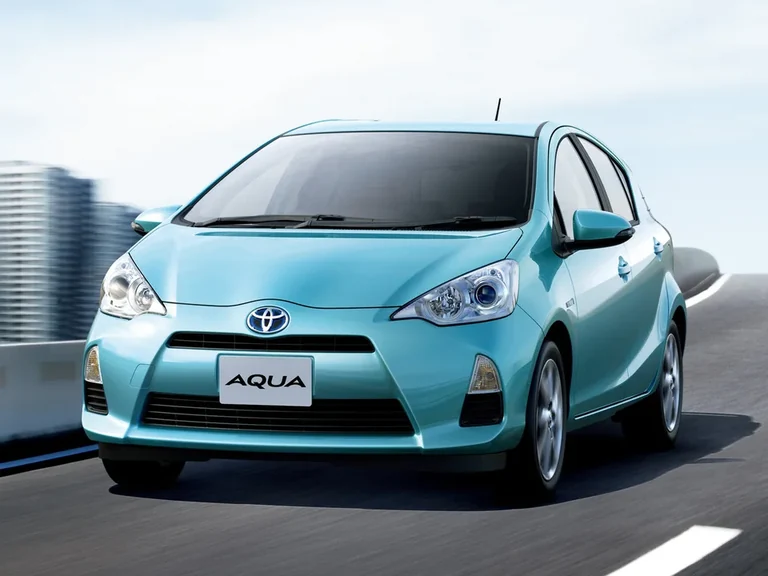
The first generation lasted in Japanese records from November 2011 to June 2021 and went through two updates – at the end of 2014 and in the summer of 2017. The installation is the same all this time: the 1NZ-FXE engine with a volume of 1.5 liters and a capacity of 54 kW (74 hp) together with a 1LM electric motor with 45 kW (61 hp) and a CVT. For the installation of the entire Toyota, Toyota provides a separate value – 73 kW (100 hp).
An important feature: the P10 does not have all-wheel drive at all. In all Japanese records of the first generation, only front-wheel drive, and this is confirmed by Toyota itself: announcing the second generation, it calls the E-Four the first all-wheel drive in the history of the Aqua. The wheelbase is 2550 mm, the dimensions are 3995 × 1695 × 1445 mm. The body code is DAA-NHP10, and in later records it is 6AA-NHP10: the letter prefix changed with the change in environmental requirements, the body index itself remained the same.
Second generation: a different platform and finally all-wheel drive
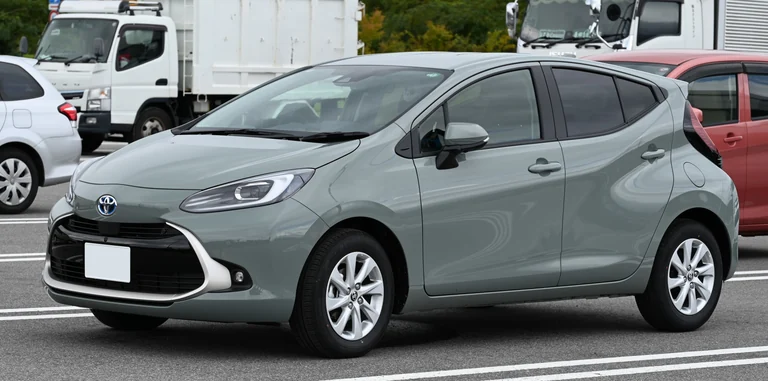
Since July 2021, Aqua has switched to the TNGA GA-B platform. The wheelbase has grown to 2600 mm, the dimensions in the records are indicated as 4050 × 1695 × 1485 mm. The engine has become different – M15A-FXE, 67 kW (91 hp) at 5500 rpm; the front 1NM electric motor produces 59 kW (80 hp).
The main practical difference is the appearance of the E-Four all-wheel drive. The rear axle is rotated by a separate 1MM electric motor: according to Toyota’s specification, it is 4.7 kW (6.4 hp) for the Z, G and X versions and 3.9 kW (5.3 hp) for the base B. Next to the 59 kW front motor, the scale is clear without estimates. Along with the all-wheel drive, the rear suspension also changes: the front-wheel drive versions have a torsion beam in the specification, the versions with the E-Four have double wishbones.
The type of battery is read by the body code
In the second generation, the type of traction battery depends on the version, and in the Toyota specification this is written directly: the Z, G and X have a nickel-metal hydride battery with a capacity of 5.0 Ah, the basic B has a lithium-ion battery with a capacity of 4.3 Ah. The rest of the versions, from X and G to Z, Z Raffine and GR Sport, are coded 6AA-MXPK11 and 6AA-MXPK16.
In the specification of the updated Aqua from September 2025, version B is no longer available: the line consists of Z, G, X, and U, with U being offered only with a KINTO subscription. Along with version B, the lithium-ion battery also left the lineup – all versions indicate a 5.0 Ah nickel-metal hydride, and the E-Four rear motor has a single value of 4.7 kW. In the catalog entries, this can be seen as the disappearance of the MXPK10 and MXPK15 codes: only the MXPK11 and MXPK16 remain. The body code, of course, does not confirm the type and condition of the battery of a particular car – it only says which battery is provided for this version.
About power
The numbers 91 and 80 in the second generation refer to different parts of the installation, and they cannot be added. In the first generation, you can clearly see why: with a 54 kW engine and a 45 kW electric motor, Toyota indicates 73 kW for installation as a whole – that is, less than the amount would give. The order of reading such characteristics is analyzed in the article “Hybrid power from Japan”.
What does this mean when choosing
If you need all-wheel drive, there is exactly one option – the second generation with the E-Four, and the difference with a front-wheel drive car here is not only in the plug-in rear axle, but also in the design of the rear suspension. The first generation remains front-wheel drive regardless of the configuration and any year of manufacture.
If all-wheel drive is not needed, the choice between generations comes down to something else: in the second generation, the wheelbase is larger, both the engine and the electric motor are more powerful – 67 versus 54 kW and 59 versus 45 kW; but in the first generation, the entire line comes with one type of battery, without separating versions. At the same time, the basic version of the second-generation B is noticeably different from the rest both in battery and rear engine power, so it is not worth comparing it directly with the X, G or Z versions.
What to check for a specific car
It is more convenient to start with the body code from Japanese documents: it immediately separates the drive and, in the second generation, the basic version from the rest. The article “Japanese Car Body Code” explains how the code works.
All versions by year are collected in the Toyota Aqua catalog: 2013 belongs to the first generation, 2022 belongs to the second. The condition of a particular car, including the operation of the hybrid part, is checked separately; the procedure is described in the article “What we check before the bet”.
The service of ordering a car from Japan helps to choose a car for the right combination of generation, drive and configuration.