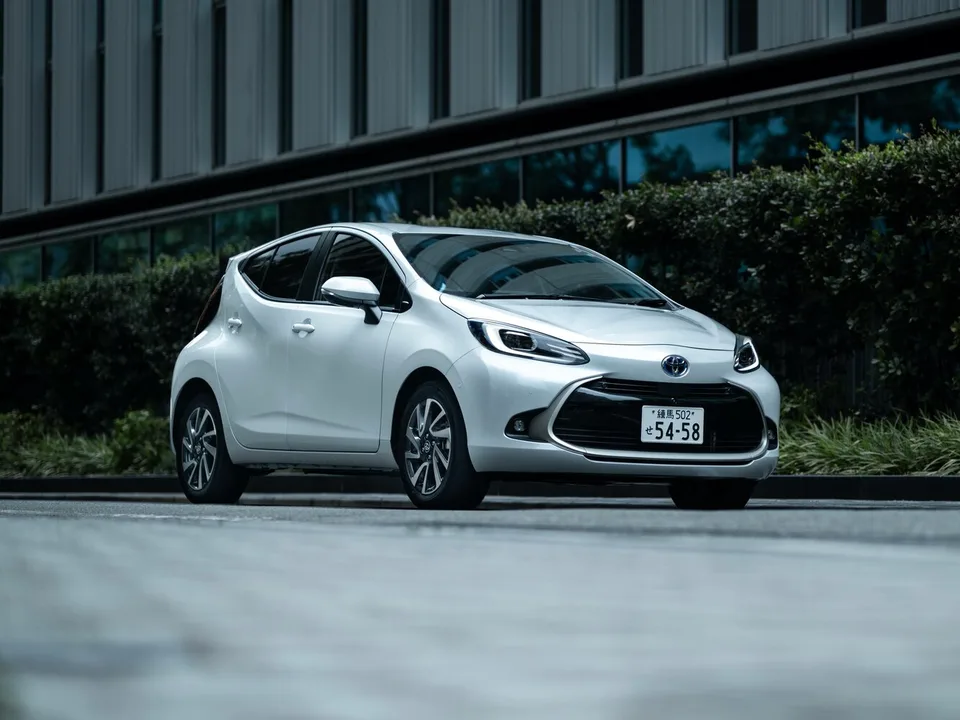
Toyota Prius: how to determine the generation and version by body code
The Prius is the most famous hybrid from Japan, and it is in its ads that the numbers most often diverge: the same two-liter car of the fifth generation in different sources is both “152 horsepower” and “196”, and the same-looking car with 1.8 liters is “98”. The confusion is not in the sellers, but in the device: the Toyota hybrid has the power of a petrol engine, the power of an electric motor and a separate “system power”, which Toyota calculates according to its methodology. Over five generations, all three digits have changed, besides, the E-Four all-wheel drive has appeared, and in the fourth generation, even the type of battery began to depend on the body code.
NHW10 and NHW11, 1997–2003: Sedan with THS
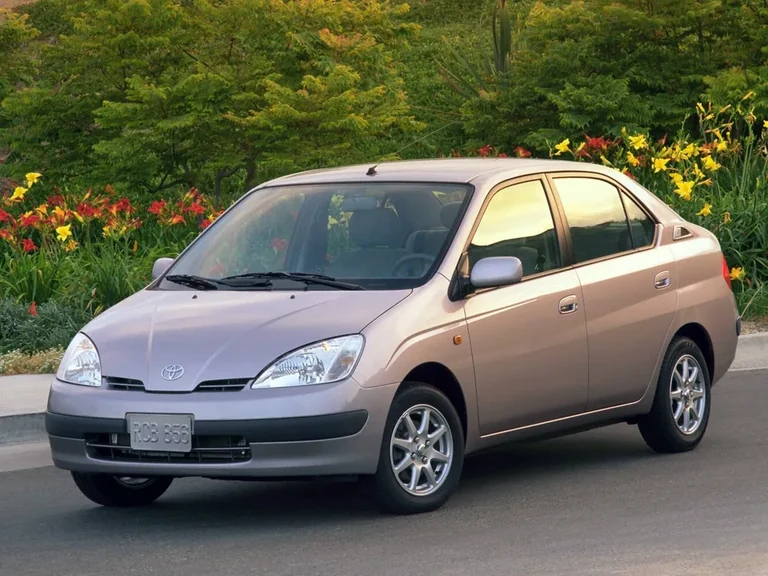
The first Prius was released in Japan at the end of 1997 as a four-door sedan with the THS system – Toyota Hybrid System. The one-and-a-half-liter 1NZ-FXE, created specifically for the hybrid, produced 43 kW (58 hp) at 4,000 rpm, the electric motor – 30 kW (41 hp), and the battery was nickel-metal hydride. Toyota did not chase recoil: the calculation was on thermal efficiency, and in 10·15 mode, the car showed 28 km/l – about twice as good as the usual petrol automatic of those years, according to Toyota itself. The body code of these cars is HK-NHW10.
In May 2000, an update arrived, and with it a new code ZA-NHW11. The engine was raised to 53 kW (72 hp) at 4,500 rpm and 115 Nm, the 2CM engine – up to 33 kW (45 hp) with 350 Nm, electric travel became possible up to 65 km/h instead of 45, consumption by 10 · 15 improved to 29.0 km/l. At the same time, the G version appeared in addition to the S. Both figures of the engine, 58 and 72 hp, refer to the same 1NZ-FXE engine – these are different years, not different versions.
NHW20, 2003–2011: THS II and the first “system” power
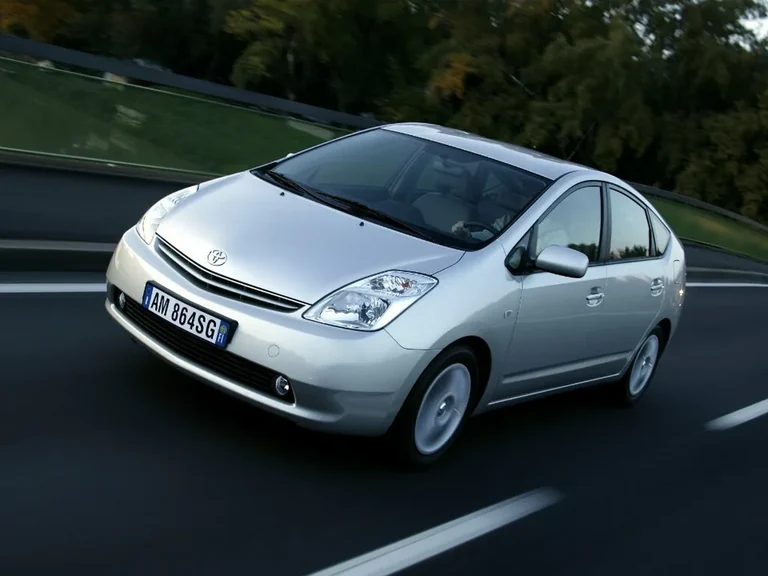
The second generation went on sale on September 1, 2003 and changed the body to a five-door hatchback. The system became known as the THS II: thanks to the AC system, the engine produced 50 kW (68 hp) and 400 Nm – about one and a half times more than the previous one – and the 1NZ-FXE engine grew to 57 kW (77 hp) at 5,000 rpm. It was then that a separate line “system power” first appeared in Toyota’s materials: 82 kW (111 hp) for the new car versus 74 kW (101 hp) for the previous one. In a footnote, Toyota directly called it the calculated value – what the engine and engine are able to produce together – and tied it to speed, from 85 km/h and above. A simple addition of 77 and 68 gives a different number, and this is the first thing to remember when looking at the ad. The battery is nickel-metal hydride, consumption of 10 × 15 – 35.5 km/l.
The November 2005 update changed the appearance and equipment, but not the power plant. In the catalog entries, cars before 2007 are listed with 77 hp, and later ones with 76 hp (56 kW); the engine is the same 1NZ-FXE. The body code for all is NHW20, the prefix ZA- for the first cars and DAA- for the later ones. After the release of the third generation, the second did not disappear immediately: in the NHW20 catalog in the EX version is dated until December 2011, so the second and third generations were sold in parallel for two and a half years.
ZVW30, 2009-2015: 1.8 liters and 136 hp system
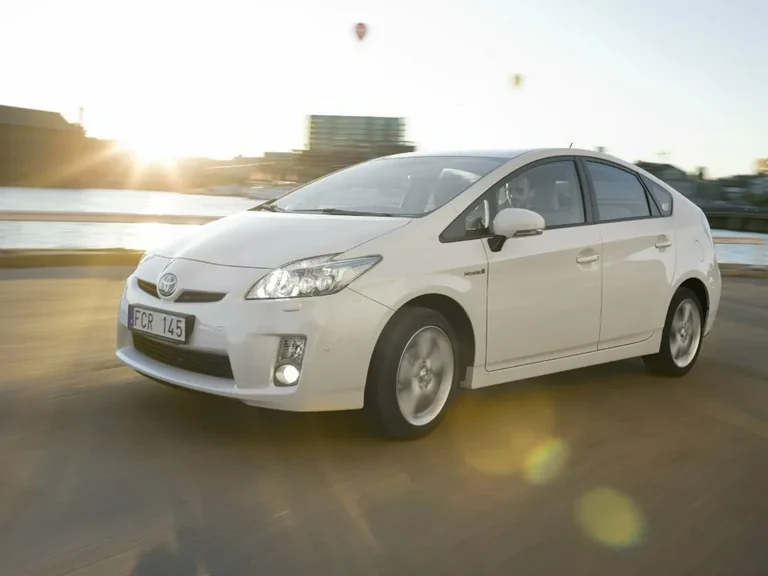
The third generation was sold from May 18, 2009 and received a new engine – a 1.8-liter 2ZR-FXE with 73 kW (99 hp) at 5,200 rpm and 142 Nm. The engine became more compact and faster, and a reduction gearbox appeared between it and the wheels: hence the official name of the system – THS II with a reduction mechanism. The output of the motor is 60 kW (82 hp) and 207 Nm, the voltage of the system is raised by a step-up converter to 650 V. Toyota called the power of the system 100 kW (136 hp), again with a note about its own calculation methodology, and compared the dynamics with 2.4-liter cars. The battery is still nickel-metal hydride, consumption is 38.0 km/l at 10·15 and 32.6 km/l at JC08. Front-wheel drive only, the body code is the same for the entire generation – DAA-ZVW30.
The update, which went on sale on December 19, 2011, affected the exterior, noise insulation and rigidity of the body; the engine, motor and battery remained the same, so in terms of power, the pre-restyled and updated ZVW30 are indistinguishable.
ZVW50, ZVW51 and ZVW55, 2015-2023: TNGA, two batteries and the first all-wheel drive
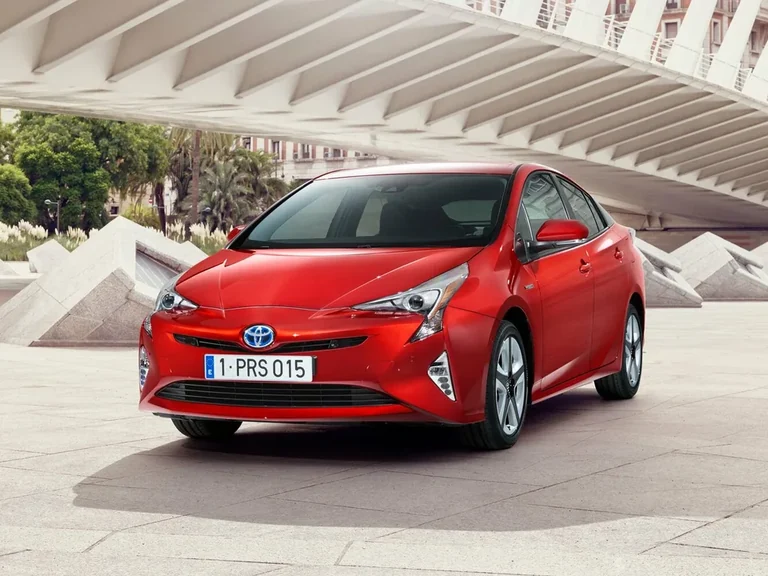
The fourth generation was released on December 9, 2015 and was the first car on the TNGA platform. The engine remained the 1.8-liter 2ZR-FXE, but redesigned: 72 kW (98 hp) at 5,200 rpm, 142 Nm and Toyota’s declared maximum thermal efficiency of 40%. The front engine of the 1NM is 53 kW (72 hp) and 163 Nm. The main news is that for the first time in the history of the model, the E-Four all-wheel drive appeared: on the rear axle there is a separate 1MM induction motor with 5.3 kW (7.2 hp) and 55 Nm, which helps to start on snow; on dry asphalt, it is still a front-wheel drive car. The battery was moved under the rear seat, the trunk grew, and the most economical E variant showed 40.8 km/l on the JC08 against 37.2 for the rest of the front-wheel drive and 34.0 for the E-Four.
Then something begins that no other generation has: there are two different batteries in the same model range, and you can distinguish them by body code. The 3.6 Ah lithium-ion was on the front-wheel drive A, A Premium and E – this is the ZVW51. The 6.5 Ah nickel-metal hydride was on the front-wheel drive S – this is the ZVW50 – and on all E-Fours, which have the code ZVW55. The December 17, 2018 update changed the appearance, made the Toyota Safety Sense standard and added a coherent DCM module, and at the same time simplified the scheme: in the spec sheets after the update, all front-wheel drive versions come as the ZVW51 with a lithium-ion battery, the E-Four remains the ZVW55 with a nickel-metal hydride, and the E version is still only front-wheel drive. By 2021, the prefix had changed from DAA- to 6AA-: in the June 2021 specification sheet, the same ZVW51 and ZVW55 are already recorded with it, and in the December 2018 list, even with DAA-. There is no line “system power” in the specification sheets of this generation: the engine and motor are written separately.
ZVW60 and MXWH60, from 2023: 1.8 or 2.0, all-wheel drive on both
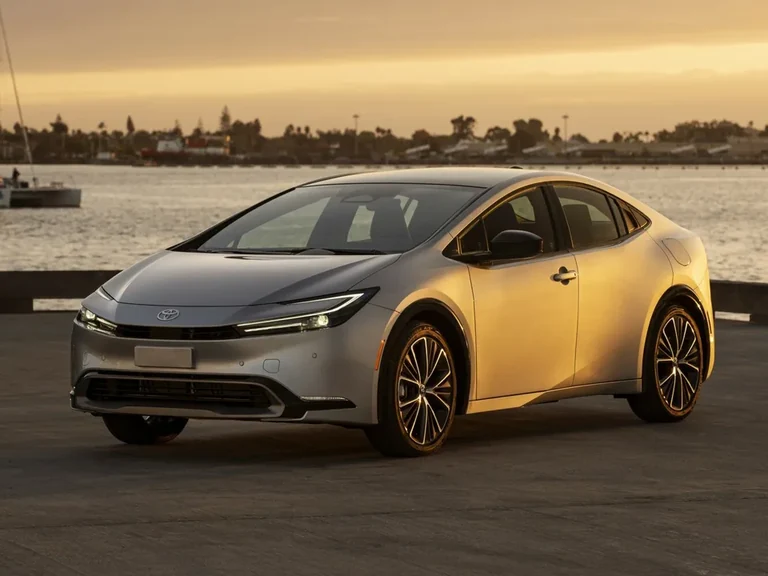
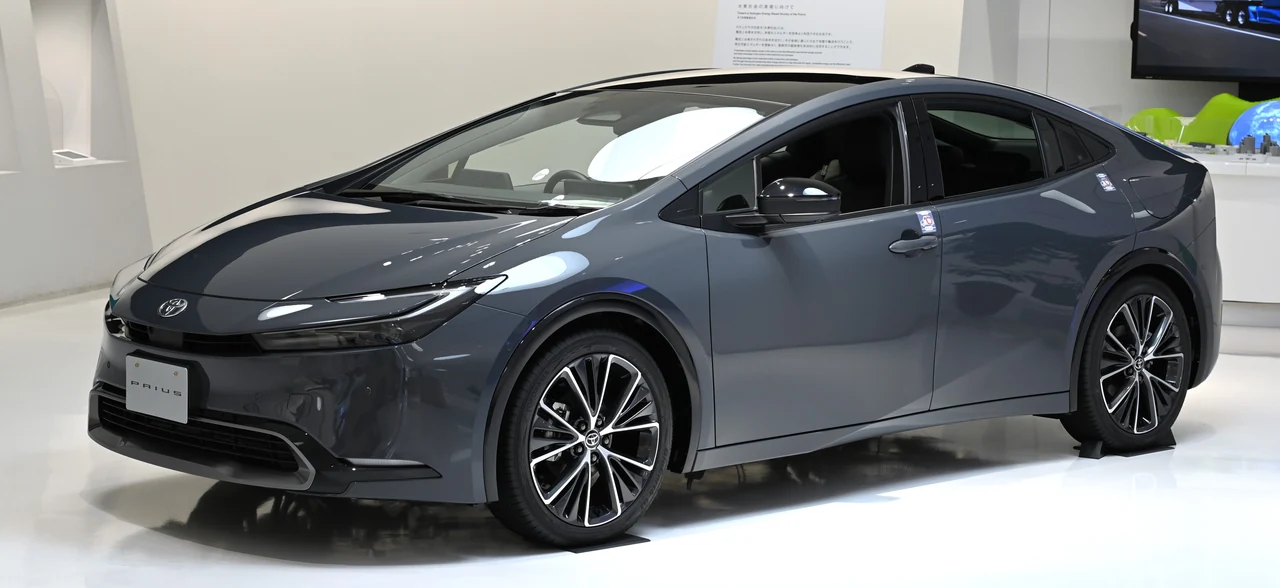
The fifth generation was shown in November 2022, sales of conventional hybrids began on January 10, 2023. For the first time, the Prius has two engines to choose from. The U and X versions are the former 1.8-liter 2ZR-FXE at 72 kW (98 hp) with a new 1VM front engine with 70 kW (95 hp) and 185 Nm, body code ZVW60, with all-wheel drive – ZVW65. The G and Z versions are a two-liter M20A-FXS with 112 kW (152 hp) at 6,000 rpm and 188 Nm with the same 1VM engine, but in a setting of 83 kW (113 hp) and 206 Nm; code MXWH60, with all-wheel drive – MXWH65. For the two-liter car, Toyota called the system power 144 kW (196 hp) – 1.6 times more than its predecessor; for the 1.8, the total figure is not given either in the release or in the list of characteristics. The E-Four is now available with both 1.8 and 2.0, and the rear engine of the 1WM produces 30 kW (41 hp) and 84 Nm instead of the previous 5.3 kW. The battery of all conventional hybrids is lithium-ion at 4.08 Ah, WLTC consumption is 28.6 km/l for the 2.0 (26.7 for the E-Four) and 32.6 for the 1.8 (30.7 for the E-Four).
The rechargeable Prius in this generation returned under a common name: the PHEV in the Z version has been sold since March 15, 2023, only with front-wheel drive, with the code MXWH61 and a system power of 164 kW (223 hp); in the catalog, it, like the previous Prius PHV, is listed as a separate model. The July 2025 improvement added a digital interior mirror and a 12.3-inch screen to the Z version, the July 2026 improvement added adaptive high beams and SNOW EXTRA mode. In the July 2026 specification list, the two-liter engine has 114 kW (155 hp) instead of 112 (152), the PHEV has 113 kW (154 hp) instead of 111 (151); the engines have not changed. Therefore, in the catalog records, the same M20A-FXS is found with both 152 and 155 hp – according to the year of manufacture, and not according to the version.
Engine, motor and system: three different numbers
The ads for the Prius mix three different characteristics: the power of the petrol engine, the power of the electric motor and the power of the hybrid system declared by Toyota. Engine power – the line “maximum engine power” in the list of characteristics: 58, 72, 77, 99, 98, 152 or 155 hp. depending on the generation and year. Engine power is recorded in a separate line and it is impossible to add it to the engine: in the fifth generation, 152 plus 113 is not equal to the declared 196. Power system is the estimated value of Toyota, which appears in releases and catalogs not for each generation and not for each version: 111 hp for the NHW20, 136 for the ZVW30, 196 for the two-liter fifth generation, and for the fourth generation and for the 1.8 fifth, it is not in the specification sheets or in the releases. Which of the numbers goes into the documents and calculations when importing is analyzed in the article “Hybrid power from Japan”; one thing is important here – you can only compare cars with each other on the same lines.
What to check for a specific car
The body code of the Prius says more than usual. NHW10 and NHW11 are the first generation, 58 and 72 hp, respectively. NHW20 is the second, 77 hp and a 68 hp engine. ZVW30 is the third, 1.8 liters and 136 hp system. In the fourth generation, the code names the battery and drive: ZVW51 – Li-ion, front-wheel drive; ZVW50 – NiMH version of the S before the 2018 update; ZVW55 – E-Four with a NiMH battery. In the fifth generation, the code names the engine and drive: ZVW60 and ZVW65 – 1.8, MXWH60 and MXWH65 – 2.0, the second digit 5 means E-Four, and MXWH61 is a rechargeable hybrid. The prefix before the code (HK-, ZA-, DAA-, 6AA-, 6LA-) indicates the environmental category, how the code is arranged as a whole – in the article “Japanese car body code”. Engine power in documents is looked at by the line of the characteristics sheet, and not by the number from the ad.
Versions by year are collected in the Toyota Prius catalog: 2004 – NHW20 with THS II, 2010 – ZVW30, 2016 – ZVW50/51/55 with the first E-Four, 2023 – fifth generation with two engines; summary characteristics – on the characteristics page. The condition of the selected car and its battery is checked separately, the order is described in the article “What we check before bidding”, and the service of ordering a car from Japan helps to choose a car.