Toyota Harrier: how to choose a generation and distinguish petrol from hybrid
Toyota Harrier has been sold in Japan since December 1997, and to date, the model has four generations: XU10 (1997-2003), XU30 (2003-2013), XU60 (2013-2020) and the current, fourth, since 2020. The second generation had a left-hand drive twin Lexus RX, Toyota developed the third as a purely internal model, and the fourth since 2021 has been assembled in China with left-hand drive – this version has nothing to do with Japanese cars from auctions. The fastest generation and engine type are determined by the full body code from the auction sheet, checked with the table below: Harrier has one engine assigned to each code, and the all-wheel drive version differs from the front-wheel drive version by one digit inside the proven pair – ACU30W and ACU35W, ZSU60W and ZSU65W. Hybrids go under their own codes: MHU38W and AVU65W were produced only with electric all-wheel drive E-Four and do not have pairs, and the front-wheel drive hybrid AXUH80 appeared only in 2020 next to the all-wheel drive AXUH85. Next in order: what Toyota changed from release to release, what engines and gearboxes went to each generation and on what grounds the hybrid differs from the petrol version in the ad. All generations, codes and versions are collected in the Harrier catalog.
Harrier Body Generations & Codes
| Series | Years | Body codes | Engines | Transmission |
|---|---|---|---|---|
| XU10 | 1997–2000 | SXU10W/15W, MCU10W/15W | 2.2 l 5S-FE, 140 hp; 3.0 l V6 1MZ-FE, 220 hp | 4AT |
| XU10 after update | 2000–2003 | ACU10W/15W, MCU10W/15W | 2.4 l 2AZ-FE, 160 hp; 3.0 l V6 1MZ-FE, 220 hp | 4AT |
| XU30 | 2003–2013 | ACU30W/35W, MCU30W/35W, GSU30W/35W, MHU38W | 2.4 l 2AZ-FE, 160 hp; 3.0 l V6 1MZ-FE, 220 hp (until 2006); 3.5 l V6 2GR-FE, 280 hp (since 2006); hybrid 3.3 l V6 3MZ-FE + THS II (since 2005) | 4AT for 2.4 l; 5AT for V6; CVT for hybrid |
| XU60 | 2013–2017 | ZSU60W/65W, AVU65W | 2.0 l 3ZR-FAE, 151 hp; hybrid 2.5 l 2AR-FXE + THS II, E-Four only | CVT |
| XU60 after update | 2017–2020 | ZSU60W/65W, ASU60W/65W, AVU65W | the same plus 2.0 liter turbo 8AR-FTS, 231 hp. | CVT; 6AT in turbo |
| Fourth | since 2020 | MXUA80/85, AXUH80/85, AXUP85 | 2.0 L M20A-FKS, 171 hp; 2.5 L A25A-FXS + THS II hybrid; plug-in hybrid (from 10.2022) | CVT Direct Shift-CVT; e-CVT in hybrids |
How to read the Harrier body code
In Japanese documents, the Harrier body code is written as an emission class prefix, letters, numbers and the letter W: for example, DBA-ZSU60W or 6AA-AXUH85. The prefix – GF-, TA-, UA-, CBA-, DBA-, DAA-, 6BA-, 6AA-, 6LA- – changes along with emission standards and does not indicate the generation, so you need to compare the part after the hyphen. There is no universal reading rule here, it is more reliable to check the full code with the table of a particular generation; according to the catalog of correspondence, they are as follows. First generation: SXU10W and SXU15W – 2.2 l 5S-FE, MCU10W and MCU15W – 3.0 l 1MZ-FE, after the 2000 update ACU10W and ACU15W – 2.4 l 2AZ-FE. Second: ACU30W and ACU35W – 2.4 l 2AZ-FE, MCU30W and MCU35W (MCU31W and MCU36W are also found) – 3.0 l 1MZ-FE, GSU30W and GSU35W (also GSU31W and GSU36W) – 3.5 l 2GR-FE, MHU38W – 3.3 l 3MZ-FE hybrid. Third: ZSU60W and ZSU65W – 2.0 l 3ZR-FAE, ASU60W and ASU65W – 2.0 l turbo 8AR-FTS, AVU65W – 2.5 l hybrid 2AR-FXE. Fourth: MXUA80 and MXUA85 – 2.0 L M20A-FKS, AXUH80 and AXUH85 – 2.5 L A25A-FXS hybrid, AXUP85 – plug-in hybrid. In pairs with numbers 10 and 15, 30 and 35, 60 and 65, 80 and 85, the first code is front-wheel drive, the second is all-wheel drive, and they differ only in one digit: ACU30W vs ACU35W, ZSU60W vs ZSU65W, MXUA80 vs MXUA85. The second and third generation hybrids do not fit into this scheme: the MHU38W is a separate code that exists only with the E-Four, without a front-wheel drive version, and the AVU65W also does not have a pair – there is no front-wheel drive hybrid in the third generation. The first hybrid with a choice of drive was the fourth generation – AXUH80 and AXUH85, and the plug-in AXUP85 is again produced only with the E-Four. Each code in the catalog has its own page — ACU30W, MHU38W, AVU65W, AXUH80 and others — and where to look for the code field in the auction sheet and documents, a separate article explains.
XU10, 1997–2003: Toyota’s first “expensive crossover”
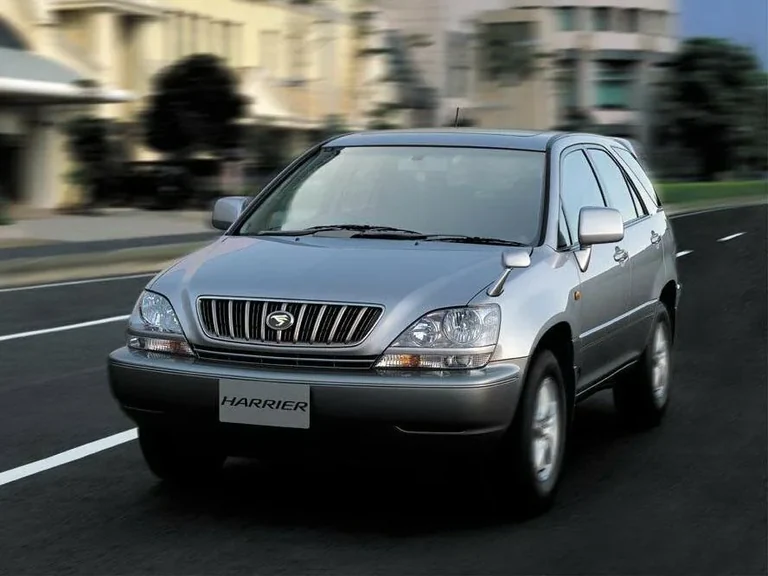
The first Harrier was released on December 25, 1997, and Toyota called it a car of a new genre in the very title of the release – an expensive SUV car with the habits of a sedan. It was sold through the Toyopet network. There were two engines: a 2.2 L 5S-FE 140 hp inline four in the SXU10W and SXU15W body and a V6 3.0 L 1MZ-FE with 220 hp in the MCU10W and MCU15W, both with a four-speed automatic transmission. In November 2000, Harrier was updated: the 2.2 L four was replaced with a 2.4 L 2AZ-FE of the BEAMS series – 160 hp, or 118 kW in the release record, The grille and taillights were changed, and the model was assigned to the Toyopet as exclusive. This is how the ACU10W and ACU15W codes appeared; the three-liter MCU10W and MCU15W remained. These are the oldest Harriers, and when choosing, the condition of a particular example is more important than the differences between versions. Generation pages in the catalog: 1997–2000 and 2000–2003.
XU30, 2003–2013: ten years, four petrol engines and the first hybrid
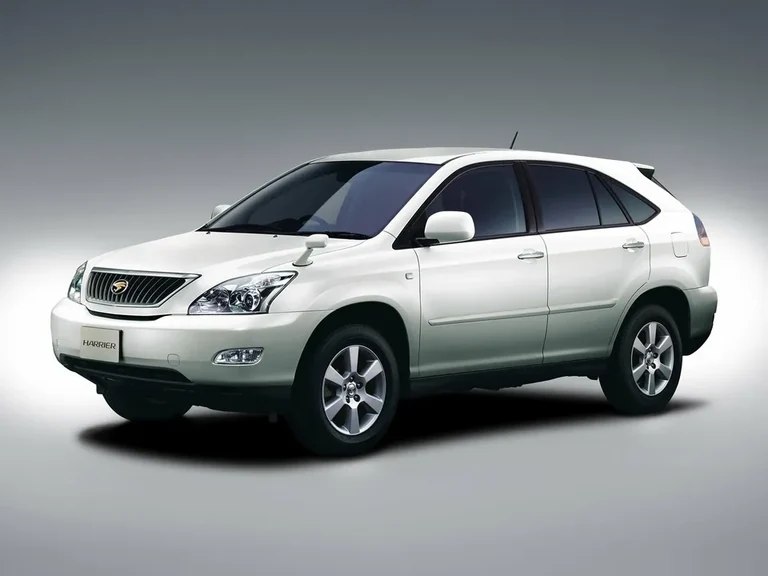
Toyota introduced the second generation on February 17, 2003; outside Japan, the same left-hand drive car was sold as the Lexus RX, and its hybrid as the RX 400h. The release focused on handling: the new AIRS air suspension with automatic ground clearance and altitude modes, 235/55R18 and 225/65R17 tyres on alloy wheels in all versions, all-wheel drive with a 50:50 distribution, 3.0 liters supplemented with VSC and TRC systems, and 2.4 liters with viscous coupling in the center differential. Here, for the first time in the world, the Pre-Crash Safety radar system appeared. The engines were transferred from its predecessor: 2.4 liters 2AZ-FE with 160 hp. with a four-speed automatic transmission in the ACU30W and ACU35W bodies and 3.0 liters 1MZ-FE with 220 hp. with a five-speed in MCU30W and MCU35W. The catalog pages show that some three-liter cars carry the codes MCU31W and MCU36W – this is the same engine in a different version, not a separate one.
On March 22, 2005, the Harrier Hybrid was released: a V6 3.3 liter 3MZ-FE, a THS II hybrid system with a front electric motor and an E-Four rear electric motor, that is, only all-wheel drive, body code MHU38W. Toyota claimed a consumption of 17.8 km/l on the old Japanese 10·15 cycle and a sales target of 500 cars per month – four times less than for the updated Harrier in 2000. This car has an internal combustion engine power of 211 hp. according to the catalog, and the full output consists of the engine and electric cars, so it is impossible to compare it with petrol versions by one figure; why so, explains an article about the power of a hybrid from Japan. On January 10, 2006, the three-liter engine was replaced with a 3.5 liter 2GR-FE (280 hp according to the catalog) with a five-speed automatic transmission – these are the GSU30W and GSU35W bodies and the 350G versions, and the 2.4 liter remained as a 240G with a four-speed transmission. The second generation lasted until the summer of 2013, longer than all the others, so in the ads it accounts for the widest range of years and mileage. In the catalogue it has a page of its own, and the hybrid has the page of the MHU38W code.
XU60, 2013–2020: Indoor model, 2.0 L and 2.5 L hybrid
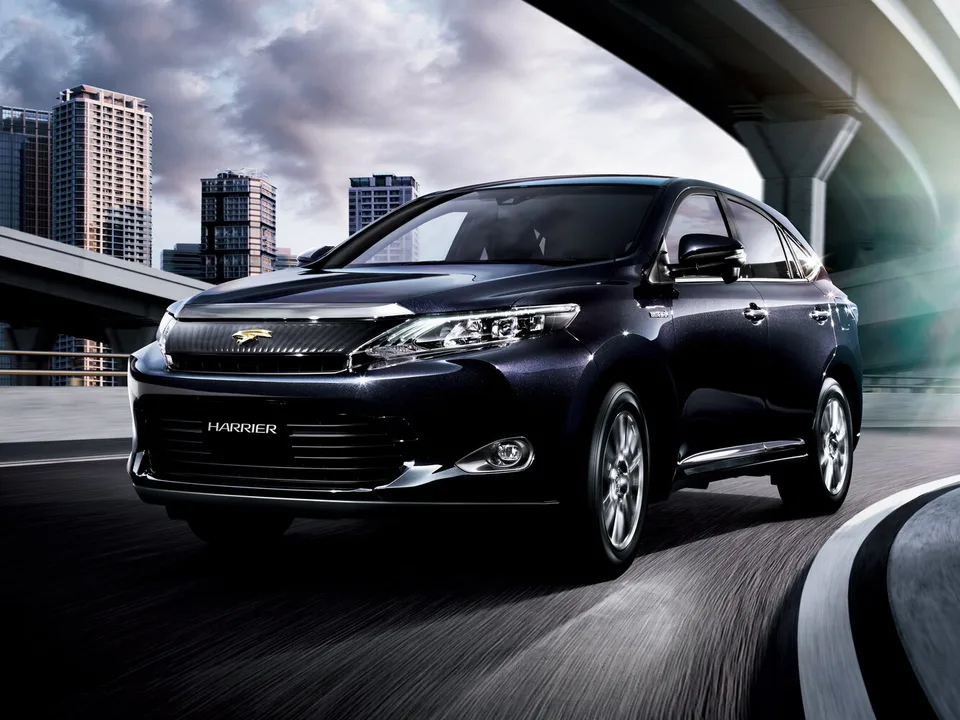
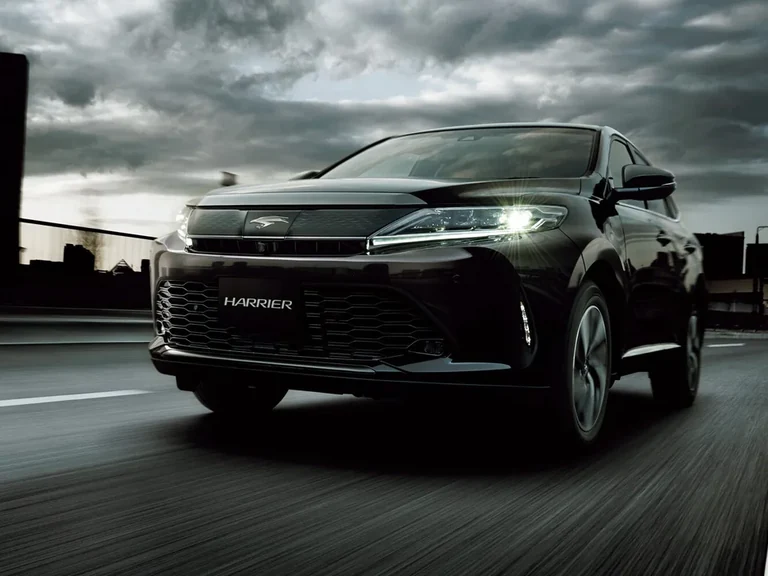
Toyota announced the third generation on November 13, 2013 and directly called it a model for the domestic market: sales of petrol versions began on December 2, hybrid – on January 15, 2014. The line has become simpler and more economical. Petrol 2.0 l 3ZR-FAE with Valvematic system and Super CVT-i CVT gave 16.0 km / l on the JC08 cycle in the front-wheel drive version, the all-wheel drive had a plug-in all-wheel drive Dynamic Torque Control; these are ZSU60W and ZSU65W bodies, 151 hp. according to the catalog. The hybrid received 2.5 liters of 2AR-FXE with THS II and E-Four, 21.8 km / l according to JC08, and again only all-wheel drive – code AVU65W, there is no front-wheel drive hybrid in this generation. The trim levels were called GRAND, ELEGANCE, PREMIUM and PREMIUM Advanced Package.
On June 8, 2017, the model was updated and a third engine was added: 2.0 liters with direct injection and turbocharging 8AR-FTS, 231 hp. according to the catalog, paired with a six-speed automatic transmission 6 Super ECT – the only version in this generation with classic hydromechanics, ASU60W and ASU65W bodies. At the same time the Toyota Safety Sense P package appeared in the equipment, and the trim levels were renamed to ELEGANCE, PREMIUM and PROGRESS. The turbo version is most easily identified by the ASU code and by the automatic instead of the CVT. Both third-generation phases are in the catalog: 2013-2017 and 2017-2020.
Fourth generation, from 2020: TNGA, front-wheel drive hybrid and PHEV
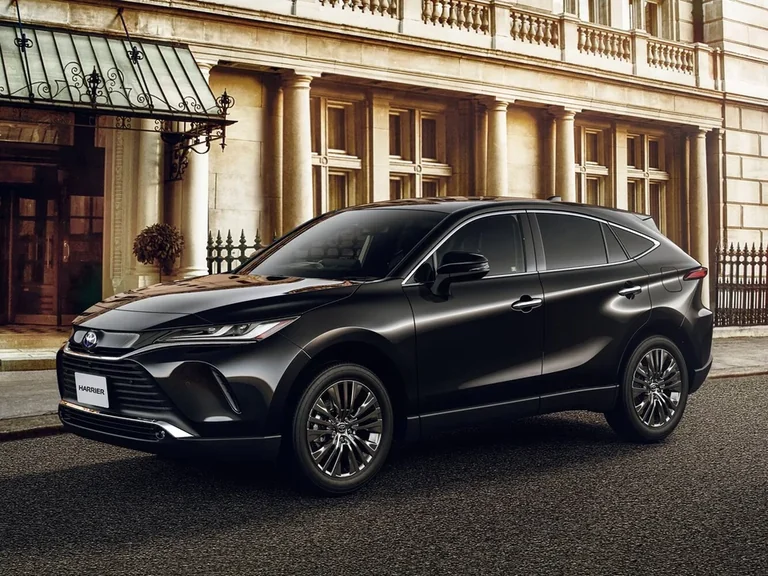
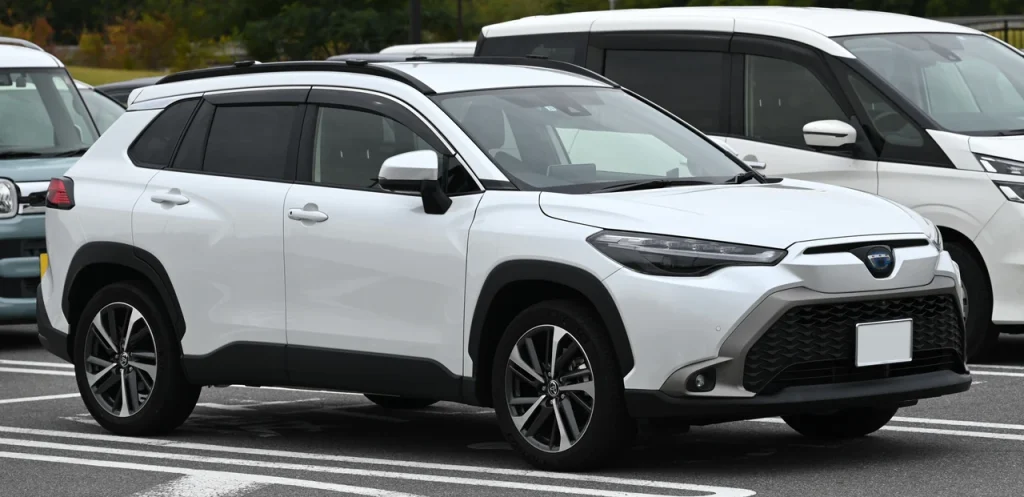
The current Harrier was shown on April 13, 2020, with sales starting on June 17. The car switched to the TNGA GA-K platform, grew to 4740 mm in length and 1855 mm in width with a height of 1660 mm and a base of 2690 mm. Petrol version – 2.0 l M20A-FKS series Dynamic Force (171 hp according to the catalog) with a Direct Shift-CVT CVT, 15.4 km / l according to the WLTC cycle for front-wheel drive and 14.7 for all-wheel drive, MXUA80 and MXUA85 bodies. Hybrid – 2.5 liters A25A-FXS with THS II: the all-wheel drive AXUH85 with the E-Four shows 21.6 km/l, and the new front-wheel drive AXUH80 shows 22.3 km/l; it was from this generation that the hybrid Harrier ceased to be only all-wheel drive. The hybrids have a 1500 watt AC100V household outlet. Trim levels are S, G and Z, and launch prices range from 2,990,000 to 5,040,000 yen. On September 26, 2022, Toyota added a plug-in hybrid in the Z trim level: the same 2.5-liter A25A-FXS, E-Four, a total system power of 306 hp (225 kW) and an 18.1 kWh battery, sales from October 31, body code AXUP85. Regular versions were then improved in June 2025 and August 2026.
There is one trap associated with this generation. Since November 2021, the Harrier has been produced in China, at the FAW plant, with left-hand drive and its own engine indexes M20D-FKS and A25F-FXS. In the catalog, the Chinese car is highlighted in a separate line; it does not appear at Japanese auctions: only right-hand drive and MXUA and AXUH codes with the prefixes 6BA- and 6AA- are sold there. The page of the Japanese fourth generation is in the catalog; how to distinguish the markets of the same model in general is described in the article about the generation and the market of the Japanese car.
How to distinguish petrol from hybrid in an ad
The most reliable is the full body code in the auction sheet, checked against the generation table: Harrier hybrids are MHU38W, AVU65W, AXUH80, AXUH85 and plug-in AXUP85, all other codes from the table are petrol. The second feature is the drive: the hybrid XU30 and XU60 exists only with the E-Four, and if the seller describes a front-wheel drive hybrid of these generations, there is a mistake in the description. The third is the gearbox: hybrids always have electromechanical CVT without stages, petrol XU60 and fourth-generation have a CVT, the 2017-2020 turbo version has a six-speed automatic transmission, and the XU10 and XU30 have a four- or five-speed transmission. Finally, in the characteristics of the hybrid, Japanese sources usually indicate the power of the internal combustion engine, not the system, and 152 hp in the AVU65W does not mean, that the car is slower than the 151-horsepower ZSU60W.
What to choose
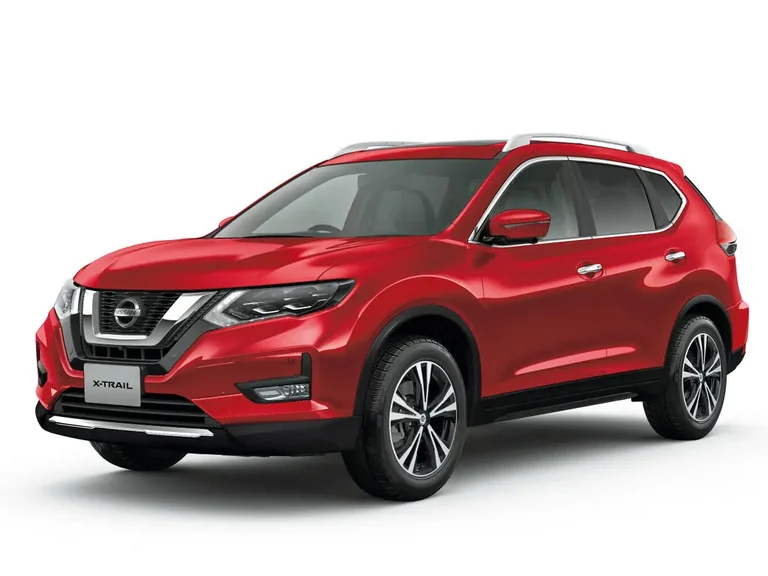
If you need the simplest and most predictable Harrier, this is the second-generation ACU30W 2.4-liter petrol ACU30W and ACU35W: a four-speed automatic transmission and a common 2AZ-FE engine, which was also installed on other Toyota models of those years. The 3.0 and 3.5-liter V6 gives noticeably more traction, but is noticeably heavier in tax and consumption. The MHU38W hybrid is interesting as a rarity and a powerful version, but these are cars from 2005-2013 with a high-voltage battery of the appropriate age, and the condition of the battery should be checked separately, and not by mileage. The third generation is the middle of the line in terms of age and price: 2.0 liters with a CVT for the city, AVU65W for economy and winter, ASU60W for those who care about dynamics. The fourth generation is the most modern and the most expensive, here the front-wheel drive hybrid AXUH80 has become a reasonable compromise between consumption and price. If the Harrier seems large, you should look at the analysis of the Toyota Corolla Cross, and if all-wheel drive in the snow is important, you should look at the article about Japanese Nissan X-Trail and a selection of all-wheel drive cars from Japan. All the hybrids in the catalogue are gathered on the page of hybrids from Japan.