Daihatsu Tanto: Generations, Engines and Custom Differences
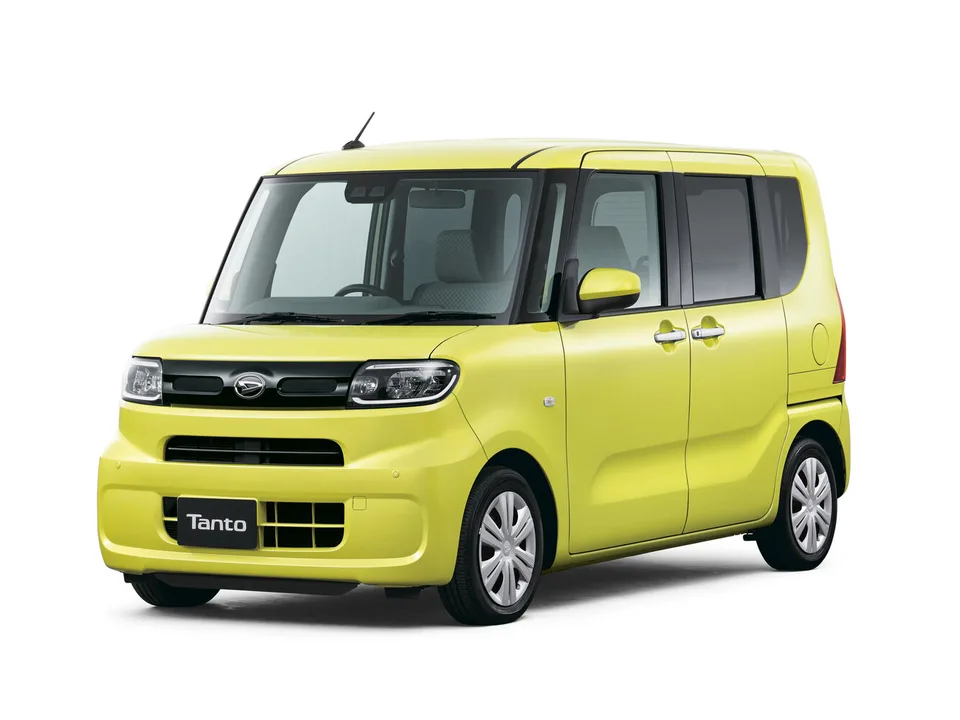
The Daihatsu Tanto is the tall kei car with which Daihatsu began the class of “super-tall” kei cars in November 2003, and one of the most mass-produced Japanese cars: by the end of May 2025, three million Tantos had been sold in Japan. There are four generations – L350S (2003-2007), L375S (2007-2013), LA600S (2013-2019) and LA650S from 2019, each has an all-wheel drive pair with a different code. The engine is always 0.66 liters for three cylinders, naturally aspirated or turbocharged, and the main choice at auction is a regular Tanto or Tanto Custom: this is the same car with a different front end, a different interior, and in some years a single line with a turbo engine. Below is what has changed with Daihatsu releases, how to read the code, and how Custom differs in practice. All generations, codes, and versions are collected in the Tanto catalog.
Tanto Generations & Body Codes
| Generation | Years | Code 2WD / 4WD | Engine | Transmission | Turbo |
|---|---|---|---|---|---|
| 1st | 2003–2007 | L350S / L360S | EF-VE, 58 hp; EF-DET turbo, 64 hp | 4AT; for atmospheric 4WD — 3AT | R, RS, Custom RS |
| 2nd | 2007–2013 | L375S / L385S | KF-VE, 58 hp, later KF at 52 hp; KF-DET turbo, 64 hp | 4AT or CVT; turbo – CVT | Custom Only (RS) |
| 3rd | 2013–2019 | LA600S / LA610S | KF, 52 hp; turbo KF, 64 hp | CVT | Custom RS, from December 2013 X Turbo |
| 4th | since 2019 | LA650S / LA660S | KF, 52 hp; turbo KF, 64 hp | D-CVT CVT | X Turbo, Custom RS, since 2022 FunCross Turbo |
How to Read Tanto Body Code
In Japanese documents, the code comes with the prefix emission class – UA-L350S, CBA-L350S, DBA-L375S, DBA-LA600S, 5BA-LA650S, 6BA-LA650S; the prefix changes along with the norms, and the generation is read in part after the hyphen. Tanto’s code is the same in all generations: the letters L or LA, three digits and S. Front-wheel drive and all-wheel drive differ not in the position of the sign, but in a pair of codes that are easier to remember in full: L350S and L360S in the first generation, L375S and L385S in the second, LA600S and LA610S in the third, LA650S and LA660S in the fourth – in each pair the first code is front-wheel drive, the second is all-wheel drive. The last two characters of the pair are the same, so the drive is not readable by the tail of the code. If the catalog data differs from the documents of a particular car, the drive must be clarified according to the documents. The engine is not readable by the code: under one LA600S there are both naturally aspirated KF and turbo. Custom also does not have its own code, it is recognized by the name of the version in the lot and by its appearance. There is also a trap with a similar name: Tanto Exe, which Daihatsu has been selling since December 2009 and has already been discontinued, is a separate model with ordinary doors, and it has its own page in the catalog. Code pages: L350S, L375S, LA600S, LA650S; where to look for the code field in the auction sheet is discussed in a separate article.
First generation, 2003–2007: L350S and L360S

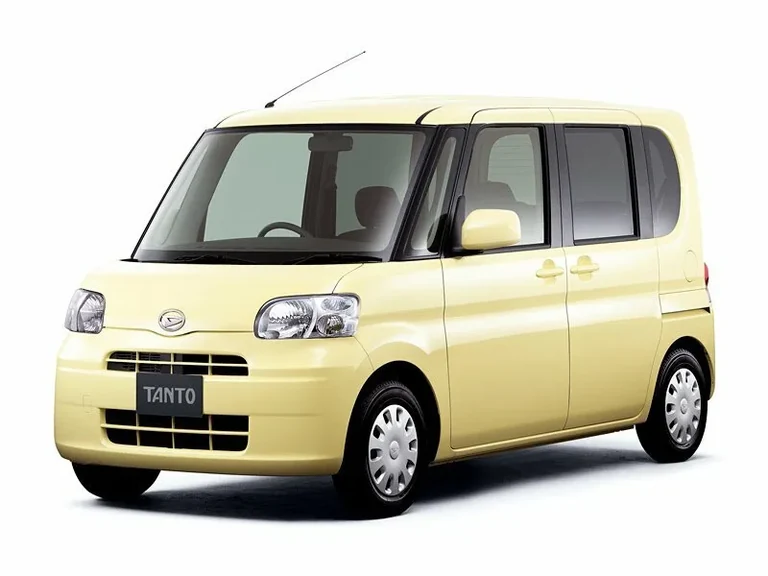
Tanto was released on November 27, 2003 and immediately set the formula for the model: the longest wheelbase in the class of 2440 mm and the interior length of 2000 mm, like a mid-range sedan, with the usual external dimensions for a kei car. Engines – naturally aspirated EF-VE with variable phases at 43 kW (58 hp) at 7600 rpm and turbocharged EF-DET with 47 kW (64 hp) at 6400 rpm with a torque of 103 Nm. Naturally aspirated versions were called L, X and X Limited, turbocharged versions – R and RS, they had an electronic four-speed ESAT gearbox. According to the catalog, all-wheel drive naturally aspirated cars came with a three-speed automatic transmission, Custom versions with their own grille and design appeared already in this generation: they have been listed in the catalog since 2005. The rear doors here are still hinged. The generation page is in the catalogue.
Second generation, 2007–2013: L375S and L385S
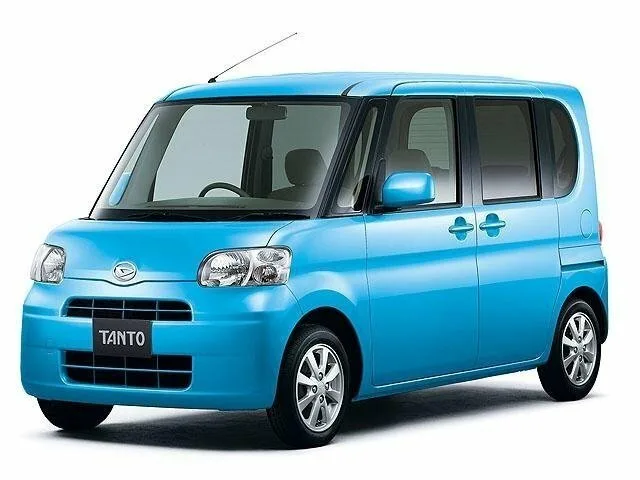
The second Tanto went on sale on December 17, 2007 and brought the main feature of the model – the Miracle Open Door: there is no middle pillar on the passenger side, it is hidden in the door, and the rear door has become sliding; for a kei car, this was the first time, and the opening on this side reached 1480 mm. The base grew to 2490 mm, the cabin – 2160 mm in length, 1350 in width and 1355 in height. Custom, which has been listed in the catalog since 2005, has been preserved in the second generation: the 2007 release of Daihatsu describes the regular Tanto for families with children and the Tanto Custom with a sharper appearance as two versions of the same model. Engines of the new KF series: naturally aspirated KF-VE and turbocharged KF-DET, according to the catalog 58 and 64 hp, and the turbo was installed only on Custom and worked with a new CVT, and naturally aspirated cars came with a four-speed automatic transmission or CVT; a bundle of KF-VE and a CVT gave the declared 20.5 km/l. The electric drive of the left sliding door was standard, including the X Limited, Custom X Limited and Custom RS. Versions with a 52 hp KF engine later appear in the catalog – this is an updated engine of the same generation, so when choosing, it is worth looking at the year of manufacture. The generation page is in the catalog.
Third generation, 2013-2019: LA600S and LA610S
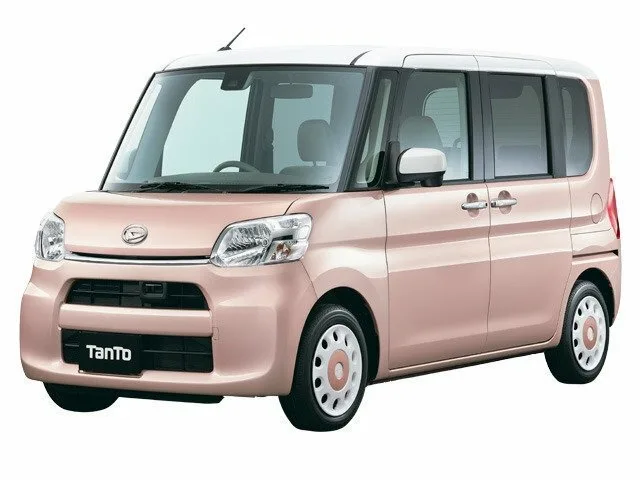
The third Tanto has been on sale since October 3, 2013. The hood, front fenders, tailgate, tank hatch and rail trims are made of plastic – this gave about 10 kg of savings, and the entire front part is made of plastic better protects the pedestrian. Electric sliding doors on both sides became standard on G and Custom RS, and on X and Custom X on the left and right for an additional fee. The Smart Assist complex with automatic braking was offered on all versions, they were marked with the letters SA in the name. The declared consumption of the atmospheric car is 28.0 km/l according to JC08. The gearbox is now only a CVT, the versions at the start are L, X, G, Custom X and Custom RS, the sales plan is 12,000 cars per month. On December 12, 2013, the turbo ceased to be a privilege of Custom: the X Turbo and X Turbo SA with a chrome grille and fog lights appeared.
The December 14, 2015 update gave the Custom a large aerodynamic bumper and chrome on the tailgate, a Top Edition SAII version and a Tanto X White Accent SAII version with white accents; in the catalog, the phase after the update goes separately, the codes remain the same. In the catalog, both engines here are KF, 52 hp naturally aspirated and 64 hp turbo. The phase pages are 2013-2015 and 2015-2019.
Fourth generation, from 2019: LA650S and LA660S
The fourth Tanto was released on July 9, 2019 as the first model on the new DNGA architecture: the platform was redesigned, the bending rigidity of the body increased by about 30%, the frame became lighter by about 40 kg, the suspension became another 10 kg, and the floor dropped by 16 mm. The D-CVT CVT with separate transmission of torque through the belt and gears transmits torque more efficiently at high speed by about 8%, and the range of gear ratios has been expanded from 5.3 to 7.3. The driver’s seat can be moved by 540 mm, which allows you to exit through the pillarless opening on the passenger side and go back to the child – Daihatsu called it Miracle Walk-Through. The new generation Smart Assist complex has 15 functions, including the first kei car parking assist on the camera. Starting versions: L, X, X Turbo, Custom L, Custom X and Custom RS; prices range from 1,220,400 to 1,873,800 yen. According to the catalog, the naturally aspirated KF delivers 52 hp at 6900 rpm, and the turbo 64 hp at 6400 rpm; in the first years, most turbo versions have the prefix 5BA, atmospheric versions have 6BA, after the 2022 update, all go as 5BA. The generation page is in the catalog.
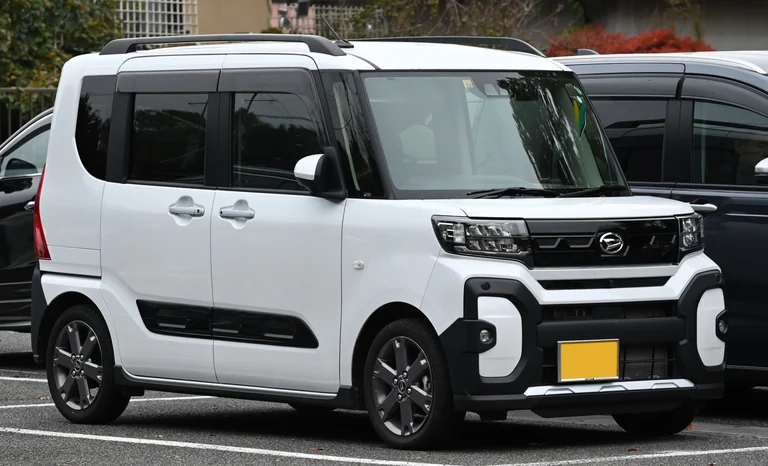
On October 3, 2022, the Tanto Custom received a new, more massive front end and two new colors, and a third option appeared in the lineup – the Tanto FunCross with roof rails, its grille, bumper and silver trims in the spirit of an SUV, including the FunCross Turbo. The naturally aspirated front-wheel drive car then shows 22.7 km/l according to WLTC. On August 31, 2026, a special version of the Daily Tool with black accents and the Urban Tough style were added to the FunCross, and Smart Assist learned to see cyclists on the crossing and oncoming cars when turning. In the catalog, the phase from August 2022 goes on a separate line with the same codes LA650S and LA660S. The page of the updated generation is in the catalog.
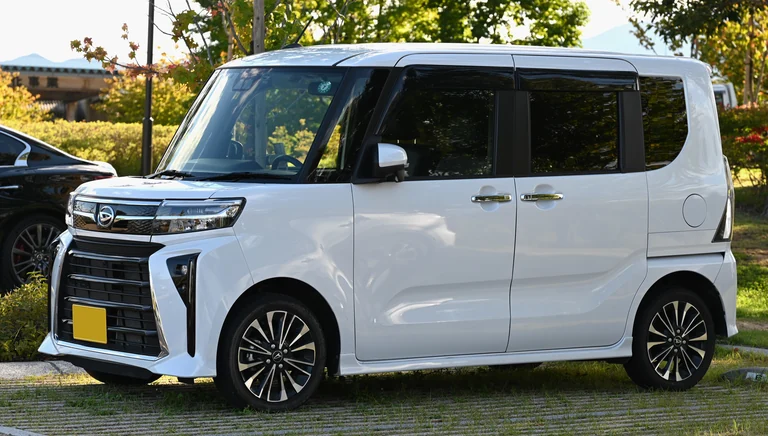
Tanto or Tanto Custom
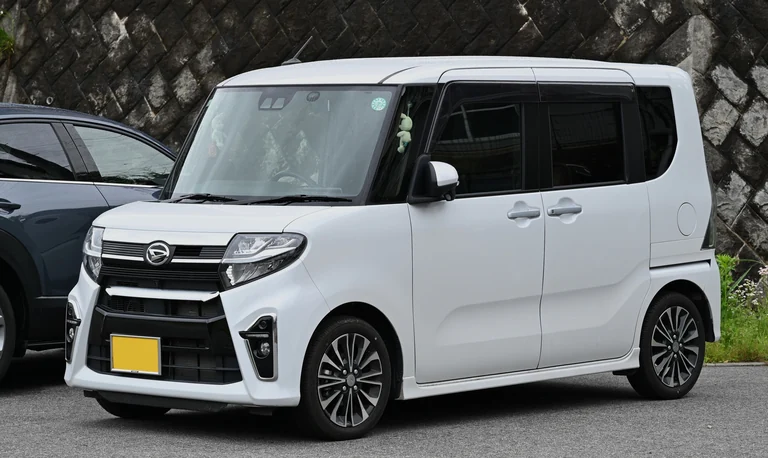
Custom versions are present in the first generation: they have been listed in the catalog since 2005. In the second generation, both versions have been retained – the regular Tanto and Tanto Custom with a different appearance and finish: a different grille and bumpers, its own interior design, and in the third generation, side airbags are standard on all Customs. The main practical difference is the engine: in the second generation, the turbocharged Tanto exists only as the Custom RS, in the third it was added to the regular X Turbo only in December 2013, and in the fourth turbo it is in both lines from the very beginning, plus the FunCross Turbo from 2022. The atmospheric Custom L and Custom X in the catalog are technically no different from the L and X, so the surcharge goes for appearance and equipment. Both lines have all-wheel drive and are read by the code: L360S, L385S, LA610S, LA660S. Neighbors in the catalog are Daihatsu Move, Honda N-BOX with the same body format, about which there is a separate analysis, and Suzuki Spacia.
What to check before ordering
First, the body code in the auction sheet: it gives the generation and drive, but not the engine or line, so then you need the name of the version (RS, X Turbo, FunCross Turbo mean turbo; Custom – a separate line) and the date of the first registration, which shows the phase before and after the 2015 and 2022 updates. For cars with Miracle Open Door, it is worth looking in the list for comments on the sliding doors and their electric drive, as well as on the geometry of the opening after impacts to the left side – the pillar is hidden in the doors, and repairing this area is more important than that of a regular body. The rest is common to any kei car: the condition of the CVT, mileage, corrosion of sills and bottom, especially in all-wheel drive versions. There is a separate article on how to understand the generation and the market by the description of the lot; Estimates and notes are deciphered on the page about the auction sheet.