Honda Fit: how to identify the generation and version by body code
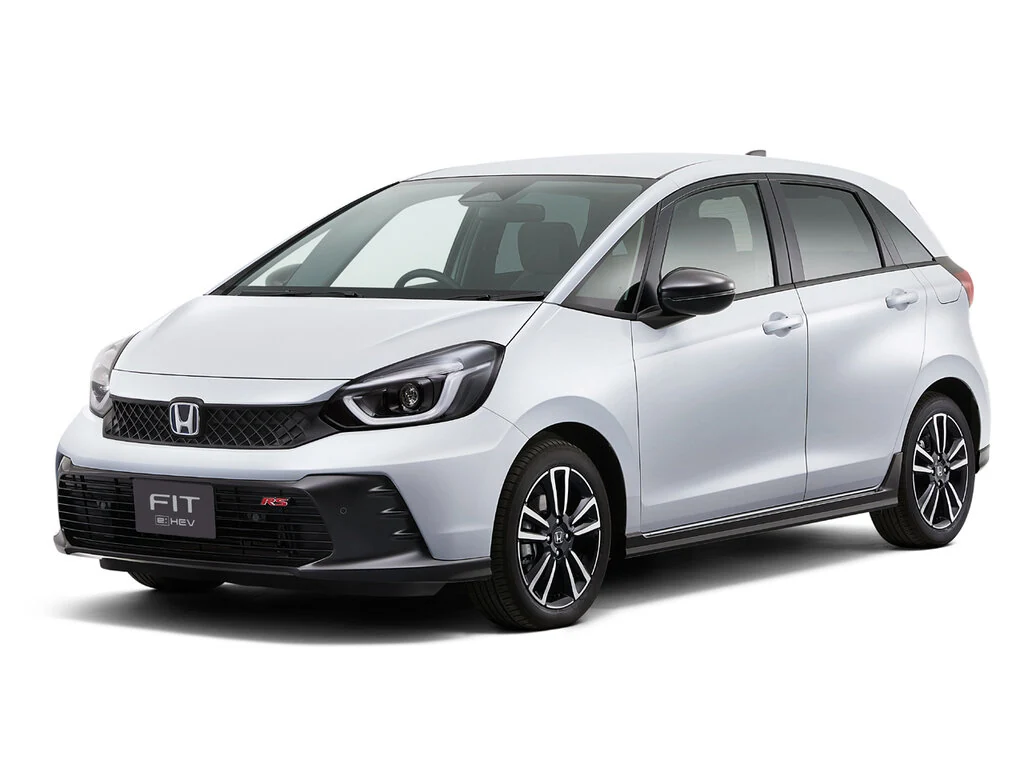
The Fit has been sold in Japan since June 2001, and since then four generations and three different hybrid schemes have changed under one name. In the ad, it all looks the same: “Fit”, year, sometimes the word Hybrid. It is safer to look at the body code – a short designation like GE6 or GP5. In Honda specification sheets and car documents, it is written with a prefix, for example, DBA-GE6; in the GTYRES catalog, the code is in the version line.
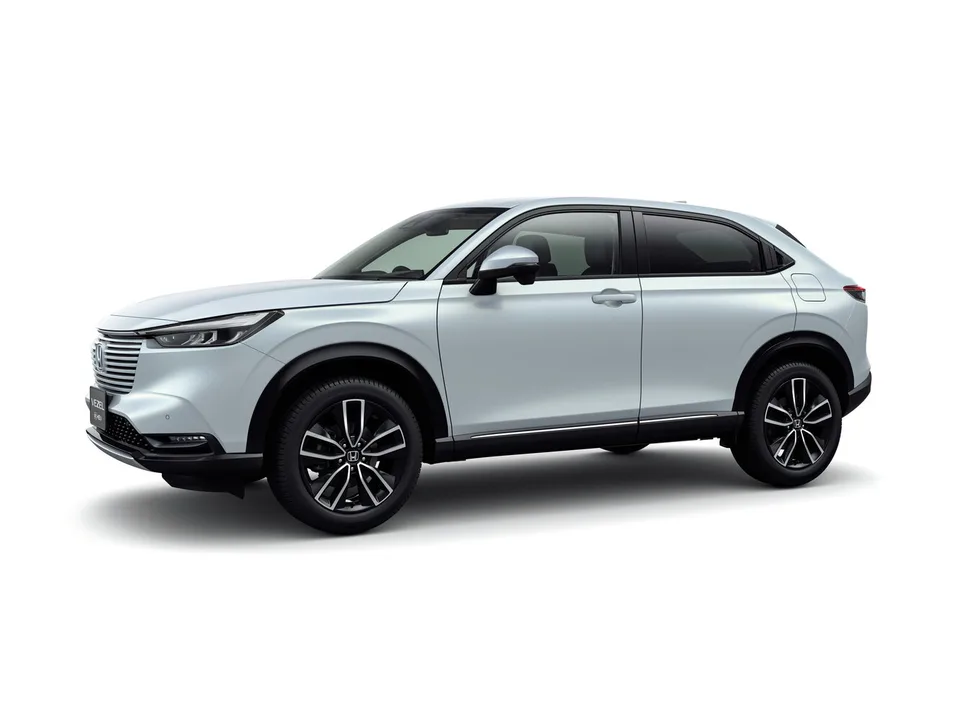
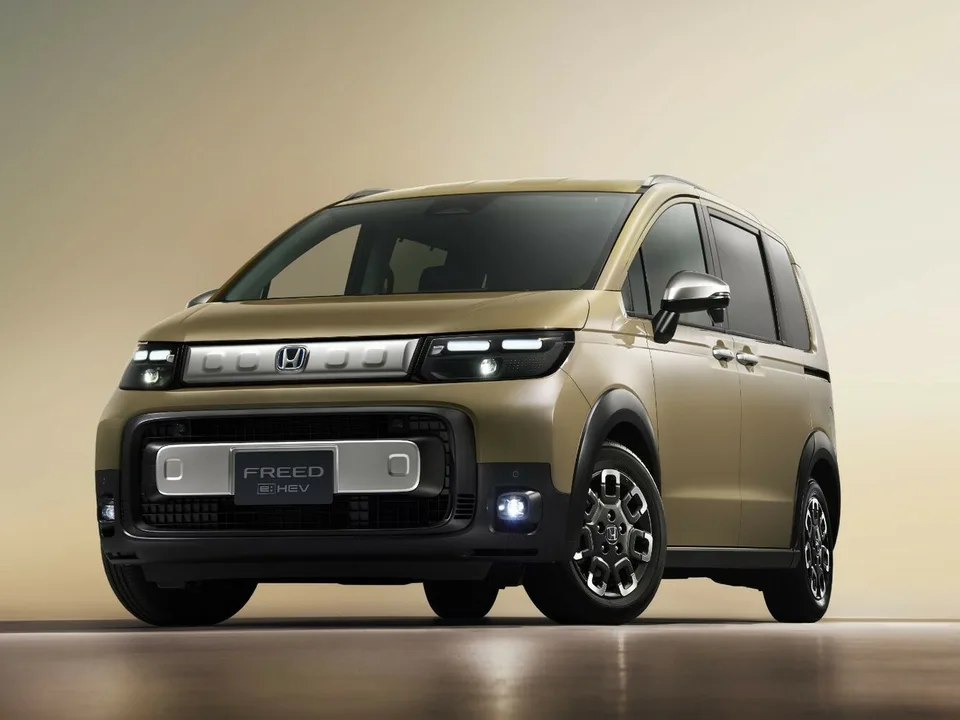
The code answers three questions — what generation it is, what is the installation under the hood, and what drive — but it does not describe the entire configuration. The reading key is short. The letters are called generations: GD, GE, GK, GR, and GS. Hybrids of the second and third generations carry the letters GP; in the fourth, the letter GR is common for petrol GR1 / GR2 and hybrid GR3 / GR4 (Crosstar – GR6 / GR8), and the hybrid is recognized here by the number. In Fit, within each pair of indices, the smaller means front-wheel drive, the larger means full-wheel drive: GE8 is front, GE9 is full. What the code will not show: a performance like Home or Luxe, a manual or a CVT inside one pair and the presence of Honda Sensing – this is looked at by the version record and documents for the car. Below is what is behind each pair, with photos of generations.
Fit body codes in one table
| Code | Generation and years in Japan | Engine or Plant | Drive |
|---|---|---|---|
| GD1 / GD2 | First, 2001–2007 | 1.3 i-DSI, 86 hp; CVT | Front / Full |
| GD3 / GD4 | First, since September 2002 | 1.5 VTEC, 110 hp; CVT, front-wheel drive versions A, W and S – and manual | Front / Full |
| GE6 / GE7 | Second, 2007–2013 | 1.3 i-VTEC, 100 hp; CVT or manual for the GE6, five-speed automatic transmission for the GE7 | Front / Full |
| GE8 / GE9 | Second, 2007–2013 | 1.5 i-VTEC, 120 hp; CVT or manual for the GE8, five-speed automatic transmission for the GE9 | Front / Full |
| GP1 | Second, 2010–2013 | IMA hybrid: 1.3 with 88 hp plus an auxiliary engine of 14 hp; CVT | Front only |
| GP4 | Second, 2012–2013 | Hybrid RS: 1.5 for 114 hp plus the same engine; CVT or six-speed manual | Front only |
| GK3 / GK4 | Third, 2013–2020 | 1.3 L13B, 100 hp; CVT, base 13G manual | Front / Full |
| GK5 / GK6 | Third, 2013–2020 | 1.5 L15B, 132 hp; CVT, RS – six-speed manual | Front / Full |
| GP5 / GP6 | Third, 2013–2020 | i-DCD hybrid: 1.5 with 110 hp and a 29.5 hp engine in a seven-speed robot | front/full (since December 2013) |
| GR1 / GR2 (Crosstar GR5 / GR7) | Fourth, 2020–2022 | 1.3 L13B, 98 hp; CVT | Front / Full |
| GR3 / GR4 (Crosstar GR6 / GR8) | Fourth, from 2020 | hybrid e:HEV: the car is driven by a 109 hp electric motor, from October 2022 – 123 hp. | Front / Full |
| GS4 / GS6 (Crosstar GS5 / GS7) | Fourth, from October 2022 | 1.5 L15Z, 118 hp; CVT | Front / Full |
The prefix before the code — LA-, UA-, CBA-, DBA-, DAA-, 6BA-, 6AA-, 5BA- — denotes the environmental category. It has changed over time, so the same GD1 has LA-GD1, UA-GD1 and DBA-GD1, and this does not affect the meaning of letters and numbers; how the code works as a whole is analyzed in the article “Japanese Car Body Code”.
First generation GD (2001–2007): 1.3 or 1.5, CVT and plug-in all-wheel drive
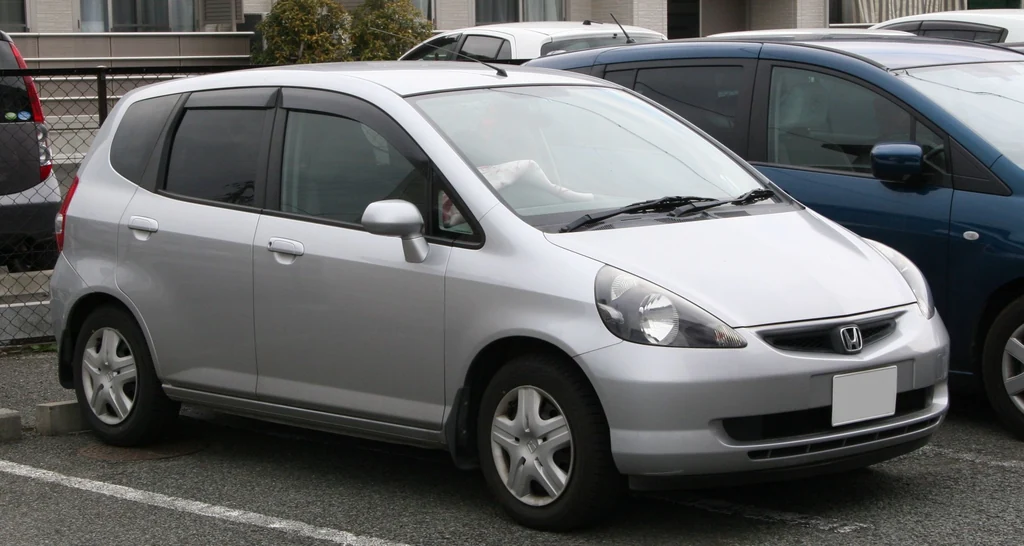
The first Fit went on sale on June 22, 2001 with a single engine – a 1.3-liter i-DSI with 63 kW (86 hp) and 119 Nm. All-wheel drive versions went on sale on July 31 of the same year, and a one-and-a-half-liter VTEC with 81 kW (110 hp) and 143 Nm, according to Japanese catalog records, appeared in September 2002. The gearbox is almost always the same – the Honda Multimatic S CVT; Honda offered a five-speed manual only on front-wheel drive 1.5 in the A, W and S versions.
The codes separate the motors and the drive at once: GD1 and GD2 – 1.3 with front and all-wheel drive, GD3 and GD4 – 1.5. The 2004 and 2005 updates did not change this scheme.
Second generation GE (2007-2013): CVT for front, automatic for all-wheel drive
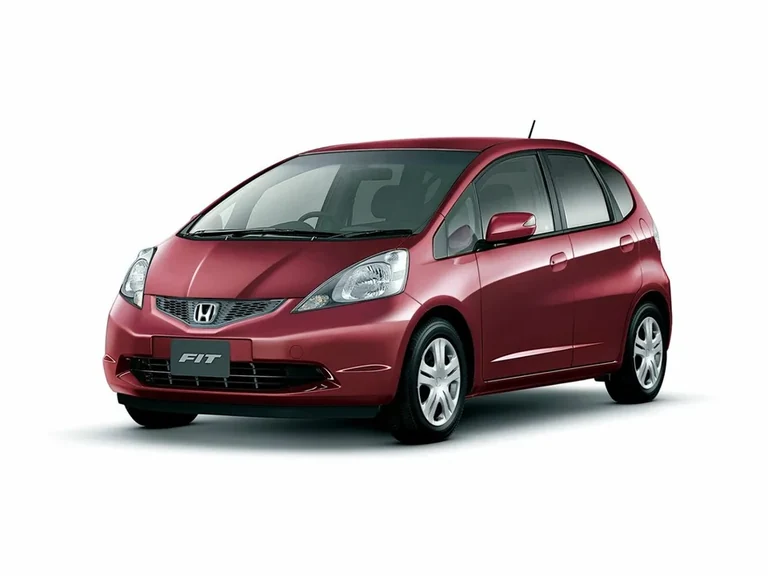
Since October 26, 2007, both engines have become i-VTEC: 1.3 for 73 kW (100 hp) and 127 Nm, 1.5 for 88 kW (120 hp) and 145 Nm. The CVT received a torque converter, and here appears a detail that the code shows better than any announcement: the all-wheel drive GE7 and GE9 specification of 2010-2013 Honda does not assign a CVT, but a five-speed automatic transmissionIn Japanese records before 2010, there are only a couple of exceptions for the swivel seat versions. The manual remains: the base 1.3 has a five-speed throughout the production, the RS until the October 2010 update has a five-speed, then a six-speed.
First hybrid: IMA in GP1 and GP4 (2010–2013)
The Fit Hybrid appeared on October 8, 2010 as Honda’s most affordable hybrid at the time. The IMA circuit is one thin electric motor between the engine and the gearbox; In the description of Honda, the main force here is the engine, and the engine is auxiliary: the petrol 1.3 LDA produces 65 kW (88 hp) and 121 Nm, the engine adds 10 kW (14 hp) and 78 Nm, the battery is nickel-metal hydride at 5.75 Ah. At the same time, the GP1 was not left completely without electric traction: in the 2010 Fit factbook, Honda writes that at low speed with a steady stroke, the car can drive on one motor and that this zone of the light Fit is wider than that of the Insight. The drive is only front. From May 24, 2012, the Hybrid RS was added to it with a one-and-a-half-liter LEA of 84 kW (114 hp) and 144 Nm and the same engine; it was entitled to a CVT with a seven-speed mode and petals or a six-speed manual. The hybrid with a manual transmission was not repeated in this story.
It is easy to distinguish these cars: the GP1 code is hybrid 1.3, GP4 is Hybrid RS, while petrol versions of the same body bear the GE6-GE9 indexes.
Third generation GK and GP5 (2013–2020): i-DCD and a seven-speed robot
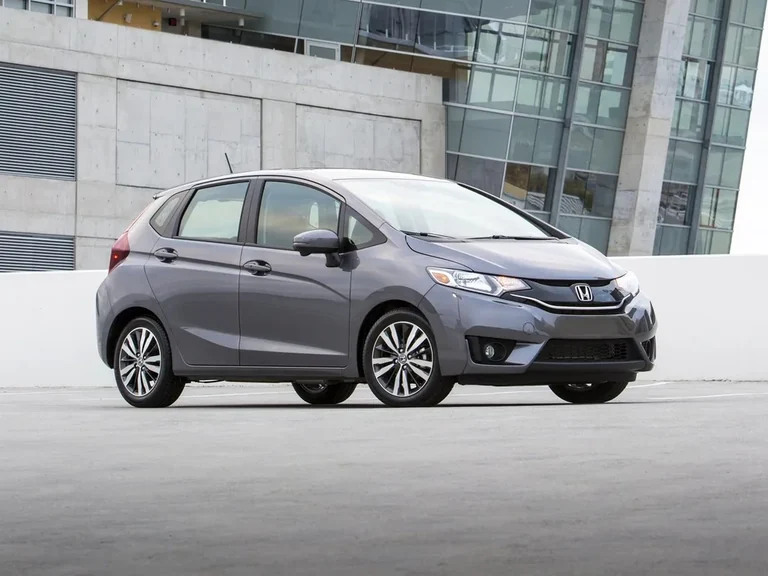
Since September 6, 2013, the hybrid has been designed differently. Honda called the SPORT HYBRID i-DCD system and separately emphasized that with one electric motor, it allows you to start on electric traction. The LEB engine with 81 kW (110 hp) and 134 Nm works with a 22 kW (29.5 hp) and 160 Nm motor through a gearbox, which the specification calls a seven-speed automatic transmission: this is a dual-clutch robot, i-DCD stands for Intelligent Dual Clutch Drive. The battery became lithium-ion, 48 cells. The GP6 all-wheel drive hybrid went on sale in December 2013 – previously the hybrid Fit did not have all-wheel drive.
Petrol versions: 1.3 L13B with 73 kW (100 hp) with CVT or five-speed manual transmission for the base 13G and 1.5 L15B with direct injection for 97 kW (132 hp) and 155 Nm with CVT or six-speed manual transmission for the RS. A detail that is easy to miss when comparing: the basic front-wheel drive versions have a hybrid and 13G have a 32-liter tank, The rest of the versions have 40, so the range of two similar cars may differ. Since June 30, 2017, the updated Fit has a Honda Sensing complex; on the outside, the update is given by a different front end, and it is not reflected in the code in any way.
Fourth generation GR and GS (2020–): e:HEV, where the electric motor carries
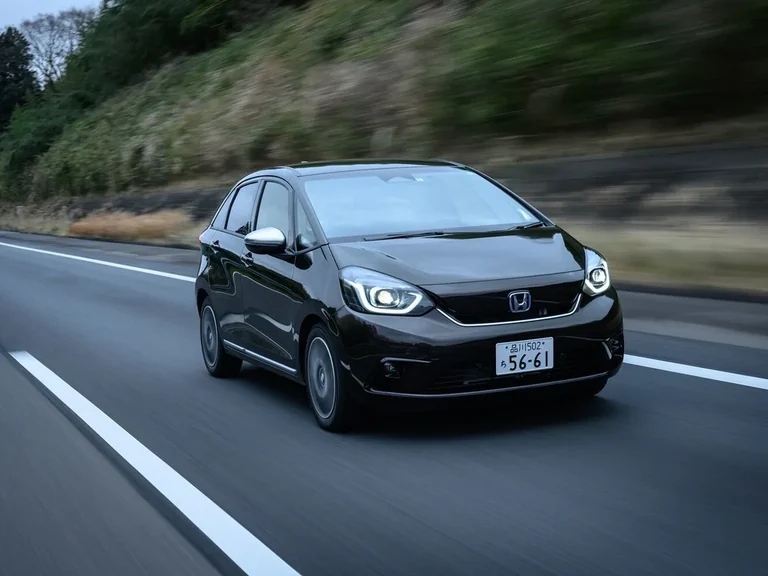
Since February 14, 2020, the hybrid has been called e:HEV and is built on two electric motors. The LEB engine with 72 kW (98 hp) and 127 Nm mainly turns the generator, and the wheels are driven by a traction motor of 80 kW (109 hp) and 253 Nm; in the specification, the hybrid has two gear ratios – one for driving from the engine and one for the direct drive from the engine, which turns on at a flat speed. How this scheme differs from i-DCD is analyzed in detail using the example of the Honda Vezel, where both units stand side by side. The petrol version initially remained with 1,3 L13B at 72 kW (98 hp), all-wheel drive was offered to both a hybrid (GR4) and a petrol car (GR2). Five versions – Basic, Home, Ness, Crosstar and Luxe – differed in trim and equipment, and the Crosstar also had ground clearance: 160 mm versus 135 in the usual front-wheel drive version.
The update on October 7, 2022 noticeably changed the technology. The 1.3 was replaced by a new one-and-a-half-liter L15Z with 87 kW (118 hp) and 142 Nm, the hybrid, according to the list of characteristics after the update, the engine produces 78 kW (106 hp), and the traction motor added 10 kW to 90 kW (123 hp). The RS version is back, first hybrid and only front-wheel drive. After the update, petrol cars received the indices GS4 (front-wheel drive) and GS6 (full), Crosstar has its own – GS5 and GS7, and the hybrid codes have not changed: GR3 / GR4, for Crosstar GR6 / GR8. So the GR3 of 2021 and GR3 of 2024 are different cars with the same code, and here the code must be read along with the release date.
The latest update came out on July 10, 2026: the Basic was renamed to the X, the Home to the Z, the RS and Crosstar became hybrid-only, and the lineup was reduced to four versions. Engines and motors according to the current Honda characteristics list are the same. In the Japanese catalog image, on which the GTYRES catalog is based, these versions are not yet reflected – it was assembled until July 2026.
Three hybrids in simple words
The IMA in GP1 and GP4 is a petrol car with an electric assistant: a thin electric motor stands between the engine and the gearbox and basically adds thrust to the engine – the name itself stands for Integrated Motor Assist. On one engine, such a car drives only at low speed with a steady stroke – for GP1, Honda directly describes this mode in the 2010 factbook – and the main force in the scheme remains the engine. i-DCD in GP5 and GP6 – one motor inside a robot with two clutches: Honda describes three modes, when the car goes only on the engine, on the engine with the engine or only on the engine, and the shifts are made by a seven-speed gearbox. The e:HEV in the GR3, GR4, GR6 and GR8 is a setup where the engine mainly turns the generator and the wheels are rotated by an electric motor; the motor is connected directly to the wheels only when running flat. If the hybrid is needed for a quiet electric ride in the city, this is primarily the fourth generation, and from the fall of 2022 its engine is also noticeably more powerful. The hybrid of 2010-2013 remains, in fact, a petrol car with an assistant: electric traction without an engine is a short low-speed mode, and there is no all-wheel drive.
Hence the answer to the question “how much power”. In Honda’s specifications, the power of the engine and electric motor are in separate lines, and neither IMA, nor i-DCD, nor e:HEV have the total value for installation in full. It is impossible to add them arithmetically, and why this is so is explained in the article “Hybrid power from Japan”. For calculation and documents, you need the specification lines, and not the number from the ad.
What the code doesn’t show
The design – Basic, Home, Luxe, G, L, RS, – the presence of Honda Sensing and a manual transmission inside one pair of indices are not readable by code: the GK5 can have both a CVT and a six-speed RS manual, the GE6 has a CVT or a five-speed manual. This is looked at by the entry of the version in the catalog and by the documents for the car. The code also names the year of manufacture only approximately – through a prefix, which changed along with environmental requirements. All-wheel drive for the Fit hybrid appeared only in December 2013, so “Fit Hybrid 4WD” before this date or with the GP1/GP4 code is a mistake in the announcement. And the all-wheel drive second generation has a five-speed automatic transmission instead of a CVT, and this can be seen from the GE7 or GE9 code.
A manual transmission was in each of the first three generations: five-speed in the front-wheel drive 1.5 of the first generation and in the basic 1.3 of the second and third generations, six-speed in the second and third generations RS and in the 2012-2013 hybrid Hybrid RS; in the fourth generation, there is no mechanics at all.
What to check for a specific car
First, the code: letters – generation, GP and GR3/GR4 (GR6/GR8) – hybrid and which one, and GR1/GR2 and GS – petrol; the smaller pair index is front-wheel drive, the larger – full-wheel drive: GD1/GD2, GE8/GE9, GK5/GK6, GP5/GP6, GR3/GR4, GS4/GS6. And the year of manufacture, because the GR3’s power depends on whether the car was produced before October 2022 or after. Versions by year are collected in the Honda Fit catalog: 2010 – the second generation and the first hybrid, 2014 – i-DCD, 2017 – an update with Honda Sensing, 2020 – the first e:HEV, 2023 – already with a 1.5 and a reinforced engine; summary characteristics are on the characteristics page. The condition of the selected car is checked separately, the procedure is described in the article “What to check before the bid”, and the service of ordering a car from Japan helps to choose a car.