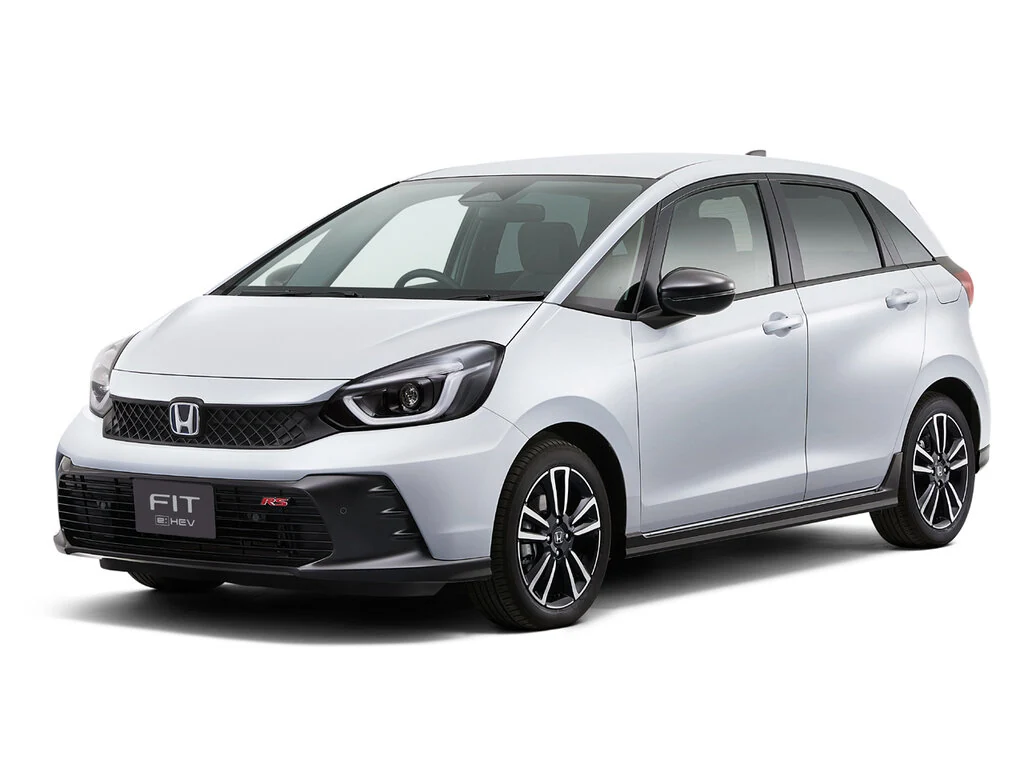
Honda Vezel: what is the difference between petrol and hybrid versions
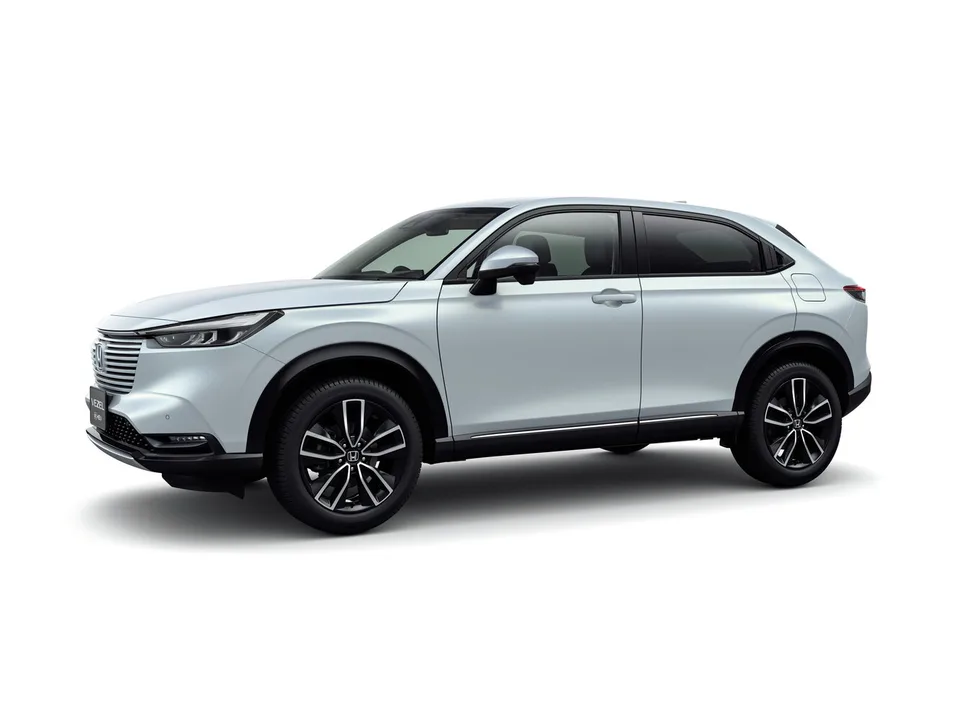
The word “hybrid” in the description of Vezel means two fundamentally different installations. In the first generation, the main work is done by the petrol engine, and the electric motor helps; in the second, on the contrary, the main work is taken over by the electric motor.
First generation: the main engine here is the petrol engine
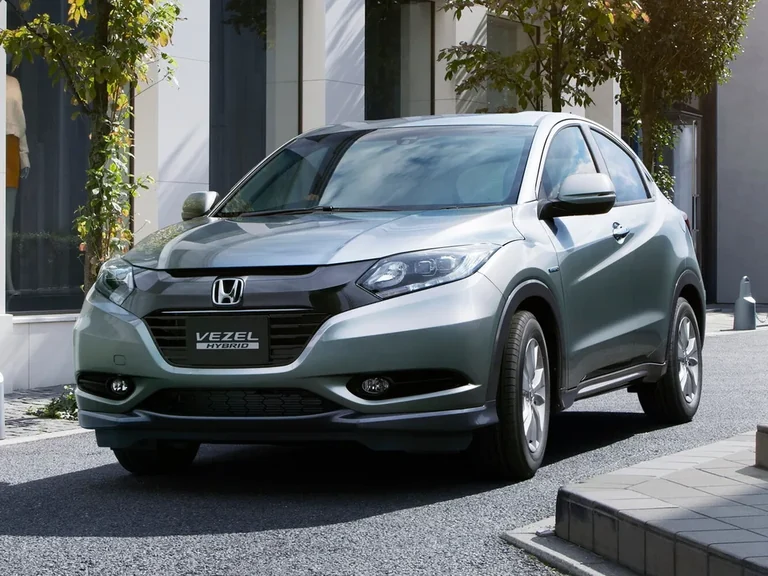
Japanese records of the first generation cover December 2013 – January 2018. The regular version is an atmospheric 1.5 liter with 131 hp. with a CVT. The hybrid is arranged differently: according to catalog entries, the petrol engine produces 132 hp, the electric motor – 30 hp, and the gearbox for the hybrid is unusual, seven-speed robotic.
All-wheel drive Real Time AWD was offered in both petrol and hybrid versions. Body codes separate everything at once: DBA-RU1 – petrol with front-wheel drive, DBA-RU2 – petrol with full drive, DAA-RU3 – front hybrid, DAA-RU4 – full hybrid.
2018 Update and Turbo
Since February 2018, the Honda Sensing complex has become standard equipment, and the hybrid installation has been reconfigured for smoother acceleration. The main replenishment occurred in January 2019: a version of the Touring appeared with a 1.5-liter turbo engine with 172 hp. This is the most powerful version of the Vezel of that period, and in the records it is listed only with front-wheel drive.
In the 2018–2021 records, the old DBA-RU1/RU2 and DAA-RU3/RU4 codes and the new 6BA-RU1/RU2 and 6AA-RU3/RU4 are found side by side. The letter prefix changed in the middle of the generation following the emission requirements, and the body index remained the same, so the meaning of the figure has not changed.
Second generation: the main thing here is the electric motor
Since February 2021, Vezel has been built on a different platform shared with the current Fit. The usual version is a naturally aspirated 1.5 with 118 hp (87 kW) and 142 Nm with a CVT. In the e:HEV hybrid, the petrol engine produces 106 hp (78 kW) and 127 Nm, the electric motor produces 131 hp (96 kW) and 253 Nm; these values are specified in the Honda specification. Most of the time, the car is carried by an electric motor, but the engine is not devoid of a fully mechanical connection: The Honda owner’s manual separately describes the driving mode on the engine – at high speed under light load – and the specification for installation contains two different gear ratios, one for the electric motor drive and one for the motor drive. The transmission in Honda documents is called an electric continuously variable transmission; the signature “CVT” in the handbook does not mean that there is a regular belt drive. The first-generation hybrid in the same catalog entries has a seven-speed robotic transmission.
The body codes have retained the same logic: 6BA-RV3 and 6BA-RV4 are petrol versions, 6AA-RV5 and 6AA-RV6 are hybrid.
2024 restyling: petrol remained only with all-wheel drive
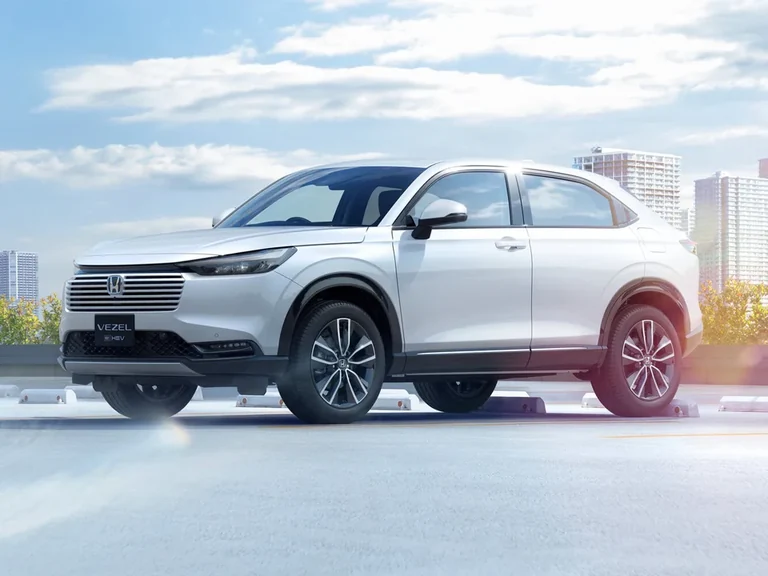
Since March 2024, the composition of the versions in the Japanese records has changed. The naturally aspirated 1.5 is now found only in all-wheel drive, under the code 5BA-RV4; the front-wheel drive petrol version is not in these records. The e:HEV hybrid is available with both front-wheel drive and all-wheel drive. The same can be seen in Honda documents: in the current specification, the petrol version of G is listed only in the all-wheel drive version with the code 5BA-RV4, while in the archived specification of the previous period it was also front-wheel drive – codes 6BA-RV3 and 6BA-RV4.
Why capacities do not add up
In Honda’s specification, the engine power and the power of the electric motor are written in separate lines: 106 hp (78 kW) and 131 hp (96 kW). These are different parts of the installation, and they cannot be added together: the sum does not describe any of them and does not replace the value that the manufacturer determines for the car as a whole. Why such values are not added at all is analyzed in the article “Power of a hybrid from Japan”.
What does this mean when choosing
If you need a hybrid that rides mainly on electric traction in the city, this is the second generation. The transmission of hybrids of generations is also different: in the records of the first there is a seven-speed robotic, in the records of the second it is no longer there.
The most powerful petrol option is the 2019-2021 Touring turbo, but only with front-wheel drive. But the combination of “atmospheric petrol engine plus all-wheel drive” after the 2024 update remains the only petrol version, so such cars should be looked for purposefully, and not by the general query “Vezel with all-wheel drive”.
What to check for a specific car
The body code answers two questions at once. The indices RU1, RU2, RV3 and RV4 denote petrol versions, RU3, RU4, RV5 and RV6 – hybrid; an odd number means front-wheel drive, an even number means full-wheel drive. How the code is arranged in its entirety is analyzed in the article “Japanese car body code”.
It is worth keeping a separate eye on the market: Vezel has Chinese records with their own periods, which do not coincide with the Japanese ones. What exactly is changing because of this is shown in the article “One generation, different markets”, and the order of the Chinese version is described on the page of Honda Vezel from China.
Versions by year are collected in the Honda Vezel catalog: 2016 is the first generation, 2019 is the period of the appearance of the turboversion, 2022 is already e:HEV. The condition of the selected car is checked separately, the procedure is described in the article “What we check before the bid”, and the service of ordering a car from Japan helps to choose a car.