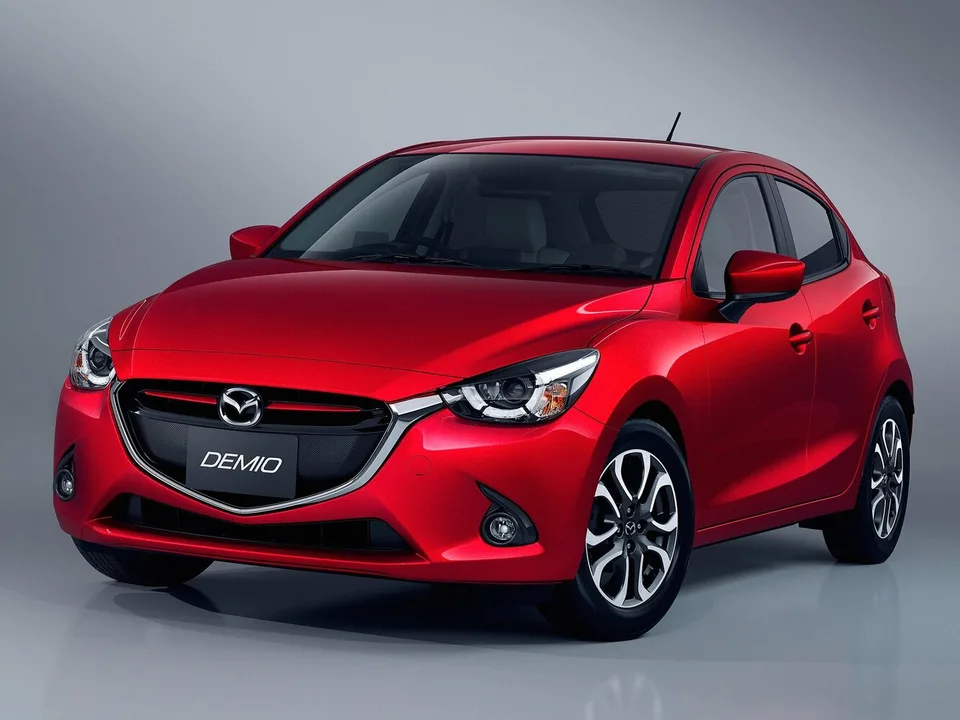
Mazda Axela: generations, engines and how to identify the version by body code
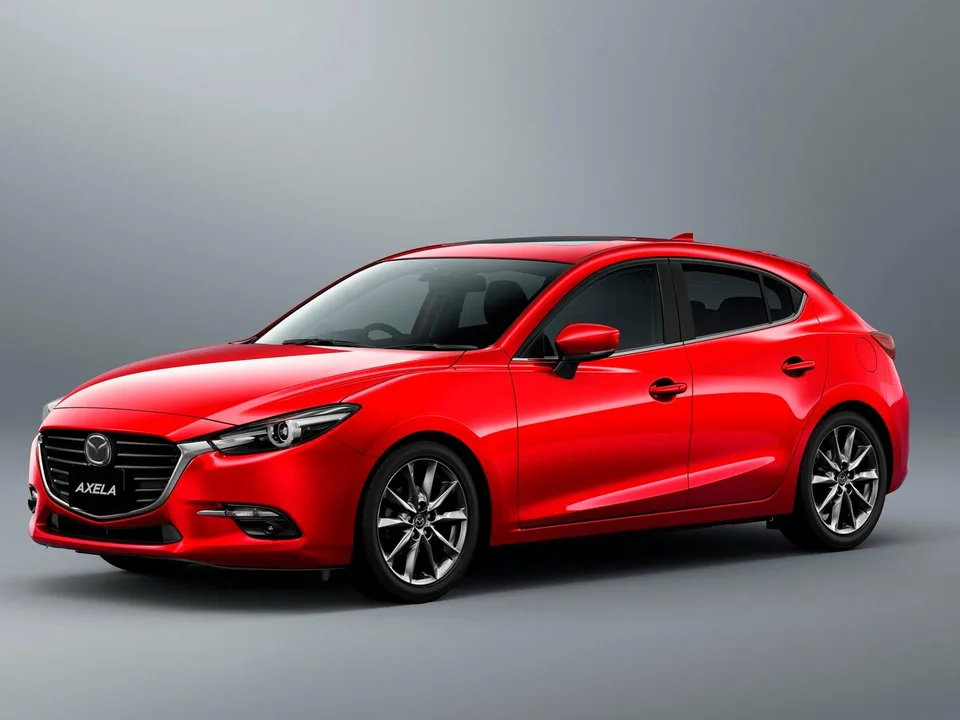
In Japanese ads, this car is called Axela, in Russia the same model is known as Mazda 3. The names are different, the car is the same: in a publication dated November 18, 2003, Mazda calls it “Mazda Axela (foreign name: Mazda3)”. But the Japanese line lived according to its own calendar – with its own engines, gearboxes, diesels and a hybrid, which was not in the Russian version. Therefore, when ordering from an auction, they look not at the name in the ad, but at the body code: it says more about the version than the line “Mazda 3”. Below are three generations of Axela, their engines and drive, and what is read in the code and what is not.
Axela and Mazda 3: one model, two lines
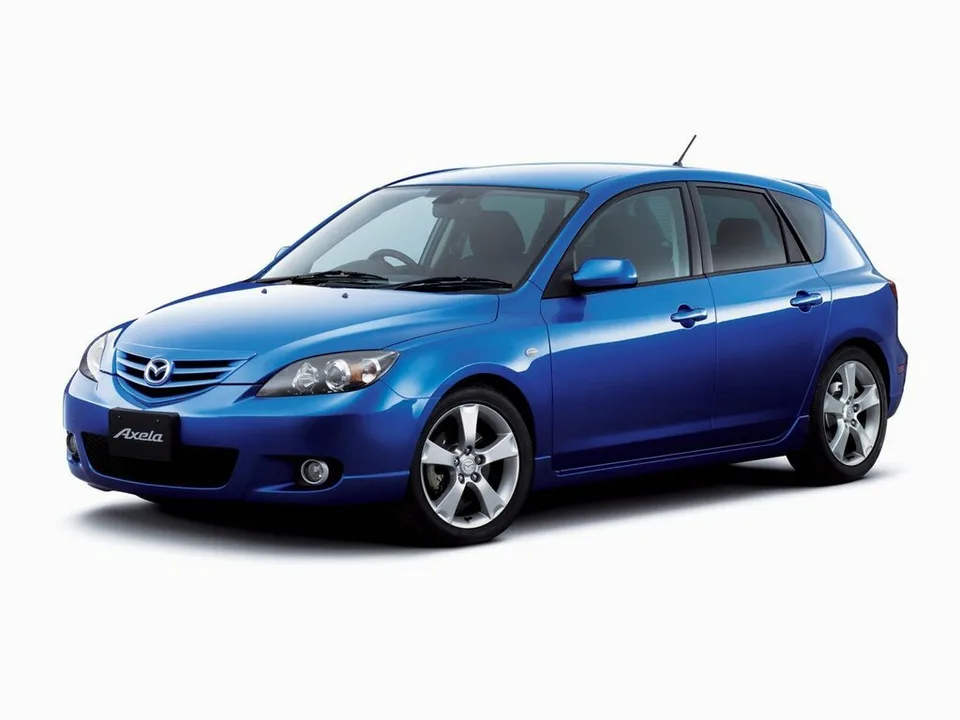
The name Axela is used in the Japanese market, and for the buyer it means a simple thing: the Japanese lot with the Axela inscription is a Mazda 3, but its configuration, engine and drive will be Japanese. Russian versions are not analyzed here, and their characteristics are not transferred to the Japanese car: everything below belongs to the Japanese line.
In the catalog, this division can be seen right in the addresses: the Japanese Axela and Mazda 3 are two different cards, and the characteristics in them are also different.
Three generations: BK, BL and BM
There are three generations, and they run in a row from October 2003 to May 2019. Inside each is the period before and after the update, and there are two bodies: a sedan and a five-door hatchback. Hence the variety of codes: the same engine receives different designations depending on the body and drive.
| Generation | Periods | Body | Base Codes |
|---|---|---|---|
| BK | 10.2003–05.2006 and 06.2006–05.2009 | sedan, hatchback | BK5P, BKEP, BK3P |
| BL | 06.2009–08.2011 and 09.2011–10.2013 | sedan, hatchback | BL5FP, BL5FW, BLEFP, BLEFW, BLFFP, BLFFW, BLEAP, BLEAW, BL3FW |
| BM | 11.2013–06.2016 and 07.2016–05.2019 | sedan, hatchback | BM5FP, BM5FS, BM5AP, BM5AS, BMEFS, BM2FP, BM2FS, BM2AP, BM2AS, BMLFP, BMLFS, BYEFP |
BK (2003–2009): 1.5, 2.0 and charged 2.3
The first generation is the simplest in terms of set. The one-and-a-half-liter engine produces 114 hp. and is installed under the code BK5P, with manual or automatic transmission. Two-liter – 150 hp. on front-wheel drive under the code BKEP; an all-wheel drive version of the same engine with an output of 143 hp appears in the catalog in the second period, after the 2006 update, and comes only with an automatic. There is no CVT in this generation at all.
The 2.3 liter engine is the code BK3P. In the regular version, it gives 171 hp: before the update, the catalog has both a manual and an automatic, in the second period only the automatic remains. On June 22, 2006, a charged Mazdaspeed Axela went on sale – Mazda announced 194 kW, that is, 264 hp, 380 Nm of torque and a six-speed manual; in the catalog, this version is found only in the hatchback body. It has the same body code as the regular 2.3, so you have to distinguish these cars by engine, power and gearbox, and not by code.
And the main feature of the BK: the code here is short, of four digits, and does not say either about the body or drive. BK5P, BKEP and BK3P are found in both sedan and hatchback, and BKEP hides two different cars at once – front-wheel drive with 150 hp. and all-wheel drive with 143 hp.
BL (2009–2013): 1.5 CVT and updated 2.0
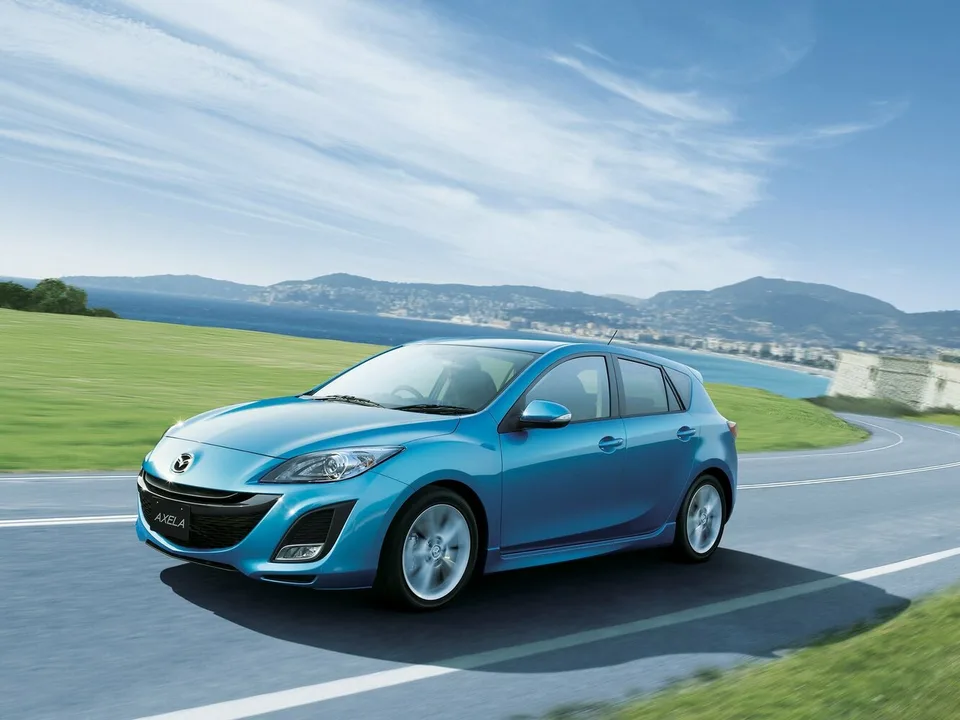
The second generation went on sale on June 11, 2009. The one-and-a-half-liter engine loses two forces – 111 hp. – and gets a CVT: codes BL5FP for the sedan and BL5FW for the hatchback. This is the only petrol Axela with a CVT, and it is important not to confuse it with the hybrid, which will be discussed below.
Two-liter versions remain with an automatic transmission. Before the update, it is 150 hp. (BLEFP and BLEFW), after the September 2011 update – 154 hp. (BLFFP and BLFFW); Mazda confirms this figure in the September 27, 2011 release. All-wheel drive is also on a two-liter engine, but with its own output of 143 hp. and its own codes: BLEAP for the sedan, BLEAW for the hatchback. The charged version of the 2.3 liter with 264 hp. with mechanics is retained here, but only in the hatchback body – code BL3FW; the exact date of the start of its Japanese sales in Mazda publications is not named, and in the catalog it is present in both periods of the generation.
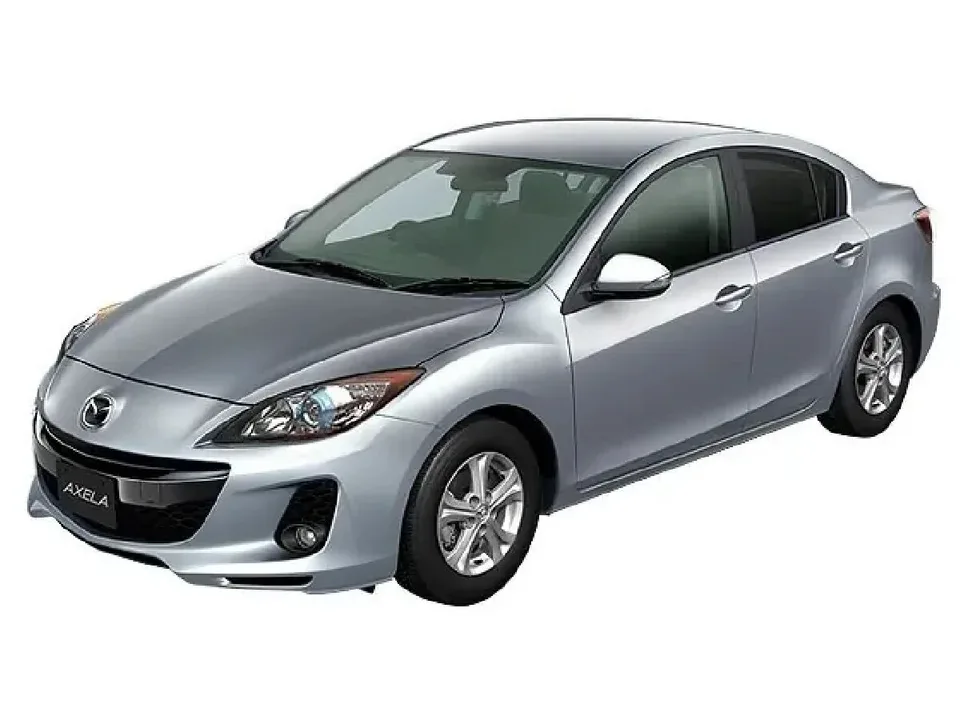
From this generation, the code becomes longer and noticeably more useful: the penultimate sign says about the drive – F front, A full – and the last one about the body: P sedan, W hatchback. From one code from the documents, it is immediately clear which car you are looking at.
BM (2013–2019): 1.5 and 2.0, diesels and all-wheel drive
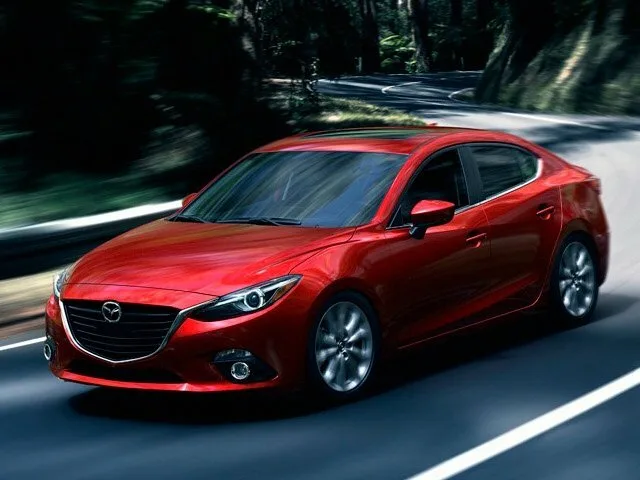
The third generation went on sale on November 21, 2013 – immediately petrol versions and hybrid, and Mazda designated the diesel in the same release as the January 2014 version, that is, it appeared two months later than the rest.
The main petrol engine here is 1.5 liters with 111 hp (Mazda indicates 82 kW), with manual or automatic transmission: BM5FP for the sedan, BM5FS for the hatchback. Among the petrol versions, only this engine has all-wheel drive and only with an automatic transmission – the codes BM5AP and BM5AS. A brand name like “i-ACTIV AWD” for Axela is not found in official publications, there is just 4WD.
The two-liter petrol engine in the catalog is only in the hatchback body and only until the update – the BMEFS code, 155 hp. This is the figure of the catalog of versions, not the specification of Mazda: there is no official table of characteristics of the pure two-liter SKYACTIV-G specifically for BM in the company’s publications, and in the 2017 specification of the year, the two-liter engine is presented only as part of a hybrid. A two-liter BM in the sedan body will not be in the Japanese lineup, and if such a version is promised in the ad, it is worth checking before the bid.
Diesels are a notable part of the lineup. The main one is 2.2 liters: SH-VPTR, 129 kW, that is, 175 hp, and 420 Nm; on the front-wheel drive, these are the BM2FP and BM2FS codes, with manual or automatic transmission. The BM2AP and BM2AS all-wheel drive diesels appear in the catalog after the July 2016 update: the sedan has only an automatic transmission, the hatchback also has a manual. At the same time, a second diesel is added – 1.5 liters with 105 hp, BMLFP and BMLFS codes, front-wheel drive and automatic.
Hence, it is important for the choice: all-wheel drive in the third generation happens to two completely different cars – the petrol 1.5 with an automatic transmission and the diesel 2.2 of later years. One does not contradict the other, it’s just that these are different branches of the line, and they have different codes.
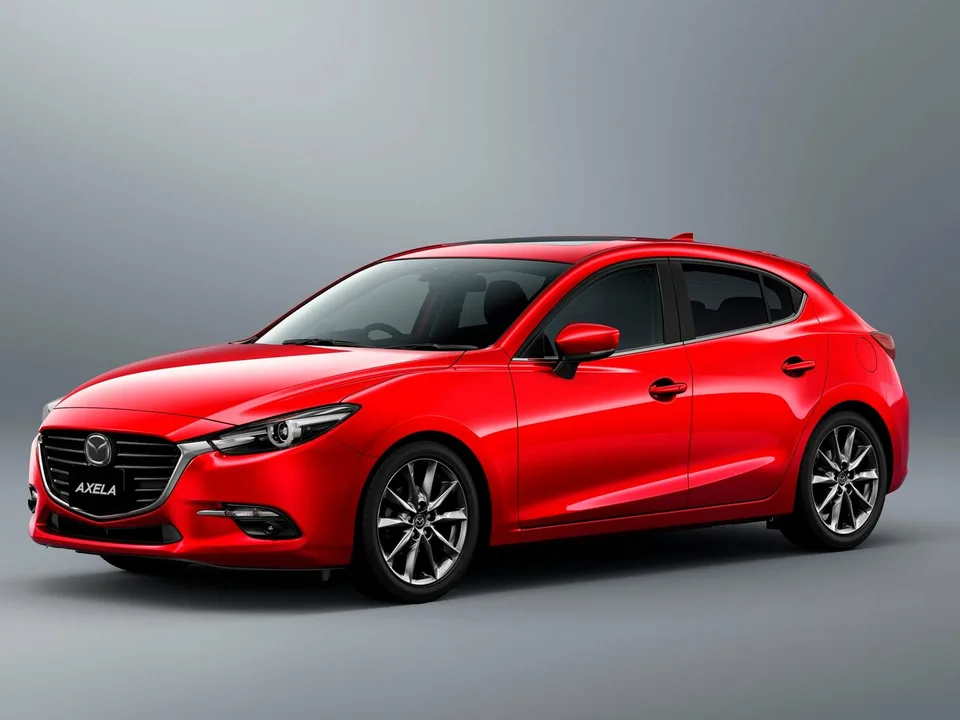
The body designation in BM codes has changed: the sedan is still P, and the hatchback is now S, not W. A trifle, but when you quickly read the ad, it knocks you down.
BYEFP hybrid: only sedan and only front-wheel drive
The hybrid Axela is a separate BYEFP code, and it is useful to remember it. Mazda confirms both the code and the numbers: the specification contains a “Mazda DAA-BYEFP”, a 73 kW (99 hp) PE-VPH engine and a 60 kW (82 hp) electric motor, a nickel-metal hydride battery. The unit is called SKYACTIV-HYBRID and is built on a two-liter SKYACTIV-G, modified specifically for the hybrid. The power of the system does not add up to the sum of 99 and 82, although it is often indicated as such in ads. According to the catalog, the hybrid is always a sedan and always front-wheel drive.
The main thing that is confused is the gearbox. In the catalog, the “CVT” is written for both the hybrid BYEFP and the petrol BL with a 1.5 engine, but these cars are different: in the second case, an ordinary petrol car, in the first – a hybrid unit, the structure of which Mazda does not describe in open publications. The easiest way to distinguish the versions is by body code: BYEFP is a hybrid, BL5FP and BL5FW are a petrol car. How hybrid schemes of Japanese cars are generally arranged and which of them is checked before purchase, is analyzed in the article “Types of hybrids from Japan“.
What is read in the body code and what is not
| Code | Engine | Drivetrain | Transmission |
|---|---|---|---|
| BK, 2003–2009 | |||
| BK5P | 1.5 l, 114 hp | front-wheel drive | manual transmission or automatic transmission |
| BKEP | 2.0 l, 150 hp; all-wheel drive – 143 hp (from 06.2006) | front- or all-wheel drive | automatic transmission |
| BK3P | 2.3 l, 171 hp; from 06.2006 also 264 hp (hatchback only) | front-wheel drive | 171 hp – manual transmission or automatic transmission, from 06.2006 only automatic; 264 hp – manual transmission |
| BL, 2009–2013 | |||
| BL5FP / BL5FW | 1.5 l, 111 hp | front-wheel drive | CVT |
| BLEFP / BLEFW | 2.0 l, 150 hp | front-wheel drive | automatic transmission |
| BLFFP / BLFFW | 2.0 l, 154 hp (from 09.2011) | front-wheel drive | automatic transmission |
| BLEAP / BLEAW | 2.0 l, 143 hp | all-wheel drive | automatic transmission |
| BL3FW | 2.3 l, 264 hp | front-wheel drive | manual transmission |
| BM, 2013–2019 | |||
| BM5FP / BM5FS | 1.5 l, 111 hp | front-wheel drive | manual transmission or automatic transmission |
| BM5AP / BM5AS | 1.5 l, 111 hp | all-wheel drive | automatic transmission |
| BMEFS | 2.0 l, 155 hp (hatchback only, until 06.2016) | front-wheel drive | manual transmission or automatic transmission |
| BM2FP / BM2FS | Diesel 2.2 l, 175 hp | front-wheel drive | manual transmission or automatic transmission |
| BM2AP | Diesel 2.2 l, 175 hp (sedan, from 07.2016) | all-wheel drive | automatic transmission |
| BM2AS | Diesel 2.2 l, 175 hp (hatchback, from 07.2016) | all-wheel drive | manual transmission or automatic transmission |
| BMLFP / BMLFS | Diesel 1.5 l, 105 hp (from 07.2016) | front-wheel drive | automatic transmission |
| BYEFP | Hybrid: 2.0 l, 99 hp plus 82 hp electric motor | front-wheel drive | SKYACTIV-HYBRID installation |
The codes BL and BM are arranged in the same way: the first two signs are the generation, the third is the engine, the fourth is the wheel drive (F front, A is full), the fifth is the body (P sedan, then W for BL and S for BM). Therefore, the car of 2009 and newer has a uniquely defined drive by code. The BK has four signs, they do not have a drive or body at all – BKEP is both a front-wheel drive car with 150 hp and an all-wheel drive car with 143 hp.
The year of manufacture is not readable in any generation. The basic codes are repeated in different periods: BK5P is on both the 2004 and 2008 cars, BM5FP is on both the 2014 and 2018 cars. The prefixes before the code — UA-, CBA-, DBA-, DAA-, LDA- — refer to the environmental classification and the date of type approval, and not to a specific car. How the Japanese body code works in its entirety is analyzed in the article “Japanese Car Body Code“.
How the Japanese line ends
The last period of the Axela in the catalog ends in May 2019. On May 24, 2019, Mazda began selling the model in Japan under the name MAZDA3 – this is the date from its publication. The Axela name was no longer used on the new car.
What to check before buying
First, the body code, not the year: BK5P, BL5* and BM5* are 1.5 liters; BKEP, BLEF*, BLFF* and BMEFS are 2.0 liters; BM2* and BML* are diesels; BYEFP is a hybrid; BK3P and BL3FW with an output of 264 hp is a charged version. Then the drive: the BK has it not written in the code and needs to be checked against the documents, the BL has all-wheel drive on a two-liter engine, the BM has an petrol 1.5 and a 2.2 diesel engine, and the hybrid has no all-wheel drive at all.
Next is the gearbox: in the BK there are two of them – manual and automatic; in the BL, the CVT appears only at 1.5; in the BM, only the hybrid has a CVT. And finally, the body: in the BK it is not readable by code, in the BL the hatchback is marked with the letter W, in the BM – with the letter S.
Separately, look at the date of the first registration: it limits the release period more accurately than the name of the generation in the ad. What exactly is checked in the auction sheet and during the inspection is described in the article “What we check before bidding“.
Where to look next
All Japanese versions by year, body code and trim level are collected on the Axela catalog page. If you need a smaller car, watch the analysis of “Mazda Demio: Generations and Engines“. How the Japanese version of the model differs from the version for another market and why it is important when ordering is analyzed in the article “One generation, different markets“. The service of ordering a car from Japan helps to choose a specific car, the turnkey cost is calculated in the calculator, and the timing and routes are on the delivery page.
Generation release dates, engine power 1.5, diesel characteristics 2.2, hybrid and charged version figures – Mazda publications. Distribution of versions by body codes, periods and gearboxes, as well as the power of the first generation and two-liter BMEFS – GTYRES version catalog; this is a secondary source of structure, not manufacturer data.