Mazda Demio: how to understand generations and engines by body code
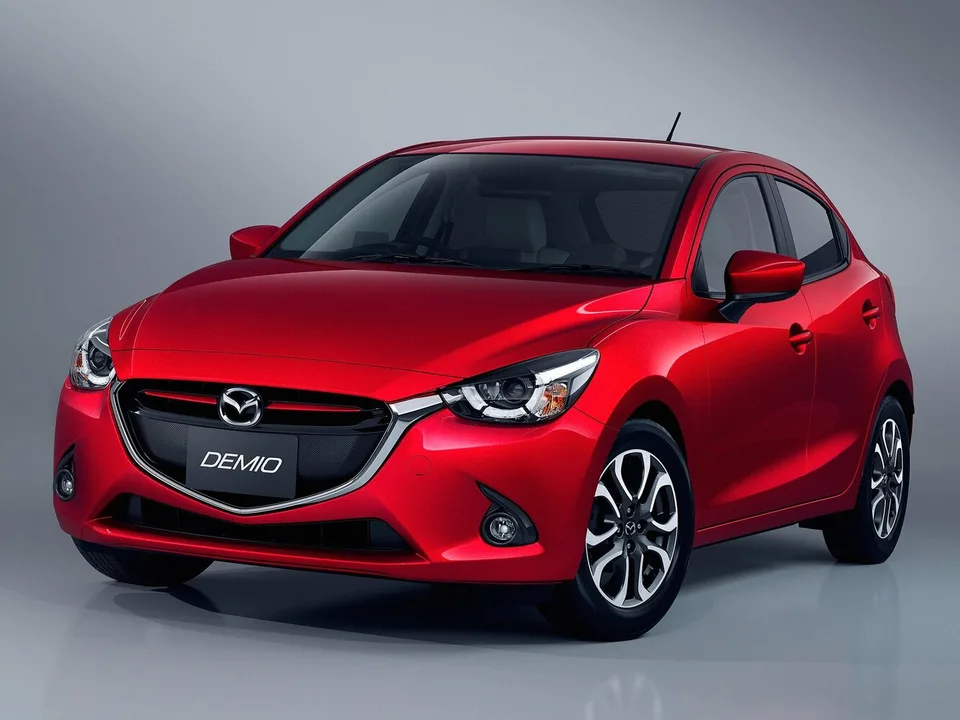
The Mazda Demio has had four generations since 1996, and in the Japanese market they are all five-door hatchbacks of almost the same length, so it is easy to confuse the generation from the photo in the auction sheet. But the body code tells almost everything about the car: the first two letters are the generation (DW, DY, DE or DJ), the third digit is the engine, the ending is the drive. Since 2019, the same fourth-generation hatchback has been sold in Japan under the name MAZDA2, so the same car is found under two names in the ads.
Body Code Key
The first two letters of the code are the generation index: DW is the first Demio (1996–2002), DY is the second (2002–2007), DE is the third (2007–2014), DJ is the fourth (since 2014, since the fall of 2019 — already as MAZDA2). DW and DY have the third sign – displacement: DW3W and DY3W – 1.3 liters, DW5W and DY5W – 1.5 liters. In the third generation, DEJFS was added to the pair of DE3FS (1.3 liters) and DE5FS (1.5 liters) in 2011 – this is the Demio 13-SKYACTIV with a new petrol engine. In the fourth generation, the letters are read differently than you expect: DJ3FS – petrol 1.3 liters, DJLFS – petrol 1.5 liters, and the DJ5FS is a SKYACTIV-D 1.5 diesel. The end of the code is responsible for the drive: the DY has the letter R (DY3R, DY5R) for e-4WD, for DE and DJ front-wheel drive versions end with FS, all-wheel drive versions end with AS (DE3AS, DJ3AS, DJLAS, DJ5AS). In the Demio catalog, each code has its own page with versions and years, and the general logic of Japanese indices is analyzed in the article on body code.
DW, 1996–2002: First Demio
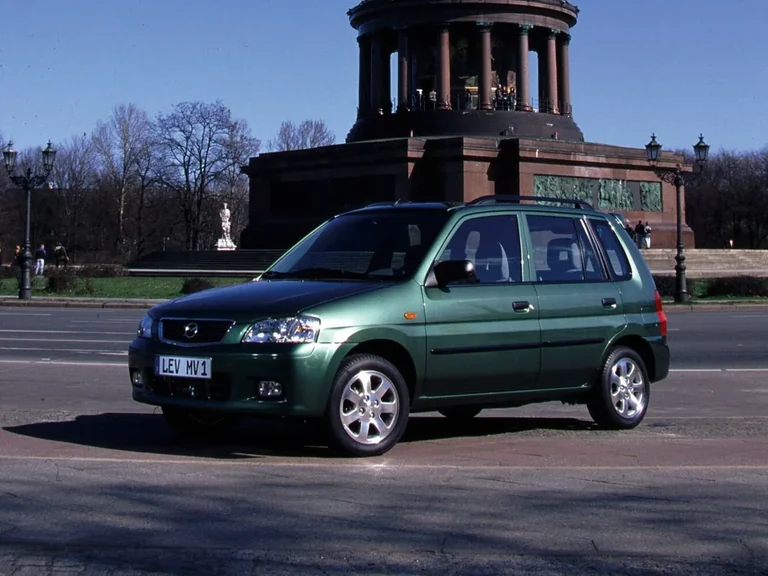
Mazda introduced the first Demio in August 1996, and according to its own formulation from the 2007 release, the car “created a new trend” in the compact class – a convenient size plus an unusually roomy and functional interior. Engines – 1.3 L B3 series and 1.5 L B5 series, according to catalog data, about 83 and 100 hp; Gearboxes – 5-speed manual or 4-speed automatic transmission, front-wheel drive only. According to catalog data, in December 1999 there was an update with a new radiator grille, and in 2000 the most complete Aletta equipment appeared. Today, any DW is more than twenty years old, so this is more of a rarity for an enthusiast than a working version; versions by year are collected in the catalog entry about DW.
DY, 2002–2007: second generation and first all-wheel drive
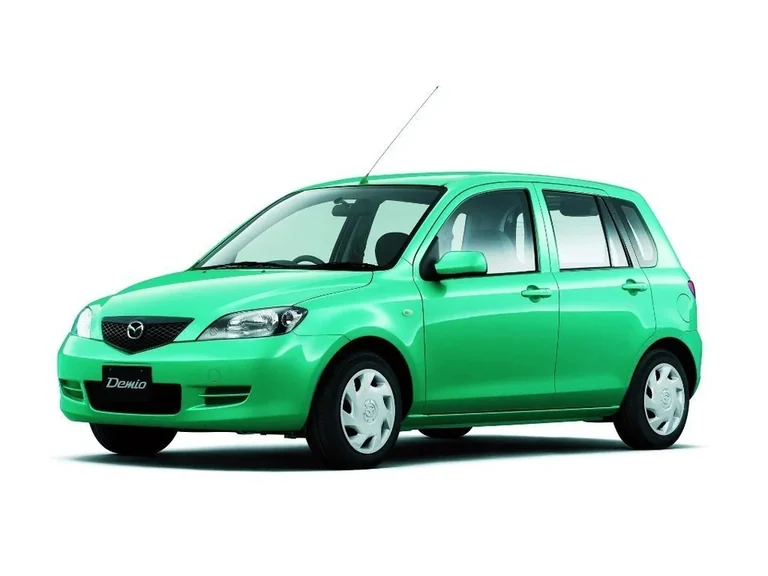
The second generation was released in August 2002 on the new DY platform, the wheelbase increased to 2,490 mm, and the third generation was then built on the same basis. The engines remained 1.3 and 1.5 liters, but of a new family – according to catalog data, 91 and 113 hp; in the 2005 Mazda release, they appear as the “1300 DOHC” with a 4-speed automatic transmission and the “1500 DOHC” with an Activematic automatic transmission on the SPORT version. In November 2003 (catalog date), versions with the e-4WD appeared – this is not a mechanical all-wheel drive, but an electric motor on the rear axle, which helps to start on slippery roads; such cars received a code with the letter R. Update on April 13, 2005, Mazda dedicated to fuel consumption: for the 1.3 L with an automatic transmission, it improved by about 9% on a 10·15 cycle, and all versions, including the e-4WD, fit into the norm of “standard 2010 +5%”. At the same time, the Casual Aeroactive trim level with a body kit and 15-inch wheels appeared, and the Cozy turned from a separate version into an option package. Catalog entries: DY before the update and DY after 2005.
DE, 2007–2014: 100 kg lighter and the first Mazda CVT
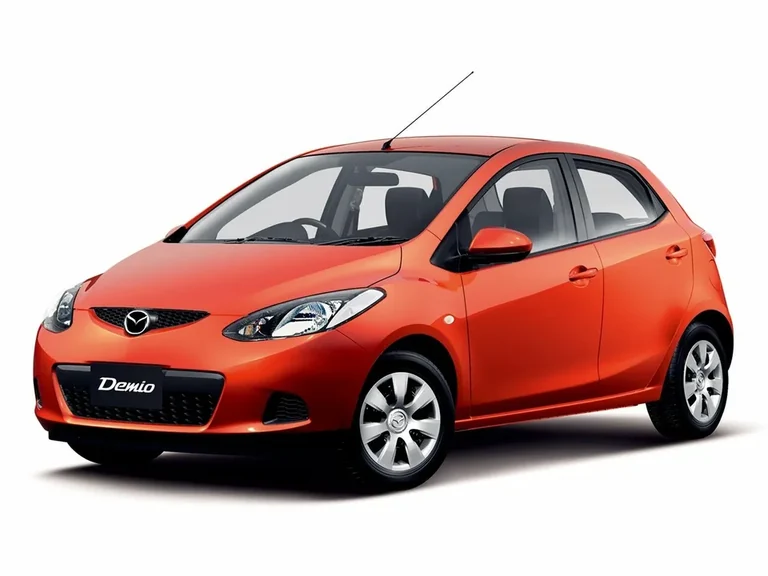
The third Demio went on sale on July 5, 2007, and Mazda made it noticeably lighter than its predecessor – by about 100 kg, to 970-1,020 kg depending on the version; The body is 30-40 mm shorter (3,885-3,895 mm) and 55 mm lower with the same base of 2,490 mm. Lineup at launch: 13F, 13C, 13C-V, 13S with 1.3 liters, 15C and SPORT with 1.5 liters. Regular 1.3 liters ZJ-VE produces 67 kW (91 hp) and 124 Nm, 1.5 liters ZY-VE – 83 kW (113 hp) and 140 Nm. 13C-V stands apart: there is a ZJ-VEM engine with a Miller cycle, 66 kW (90 hp) and 120 Nm, but paired with a CVT, it showed 23.0 km / l on a cycle of 10 · 15 versus 21.0 in the usual 1.3-liter versions. The CVT generally appeared on Mazda for the first time here (not counting the models that Mazda received from other manufacturers) – on the 13C-V, 1.5-liter 15C and SPORT, and in the SPORT with a 7-speed manual mode; the rest of the versions remained with a 4-speed automatic transmission or a 5-speed manual. All-wheel drive – again e-4WD, and only in the 13C and 13S with an automatic; in the code this is the ending of AS.
An update on June 30, 2011 added a version of the 13-SKYACTIV with the first engine of the new family, the SKYACTIV-G 1.3 petrol engine with direct injection and a compression ratio of 14.0, an i-stop system and a CVT. Mazda claimed 30.0 km/l on a cycle of 10·15 and 25.0 km/l on the JC08 and planned that this version would account for 60% of sales. The code for such a car is DEJFS, and this is an easy way to distinguish it from the regular 13C-V: on the outside, the difference comes down to blue headlight rings and a separate nameplate. The previous versions have not gone anywhere: 13C with manual, 4-speed automatic transmission and e-4WD, 13C-V with CVT, 15C and SPORT. In the DE catalog, it is divided into entries before 2011 and after the update.
DJ, 2014–2019: SKYACTIV in its entirety, diesel and manual 4WD
Mazda opened the fourth generation for pre-order on September 11, 2014; Petrol front-wheel drive versions went on sale on September 26, diesel – on October 23, all-wheel drive – in December. Everything here is from the “new generation” of Mazda: the SKYACTIV-BODY body, the design of the “kodo”, and of the engines – the updated petrol SKYACTIV-G 1.3, in which the torque increased by 5-10% in the entire range, and the new diesel SKYACTIV-D 1.5: 77 kW (105 hp) at 4,000 rpm and 250 Nm already from 1,500 rpm. Gearboxes – 6-speed automatic transmission SKYACTIV-DRIVE, and on the manual 5 speeds for petrol and 6 for diesel versions. The all-wheel drive has become mechanical: the clutch with active torque control, as on the CX-5, is 20% lighter than the previous system – that is, a DJ with an AS ending is no longer e-4WD, unlike DE. Range: 13C and 13S with petrol, XD, XD Touring and XD Touring L Package with diesel; later, a 15MB version was added with a 1.5-liter petrol engine and a 6-speed manual – in the 2016 Mazda table, it stands separately from the rest.
Further, the generation was refined almost every year. Since November 2016, all versions have received G-Vectoring Control, diesels have received “frequency control” to suppress knocking, older versions have been offered adaptive LED headlights and packages with radar cruise control. According to the table of the same release, the consumption of the JC08 for a petrol 1.3 liter with an automatic transmission is 24.6 km / l (4WD – 20.6), for a diesel engine with an automatic transmission – 26.4 km / l, with a 6-speed manual – 30.0. The most important change occurred on August 30, 2018: the petrol 1.3 liter was replaced by the SKYACTIV-G 1.5, the versions were renamed 15C, 15S and 15S Touring, and the consumption began to be indicated according to WLTC – 19.0 km / l for front-wheel drive with automatic transmission and 17.2 for 4WD. Hence the practical As a consequence, the petrol DJ produced before August 2018 has the code DJ3FS and 1.3 liters, after – DJLFS and 1.5 liters; the diesel versions remain DJ5FS all the time. All of them are collected in the catalog entry about the DJ, and the DJ3FS, DJLFS and DJ5FS code pages show versions by year.
After 2019: MAZDA2 – same generation, different name
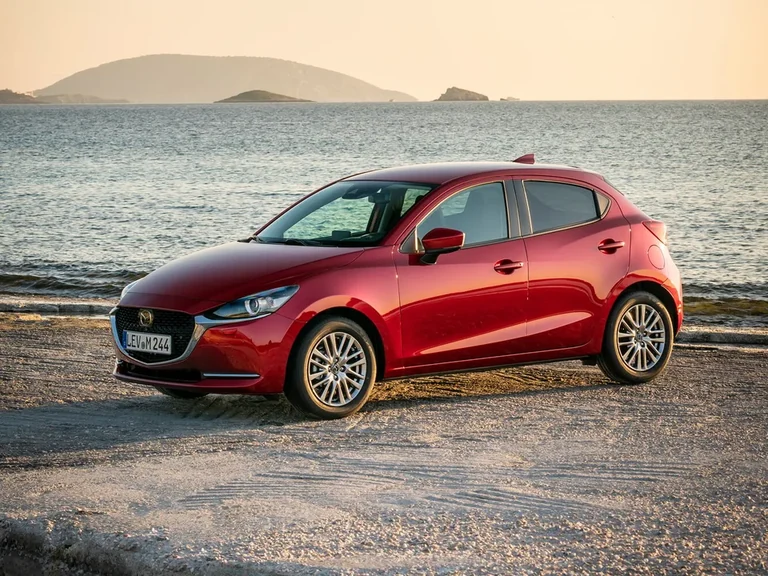
On July 18, 2019, Mazda announced that the Demio for the Japanese market would be renamed the MAZDA2; production under the old name ended at the end of June, with sales of the new version beginning on September 12. This is not a new generation: the DJ platform, the same DJLFS/DJLAS and DJ5FS/DJ5AS codes, the same 1.5-liter petrol and diesel engines. The front end, seats and suspension have changed, G-Vectoring Control Plus has appeared, i-ELOOP is now on petrol versions, cruise control with operation in the entire speed range on automatic transmissions. WLTC consumption for petrol 15S with automatic transmission – 19.0 km / l, diesel XD – 21.6, 15MB with 6-speed manual – 20.2. In June 2021, some petrol versions received an engine with an increased compression ratio from 12 to 14 and “diagonal vortex combustion” – in the Mazda price list it is designated as SKYACTIV-G 1.5 (high compression) and costs 15S Proactive and older, and the base 15C and 15S remained with the same engine. On January 27, 2023, Mazda opened pre-orders for a major update (sales from the end of March): the lineup was reduced to versions of 15 BD and XD BD, 15 SPORT and XD SPORT+ (with mechanics), 15 Sunlit Citrus, prices ranging from 1,529,000 to 2,541,000 yen. In the catalog, MAZDA2 is highlighted as a separate model, Japanese records are 2019-2023 and from 2023.
One pitfall when searching: in the European branch of the same Mazda2 catalog, there is a “fourth generation” from 2021 – this is a hybrid based on the Toyota Yaris, which is sold in Europe and has nothing to do with the Japanese car. There are no hybrid versions in the Japanese price lists of Mazda for the Demio and MAZDA2; the economical options here are diesel and petrol with i-stop. Why the same name can mean different cars in different markets is discussed in detail in the article about the same generation and different markets.
What to check before buying
First, the body code in the auction sheet: it immediately answers three questions – generation, petrol or diesel and drive. For DJs, the timing of production is also important: DJ3FS with 1.3 liters and DJLFS with 1.5 liters on the outside are the same, the difference is in the engine and in the fact that for petrol versions from 2018, Mazda gives consumption according to WLTC, not JC08, so numbers from old and new catalogs cannot be directly compared. All-wheel drive for DY and DE — this is an e-4WD with an electric motor at the rear, an assistant on slippery starts, and not a system for bad roads; the DJ is mechanical. Diesel XDs are worth looking at the configuration: i-ELOOP was an option on them, and the Touring versions differ in equipment, not in the engine. For 13-SKYACTIV (DEJFS) and all DJs, i-stop is typical — in the ad, this is not a breakdown, but the normal behavior of the engine at traffic lights.