Types of hybrids from Japan: how to understand which installation is in the car
The word “hybrid” in the Japanese ad describes not one design, but several different ones. In one car, the wheels are rotated only by an electric motor, and the petrol engine is powered by a generator. In another, on the highway, the engine is connected to the wheels directly. In the third, the electric part only helps the engine and the car itself does not carry. In the fourth, the traction battery is charged from the mains.
Three schemes that are distinguished by the manufacturers themselves
Honda lists three types of hybrid systems in the description of the e:HEV installation: serial, where the engine generates electricity, and the car is driven by an electric motor; parallel, where the car is driven mainly by the engine, and the motor helps; and series-parallel, where the engine and motor work together to move. The separation is convenient because it relies on the drive device, and not on the name on the body.
The names – e:HEV, e-POWER, HYBRID, PHEV – are associated with these schemes, but they are not replaced. The word “HYBRID” is used both on a car that travels part of a city route on electric traction, and on a car where the electric part only helps the engine: the Suzuki Hustler, which went on sale on January 20, 2020, all versions are called HYBRID G and HYBRID X, and the same Suzuki release says that a mild hybrid is installed on all versions.
Nissan e-POWER: only the electric motor rotates the wheels
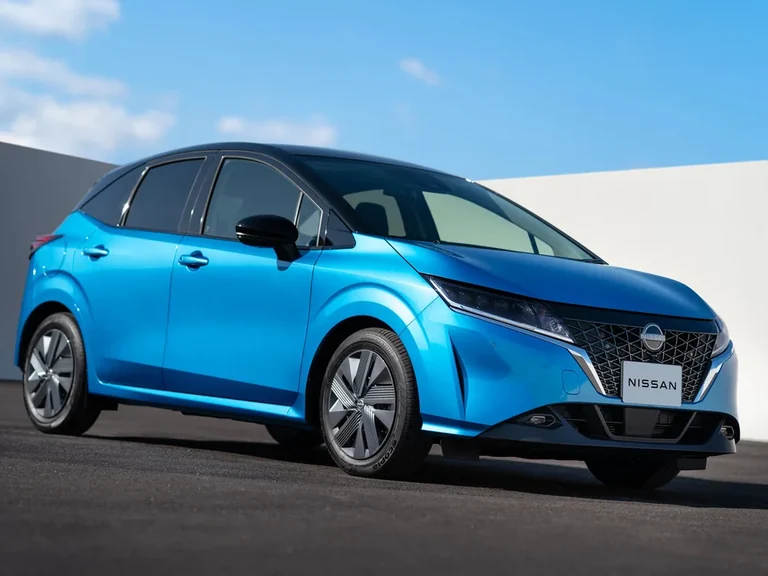
Nissan describes the e-POWER without premise: the system is classified as a sequential hybrid, the wheels are driven exclusively by an electric motor – just like in an electric car – and the petrol engine is used exclusively to charge the battery and is not directly connected to the wheels. That is why the engine can be turned on at any time and run at the revs that are most efficient for generating energy.
Hence the practical consequence: the car behaves like an electric car, but it does not have an outlet and the range is determined by petrol. Smooth electric acceleration in itself is not a sign of a plug-in hybrid. In which generation of Note this installation appeared and what stood before it, is analyzed in the article “Nissan Note: in which generation which engine”; versions by year are collected in the Nissan Note catalog. The same installation is found in larger models – Serena and X-Trail.
Honda e:HEV: Serial circuitry with direct coupling at high speed
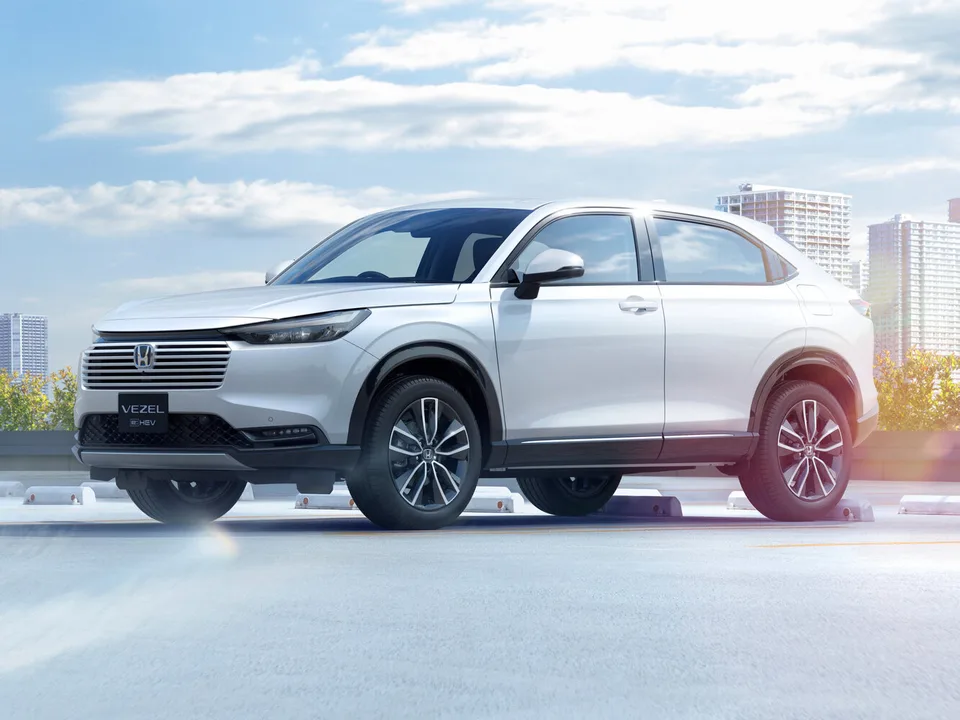
Honda explains its setup through a combination of two schemes. In the lower and mid-range range, where the electric motor has an advantage over the engine, the e:HEV operates as a sequential hybrid and drives the car with the engine. In high-speed driving, where the engine already has the advantage, the e:HEV works as a parallel hybrid: a locking clutch connects the output shaft of the engine to the wheels directly, and Honda calls this “driving mode on the engine”.
The difference is noticeable in behavior: in the city, such a car drives mainly on electric traction, and on the highway, the engine works not only with a generator. In the documents, the versions are separated by the body code: in the second-generation Vezel, petrol versions are indexed RV3 and RV4, hybrid versions are RV5 and RV6. A detailed analysis by generation is in the article “Honda Vezel: what is the difference between petrol and hybrid versions”, versions by year – in the Honda Vezel catalog. The same installation is in those generations of Fit and Stepwgn, where it is designated by the name e:HEV; earlier hybrid Fit are assembled according to other schemes, and the description of e:HEV is not transferred to them.
Toyota: engine and electric motor carry the car together
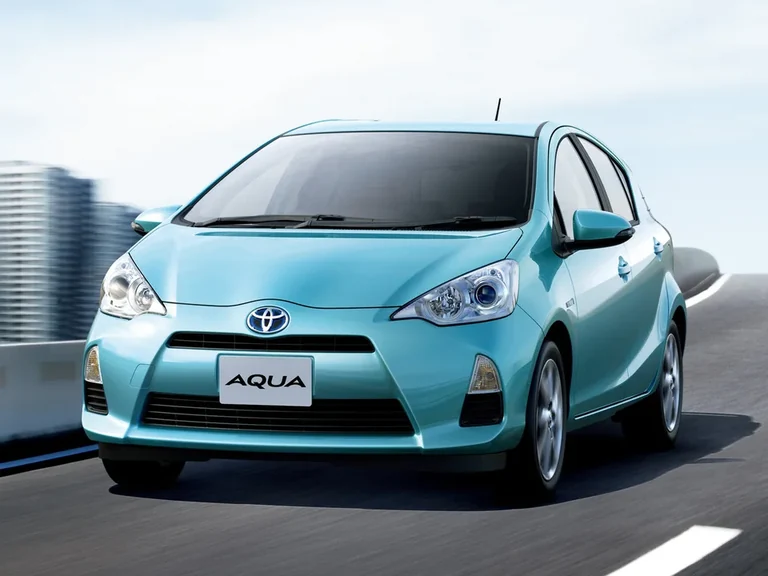
In the July 19, 2021 release about the current Aqua – this is the second generation, not like the one in the picture above – Toyota calls the THS II installation with a gearbox and indicates the M15A-FXE engine with a volume of 1.5 liters. Here, unlike the sequential scheme, both parts are involved in the movement: in the note to the power of the system, Toyota directly writes that this is the output value that the engine and electric motor are capable of producing.
Such an installation does not imply external charging: energy returns to the battery on the move, including when decelerating – in the same release, Toyota describes a mode in which it is enough to release the pedal for the car to slow down with the return of energy.
At the same time, it can drive on electricity alone: the model page describes a separate EV mode, in which the car moves quietly only on the engine – for example, so as not to make noise at night or not to release exhaust in the garage. And the release says that the new Aqua has an expanded speed range, in which the car moves on one battery without starting the engine. Next to it on the model page there is a reservation that clarifies the picture: electric driving is canceled and the engine is turned on regardless of the remaining charge – depending on the condition of the engine and hybrid battery, the operation of the air conditioner, driving style (sharp acceleration, speed) and road conditions, such as climbing. Hence the rule of reading ads: “in the city rides on electricity” is a condition, not a permanent property of the car.
The all-wheel drive in Toyota hybrids is designated as the E-Four. In the same release, this stands for an electric all-wheel drive system and is on a par with front-wheel drive: that is, the E-Four describes the drive, not a separate type of hybrid installation.
Generations, versions and body codes of Toyota hybrid models are disassembled separately: Aqua, Prius, Corolla Fielder, Sienta, Corolla Cross, Harrier and Alphard.
Lightweight circuit: the electrical part helps the engine
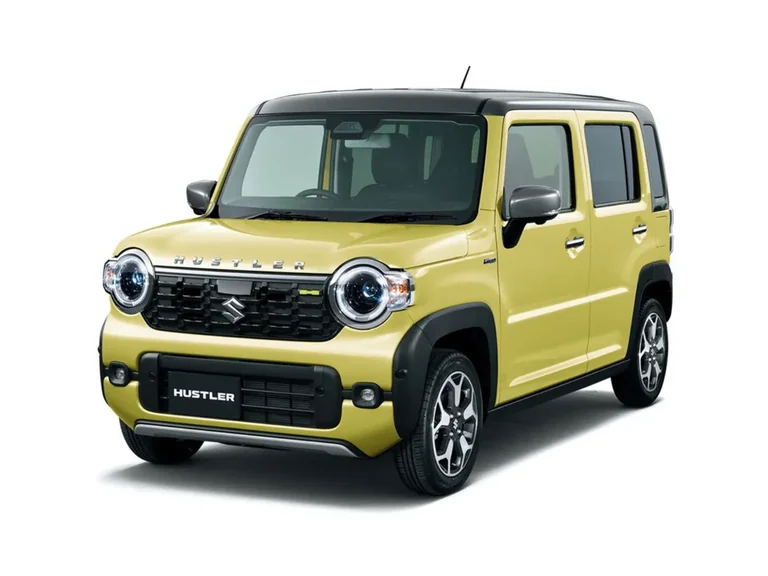
In the light circuit, the electric part does not carry the car, but helps the engine: when decelerating, it generates electricity, and when accelerating, it gives it back. This is how Suzuki describes a mild hybrid – and this is how it differs from a full hybrid, where the electric motor is able to pull the car itself.
“Mild hybrid” is the word of Suzuki itself, and not a market nickname. In the release about the new Hustler dated December 24, 2019 (sales from January 20, 2020), it is said directly: a mild hybrid is installed on all versions, a new R06D engine is made for atmospheric versions, and the gearbox is a new CVT. Hence the inscription HYBRID on the plates of all versions. What such a helping unit looks like can be seen in the example of Swift: there Suzuki calls the system SHVS and describes it as a built-in starter-generator (ISG) with a lithium-ion battery.
For the buyer, this leads to a simple thought: the HYBRID inscription on such a car does not promise electric driving. Versions by year are collected in the Suzuki Hustler catalog and the Suzuki Swift catalog, and generations and body codes are analyzed in articles about Hustler and Swift.
Plug-in hybrid: the battery is charged from the outside
The PHEV differs from all previous schemes in that its traction battery is charged from the outside. Mitsubishi on the Outlander PHEV page describes it in everyday life: at home – regular charging, on a long journey – fast charging at charging stations, and if the traction battery charge decreases, electricity is automatically generated by the engine. The outlet, therefore, does not turn the car into an electric car and does not cancel the engine – it adds a second source of energy.
Mitsubishi accompanies the declared values of consumption, electric range and electricity consumption with a reservation: these values under the established test conditions, and in real life they change markedly depending on operating conditions, daily mileage, battery charge state and air conditioner operation. For the brought car, the condition of the high-voltage battery is not determined according to the auction sheet – this is a separate check. Outlander generations, body codes and the difference between petrol versions and PHEV are analyzed in the article “Mitsubishi Outlander: generations, body codes and the choice between petrol and PHEV”, versions by year – in the Outlander catalog.
Diagrams nearby
| Scheme | Name on the body | Charging from the outside | What the manufacturer says | Versions in the catalog |
|---|---|---|---|---|
| Consistent | e-POWER | no | Nissan: the wheels are driven exclusively by the electric motor, the motor is used exclusively to charge the battery | Nissan Note |
| Serial with direct coupling at high speed | e:HEV | no | Honda: At low to medium speeds – as a sequential hybrid, at high speeds the clutch connects the engine directly to the wheels | Honda Vezel |
| Full hybrid installation | HYBRID | no | Toyota: THS II with gearbox; the power of the system is what the engine and electric motor are able to produce; there is a driving mode only on the motor, but electric traction depends on the conditions | Toyota Aqua |
| Easy scheme | HYBRID | no | Suzuki: electricity is generated when decelerating and helps the engine when accelerating; there is no independent driving on electricity in the description | Suzuki Hustler |
| Plug-in hybrid | PHEV | Yes | Mitsubishi: regular and fast charging from the outside, and when the charge decreases, electricity is generated by the engine | Mitsubishi Outlander |
What to check for a specific car
It is worth starting with the documents, and not with the inscription on the trunk lid. In one model of the same generation, the petrol and hybrid versions usually come under different body indexes: the second-generation Vezel RV3 and RV4 have petrol, RV5 and RV6 have a hybrid. This is an example of one model, and not a general rule for all brands: you need to check the full factory type, year of manufacture, configuration and what is written in the documents of a particular car.
The second is external charging. Only a plug-in hybrid has a charging connector hatch; in other circuits, the battery is charged by the engine and braking. But it is external charging that distinguishes the connector, and not electric traction in general: a regular hybrid also travels part of the way on electricity. Therefore, “rides on electricity” and “can be charged from the mains” are different statements, and it is worth distinguishing them in the description of the lot.
The third is the drive. Toyota’s all-wheel drive hybrids are designated as E-Four, and this is an electric all-wheel drive system, that is, a version of the drive, and not a separate type of installation; other brands have their own name for the all-wheel drive hybrid version. Therefore, “all-wheel drive” in the ad and a specific version in the documents are not always the same.
The fourth is consumption numbers. Toyota explicitly stipulates on the model page that consumption is measured under established test conditions and differs depending on weather, traffic jams and driving styles; Mitsubishi adds to this the daily mileage, battery state and air conditioning operation. These numbers describe the test, not the buyer’s route.
The fifth is power. In a hybrid, it is written in several lines at once, and you cannot add them together; why so, you can see in the article “The power of a hybrid from Japan: why the numbers don’t add up”.
And the last thing: generation and market. The same model in the Japanese and other markets can be produced with different settings and in different years, so you need to check the characteristics with the records of the market where the car comes from – this is analyzed in the article “One generation, different markets”.
Where to look next
An analysis of four specific hybrid versions of Honda and Nissan with characteristics is collected on the page “Hybrids from Japan”. The condition of the selected car, including the hybrid part, is checked separately – the procedure is described in the article “What we check before bidding”, and the service of ordering a car from Japan helps to choose a car.