Suzuki Swift from Japan: how to choose the generation and distinguish the regular versions from the Sport
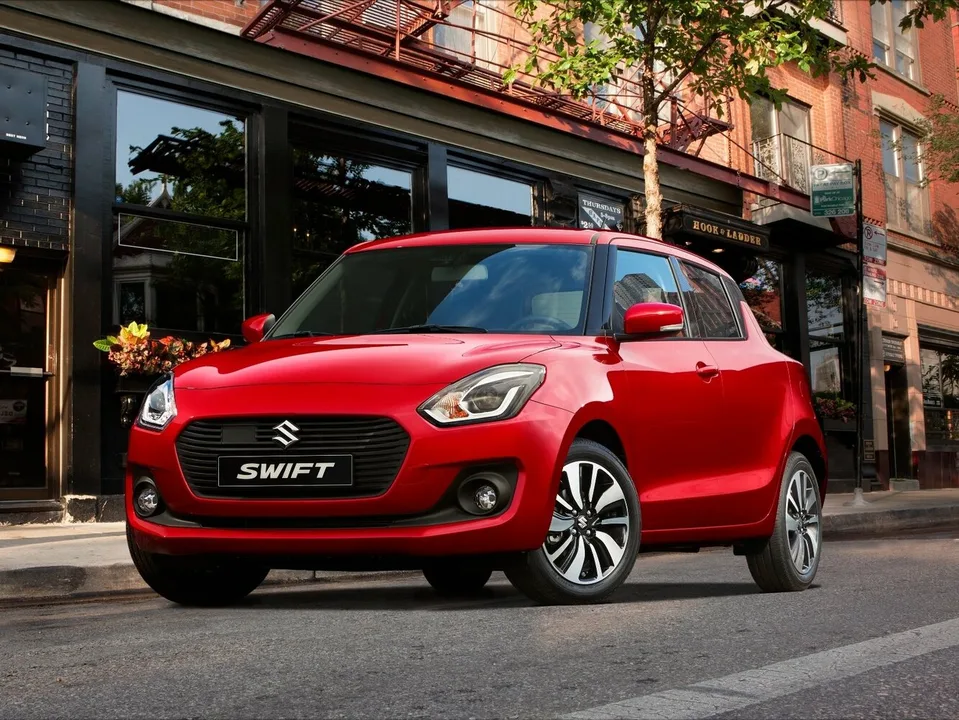
The Suzuki Swift has been sold in Japan since February 2000, and during this time five Japanese generations have changed, and the Swift Sport version appeared in four of them. From the buyer’s point of view, these are two different tasks: to understand which generation is in front of him, and not to confuse the regular Swift with the RS body kit with the real Sport. Both are solved by body code: the first two letters and the number after them name the generation and drive, and the Sport always has its own code – HT81S, ZC31S, ZC32S or ZC33S – because it has a different engine, gearbox, brakes and weight, and not just bumpers. Below is what is behind each Suzuki release code, where are which hybrids and why the Japanese Swift of 2004 is listed as the “third generation” in the catalog.
Where does generation numbering come from?
In the Swift catalog , the numbering is continuous for all markets: the first and second generations are considered to be the European Swifts of 1983 and 1989, which were sold in Japan under the name Cultus. Therefore, the Japanese Swift of 2000 is in the catalog as the “first generation” of the Japanese branch, the car of 2004 is “the third”, the car of 2010 is the “fourth”, the 2016 is the “fifth”, and the current, from 2023, is the “sixth”. Suzuki itself thinks otherwise: in the 2010 release, it counts the world model from November 2004, and calls the Swift Sport of 2017 the “third generation” – for cars of 2005, 2011 and 2017, not counting the three-door Sport of 2003. In this article, the generations are named after the body code, so as not to depend on the score: HT51S and HT81S; ZC11S, ZC21S, ZC71S and ZC31S; ZC72S and ZC32S; ZC13S, ZC53S, ZC83S, ZC43S and ZC33S; ZCEDS and ZDEDS.
HT51S and HT81S, 2000–2005: the first Japanese Swift and the first Sport
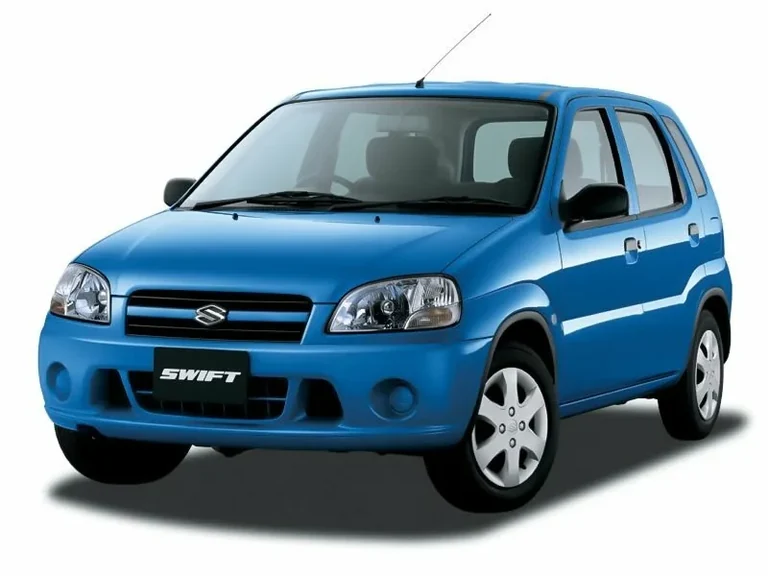
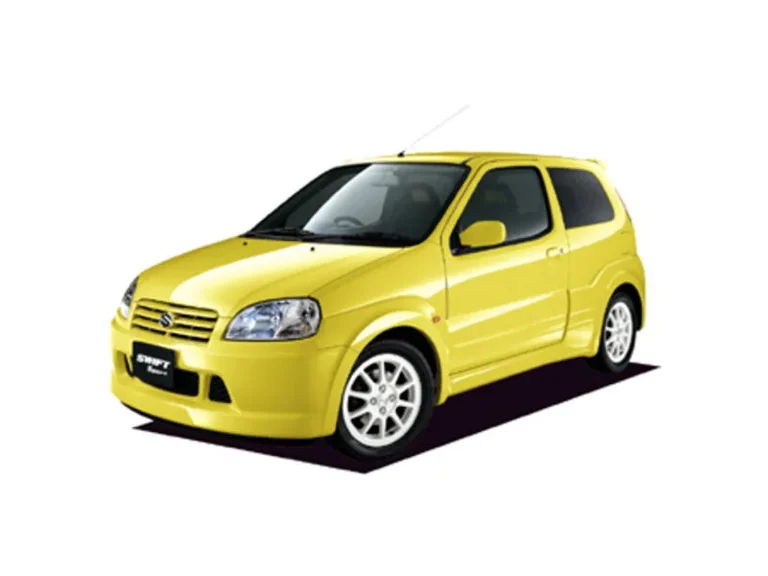
The first Swift Suzuki was released on February 9, 2000 on a new platform for small cars with a new 1.3-liter engine; the price included SE, SG and SX versions with front-wheel drive or all-wheel drive and a 4-speed automatic transmission, and the height of the body was selected so that the car entered the Japanese multi-storey parking. The five-door code is HT51S, the engine is 1.3 liters M13A, according to catalog data, 88 hp. On June 12, 2003, there was an update: a new grille, the SG-X version, and most importantly – the Swift Sport appeared with its own three-door body HT81S. It has a 1.5-liter engine with forged pistons at 85 kW and 143 Nm, only 5-speed manual with close gears, 15 mm lower suspension, disc brakes on all wheels, 185/55R15 tyres and front seats developed together with the Recaro. A regular five-door with 1.3 liters and a three-door Sport are two cars with different codes, and when searching, you should look at the HT81S, and not at the inscription “Sport” in the ad. Catalog entries: Swift 2000–2003, after the 2003 update, and Swift Sport HT81S.
ZC11S, ZC21S, ZC71S and Sport ZC31S, 2004–2010: the world’s Swift
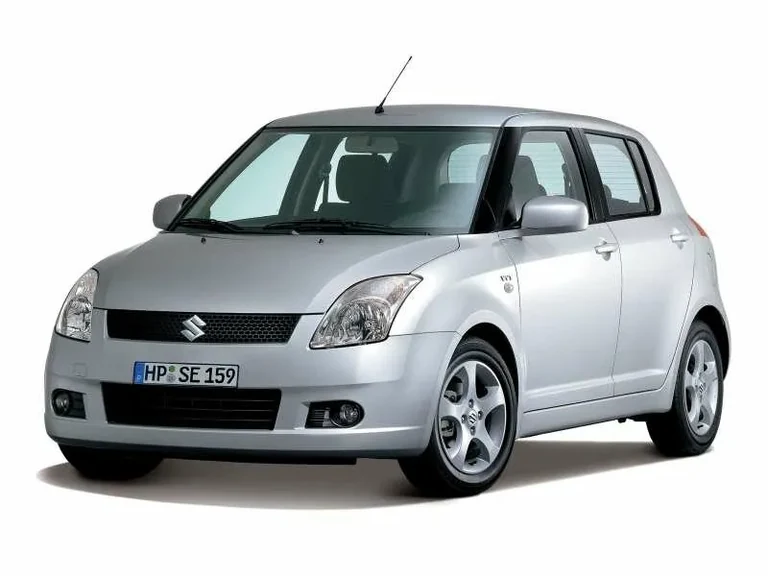
On November 1, 2004, the Swift was released, which Suzuki conceived as a world model: a new platform, a body of 3,695×1,690×1,510 mm (all-wheel drive 25 mm higher), production in Japan, Hungary, India and China. In Japan, only the five-door was sold – the three-door body of this generation was European. Engines: 1.3 liters for the 1.3XE and 1.3XG versions with a 5-speed manual or 4-speed automatic transmission, both with front-wheel drive or all-wheel drive, and 1.5 liters for the 1.5XS with automatic only; according to the catalog data, these are 91 and 110 hp. Codes are easy to read: ZC11S – 1.3 liters, ZC21S – 1.5 liters, and the letter D instead of C (ZD11S, ZD21S) means all-wheel drive. On May 24, 2007, a new 1.2-liter K12B with a CVT – 20.5 km / l on a cycle of 10 · 15 – and the Swift Style version; such Swift received the code ZC71S.
Swift Sport of this generation (ZC31S) appeared on September 7, 2005: automatic – from September 15, manual – from October 28. Suzuki described it as a “true compact sports car”: a custom-tuned 1.6-liter engine with forged pistons, aluminum intake, oil cooler and piston cooling nozzles, a 5-speed manual with a 200mm clutch or a 4-speed automatic transmission, 15-inch disc brakes on both axles, 16-inch wheels with 195/50R16 tyres, dual exhaust. The 1.6L power is not named in the release; according to catalog data, it is 125 hp. Sport has only front-wheel drive. In the catalog: Swift 2004-2007, 2007-2010 and code page ZC31S.
ZC72S and Sport ZC32S, 2010–2016
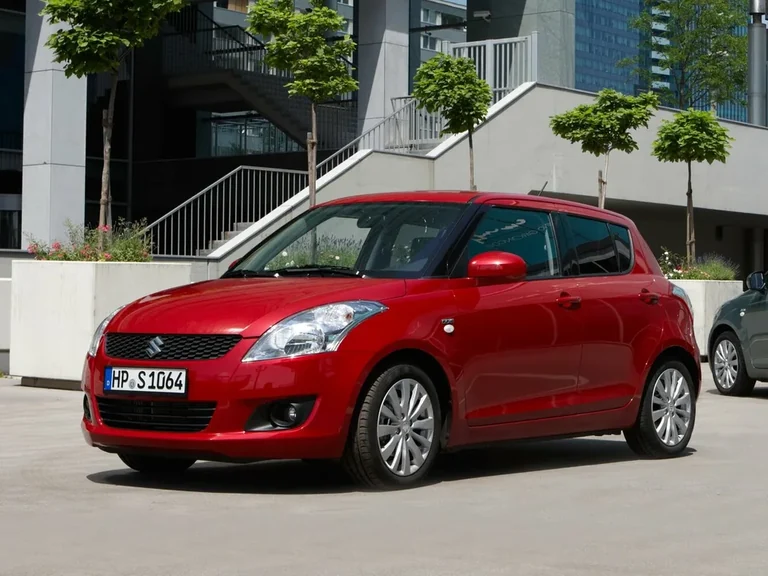
The next Swift was introduced on August 26, 2010 (sales from September 18): the new platform is lighter by 10 kg with greater rigidity, the wheelbase has increased by 40 mm, a new 1.2-liter engine with variable phases at the intake and exhaust and a CVT with a two-stage gearbox gave 23.0 km/l on a cycle of 10 · 15 for the front-wheel drive version, 21.0 with manual and 20.0 for 4WD. Code – ZC72S, all-wheel drive – ZD72S; According to catalog data, 1.2 liters here produces 91 hp. In September 2011, versions with an engine stop system at traffic lights were added, in November – a special version of the RS with a European-tuned suspension and an aerodynamic body kit. On July 17, 2013, Suzuki introduced versions of the DJE: the same K12B, but with two injectors per cylinder, an EneCharge recuperation system and a new engine shutdown system – 26.4 km/l according to JC08 for front-wheel drive; at the same time, ESP became standard for all versions.
Sport of this generation – ZC32S – was released on November 28, 2011: manual from December 13, CVT from January 27, 2012. The concept of “sports flagship”: 1.6-liter engine with variable intake geometry and increased valve lift by 100 kW (136 hp), 6-speed manual or special CVT with 7-speed manual mode and petals, body lighter by 10 kg, ESP as standard, consumption on the JC08 is 14.8 km/l with manual and 15.6 with CVT. It is important that the 2011 RS is not a Sport: the RS has a regular 1.2-liter engine, and the Sport is recognized by the code ZC32S. Directory entries: Swift 2010–2013, 2013–2016, code ZC32S.
ZC13S, ZC53S, ZC83S, ZC43S and Sport ZC33S, 2016-2025: three “hybrids” and a turbo
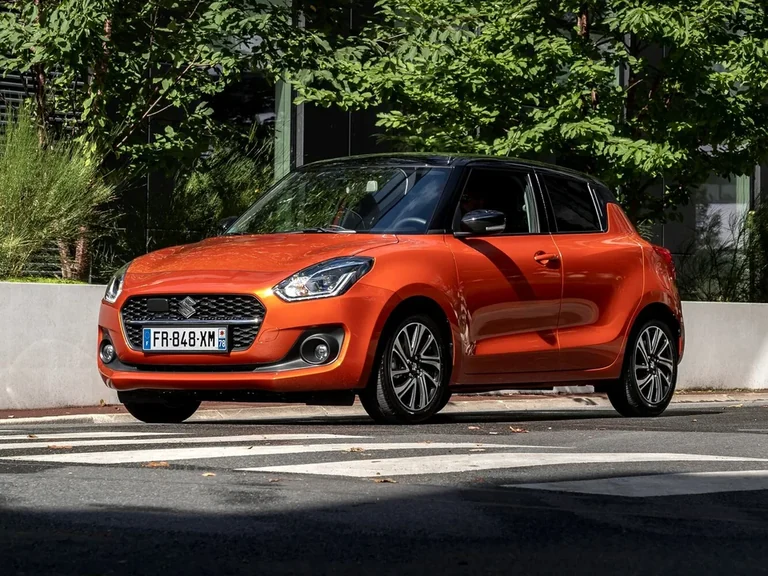
The Swift on the HEARTECT platform went on sale on January 4, 2017, becoming lighter than its predecessor by 120 kg (compared to the XG versions with mechanics), and it was in it that the word HYBRID began to mean different things. The HYBRID ML and HYBRID RS versions (since 2020 – HYBRID MG and HYBRID RS) are a “mild hybrid”: a 1.2-liter K12C with two injectors, an ISG starter-generator and a small lithium-ion battery that helps with acceleration to 30 seconds and restarts the engine after stopping; consumption is 27.4 km/l according to JC08 for front-wheel drive, there is 4WD. The code for such cars is ZC53S, all-wheel drive – ZD53S. Regular XG, XL and RS with the same K12C without a hybrid – ZC83S and ZD83S, 24.0 km / l with a CVT. RSt version with a 1.0-liter K10C Boosterjet turbo engine and a 6-speed automatic transmission – ZC13S, 20.0 km / l. And on July 12, 2017, a second hybrid, HYBRID SG and HYBRID SL, appeared, which has a different scheme: an MGU traction motor, a 100-volt lithium-ion battery under the trunk floor and an AGS robotic transmission, which allows you to drive on electric traction while crawling and at a constant speed of about 60 km/h; 32.0 km/l according to JC08, weight up to 1,000 kg, code ZC43S. Since May 2020, this version has been called HYBRID SZ and came with a 5-speed AGS, and the WLTC line looked like this: XG with a 20.0 km/l CVT, HYBRID MG 21.0, HYBRID SZ 23.0. The K12C and K10C capacities are not given in Suzuki releases; according to catalog data, these are 91 and 102 hp.
The Swift Sport ZC33S was released on September 20, 2017 and was the first turbocharged Sport: 1.4-liter K14C Boosterjet – 103 kW at 5,500 rpm and 230 Nm in the range of 2,500-3,500, 6-speed manual or 6-speed automatic transmission, weight 70 kg less than its predecessor, consumption according to JC08 16.4 and 16.2 km/l; in 2020 according to WLTC – 17.6 and 16.6. The price at the start is 1,836,000 and 1,906,200 yen. The ZC33S closes the history of the Sport: on December 17, 2024, Suzuki announced a special version of the ZC33S Final Edition with sales from March 19, 2025 and release from March to November 2025, and the regular Sport was discontinued in February 2025. In the catalog: Swift 2016-2025, codes ZC53S, ZC43S and ZC33S.
ZCEDS and ZDEDS, from 2023: three-cylinder Z12E
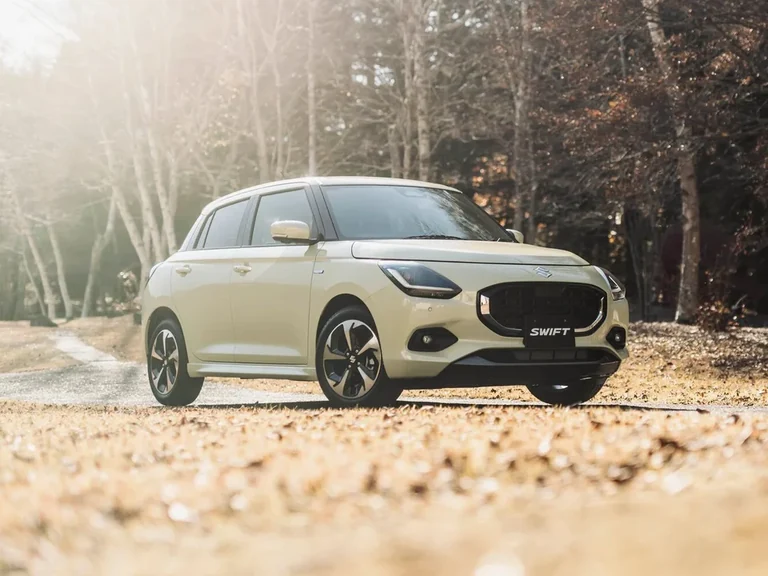
Suzuki unveiled the current Swift on December 6, 2023: versions with CVT are sold from December 13, with mechanics – from January 17, 2024. The only engine is a new 1.2-liter three-cylinder Z12E with a new CVT, according to catalog data 82 hp; a mild hybrid for the first time in Suzuki in Japan is combined with a 5-speed manual. The body, 3,860 × 1,695 × 1,500 mm, stayed within the Japanese “number five” class; the turning radius is 4.8 m. Versions: XG without hybrid (ZCDDS, all-wheel drive ZDDDS), HYBRID MX and HYBRID MZ (ZCEDS and ZDEDS); according to WLTC XG with a CVT gives 23.4 km / l, HYBRID MX with manual – 25.4, with a CVT – 24.5, 4WD – 22.7. The MZ version features an electric parking brake, adaptive high beam and stop-stop cruise control. There is no Sport in this generation: no new version of the Sport has been announced in the Suzuki release archive until June 2026 – only the Suzuki SPORT accessory body kit for the regular Swift. Catalog entry: Swift from 2023.
How to distinguish Sport from the regular version by code and documents
The first is the body code: the Sport has a third “3” sign (ZC31S, ZC32S, ZC33S) or the HT81S code for the 2003 three-door; the regular versions have 1, 2, 7, 5, 8, 4, D or E. The second is the drive and transmission: the Sport is never all-wheel drive, so any ZD code is not Sport, and the Sport has its own gearbox combinations: 5MT for the HT81S, 5MT/4AT for the ZC31S, 6MT/CVT for the ZC32S, 6MT/6AT for the ZC33S. The third is the engine in the documents: 1.5 liters for the HT81S, 1.6 liters for the ZC31S and ZC32S, 1.4 liters with a turbo for the ZC33S, while the regular versions are 1.3, 1.5, 1.2 or 1.0 liters. The word RS in a version name is misleading: the RS of 2011 and the HYBRID RS of 2017 are ordinary Swifts with a body kit and retuned suspension, not the Sport. Finally, in the fifth generation, it is important to distinguish three hybrids by code: ZC53S/ZD53S is a mild hybrid with ISG, ZC43S IS A HYBRID SG/SL/SZ with a traction motor and an AGS robot, ZC13S is a turbo without a hybrid. How to read Japanese codes in general is described in the article on body code; About why the power numbers of hybrids do not add up, see the article about the power of a hybrid.
What to check before buying
For Sport, the main thing is history: these are cars that were often bought for the sake of driving, so in the auction sheet it is worth looking at the traces of bumper and body kit replacement, the condition of the clutch at the mechanics and at non-standard parts: the wheels, exhaust and suspension of such cars are often replaced, and this should be visible in the description of the lot. For the usual fifth-generation versions, check which hybrid is indicated: The HYBRID SG/SL/SZ has an AGS robot and a traction motor, the HYBRID ML/MG/RS has a CVT and a starter-generator, and in the list this is distinguished by the code ZC43S versus ZC53S. For cars from 2016, it is worth checking the presence of a safety package with a camera and laser radar – at the start it was an option (Safety Package) and was not included in the basic XG. A general rule applies to all generations: the year of manufacture and the version must match the body code in the sheet, not the badge on the car. What GTYRES checks for the lot before the bid is in a separate article, the selection conditions are on the page about cars from Japan.