Mazda Roadster: Generations, Engines and RF Differences
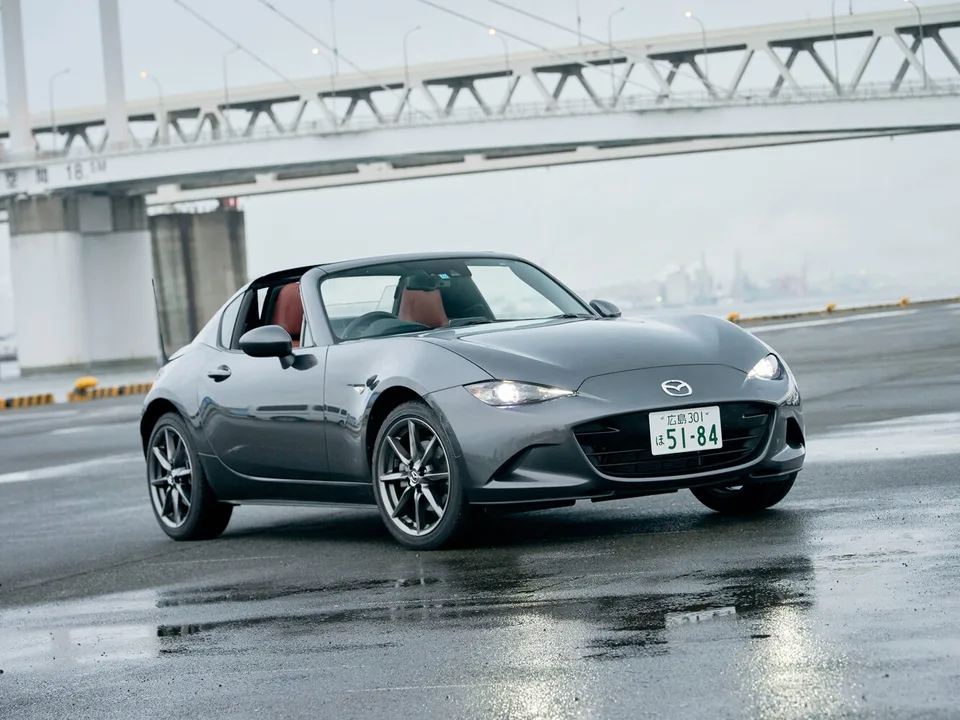
The Mazda Roadster has been sold in Japan since September 1989, and during this time four generations have changed: NA (1989-1997), NB (1998-2005), NC (2005-2015) and the current ND, since May 2015. The name is important immediately: Roadster is the Japanese name of the car, which is known in other markets as MX-5 and Miata, and the first generation in Japan was sold through a separate Eunos network as the Eunos Roadster. It is the Japanese right-hand drive version that comes from auctions, and its characteristics, configurations and body codes differ from the European and American MX-5, so you need to compare the Japanese Roadster with the Japanese tables. The second frequent question is about the roof. The Roadster had three factory versions with a hardtop, which are constantly confused: a non-removable version for the 2003-2004 Roadster Coupe, a folding electric RHT for the third generation from 2006, and a folding one with rear pillars for the current RF – and only the last one is called RF. Below are what changed in terms of Mazda releases, what engines and gearboxes were in each generation, and how to read the body code from the auction sheet. All generations, codes and versions are collected in the Roadster catalog.
Roadster Generations & Body Codes
| Series and years | Body codes | Engines | Boxes | Roof |
|---|---|---|---|---|
| NA, 1989–1997 | NA6CE, NA8C | 1.6 l B6-ZE, 120 hp (110 with automatic); 1.8 l BP-ZE, 130 hp | 5MT, 4AT | Soft |
| NB, 1998–2000 | NB6C, NB8C | 1.6 l B6-ZE, 125 hp; 1.8 l BP-ZE, 145 hp | 5MT for 1.6; 6MT for 1.8; 4AT | Soft |
| NB after the update, 2000–2005 | NB6C, NB8C | 1.6 l B6-ZE, 125 hp (120 with automatic); 1.8 l BP-VE, 160 hp (154 with automatic); 1.8 l turbo BP-ZET, 172 hp (limited edition) | 5MT, 6MT, 4AT | soft; Roadster Coupe 2003–2004 – non-removable |
| NC, 2005–2008 | NCEC | 2.0 l LF-VE, 170 hp (166 with automatic) | 5MT, 6MT, 6AT | soft; from 08.2006 – folding hard RHT |
| NC after updates, 2008–2015 | NCEC | 2.0 l LF-VE, 170 hp (162 with automatic) | 5MT, 6MT, 6AT | Soft or RHT |
| ND, since 2015 | ND5RC, from 2024 to ND5RE | 1.5 l P5-VP (SKYACTIV-G 1.5), 131 → 132 → 136 hp | 6MT, 6AT | Soft |
| ND RF, since 2016 | NDERC, since 2024 — NDERE | 2.0 l PE-VPR (SKYACTIV-G 2.0), 158 hp, from 2018 – 184 hp | 6MT, 6AT | RF – Folding Rigid with Fastback |
How to read the Roadster body code
In Japanese documents, the code is written with the prefix of the emission class: E-NA6CE, GF-NB8C, CBA-NCEC, DBA-ND5RC, 5BA-NDERC. The prefix changes along with the norms and does not indicate the generation, so you need to compare the part after the hyphen and check it with the table above. According to the compliance catalog, the Roadster has the following: NA6CE – 1.6 liters of the first generation, NA8C – 1.8 liters of the first generation; NB6C – 1.6 liters of the second, NB8C – 1.8 liters of the second, including the turbo version and Roadster Coupe; NCEC – the only third-generation code with 2.0 liters, the same for soft top and RHT; ND5RC – 1.5 liters of the fourth generation with a soft roof, NDERC – 2.0 liters in the RF body; after the 2024 update, the ND5RE and NDERE entries for the same versions appear in the catalog. In other words, the first two generations have a digit in the code that is responsible for the engine volume, the third has one code, and the fourth has a digit after ND – the number 5 or the letter E – distinguishes between 1.5 liters and 2.0 liters, and with it – a soft top and RF. There is no universal rule for all Mazdas from this: the Roadster does not have drive options, and the code does not say anything about the gearbox, you need to look at it separately. Each code in the catalog has a page — NA6CE, NB8C, NCEC, ND5RC, NDERC — and a separate article explains where to look for the code field in the auction sheet.
NA, 1989–1997: Eunos Roadster
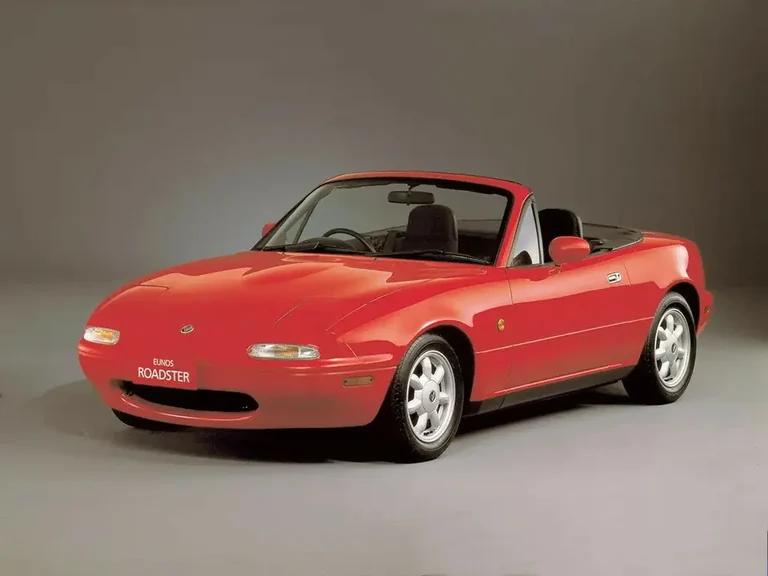
The first Roadster was released in Japan in September 1989 through the new Eunos dealer network and was called the Eunos Roadster; Mazda in its history recalls the price of about 1.7 million yen and queues at preliminary shows. Rear-wheel drive, soft top, lifting headlights and a 1.6-liter B6-ZE engine rated at 120 hp in the catalog with a five-speed manual – the automatic appeared later, and with it the 110 hp version. From August 1993 the range was joined by the 1.8-liter BP-ZE with 130 hp, which corresponds to the NA8C code, while the 1.6-liter remained in the NA6CE. According to the 1998 Mazda release, more than 430 thousand cars were produced in more than eight years of the first generation. Today, these are the oldest Roadsters, and the condition of a particular example means more than the difference between 1.6 and 1.8 liters. The generation page is in the catalogue.
NB, 1998–2005: fixed headlights, six gears and Roadster Coupe
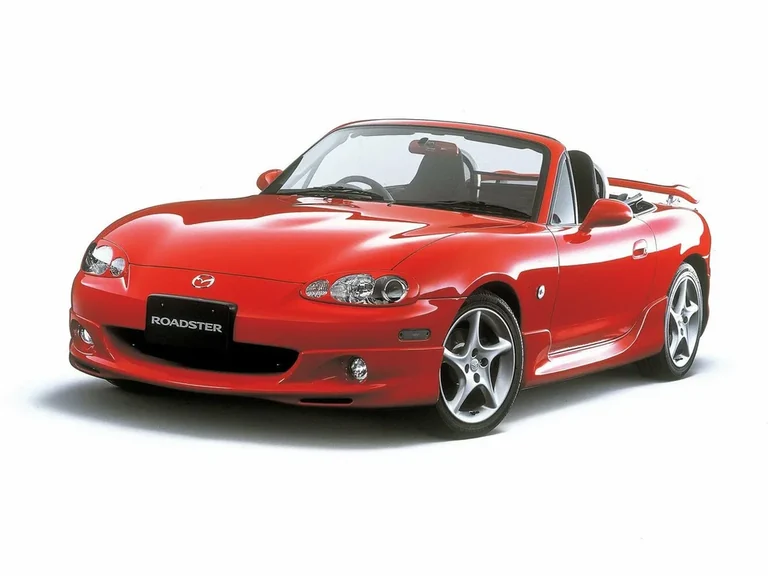
Mazda released the second generation on January 8, 1998. The lifting headlights were replaced by fixed ones – in the release this is due to weight savings, visibility and aerodynamics – and the dimensions have not changed much: 3955 mm long, 1680 mm wide, 1235 mm high with a base of 2265 mm, 5 mm wider than the first generation. The engines remained the same in families, 1.8 liters BP and 1.6 liters B6 with DOHC, but with a modified intake and exhaust, and the 1.8 liters had a six-speed manual for the first time. According to the catalog, these are 125 hp for the NB6C and 145 hp for the NB8C. On July 18, 2000, a major update followed: new headlights and a bumper with a pentagonal air intake, a reinforced body, and the 1.8 liter received the S-VT system with variable intake phases and 118 kW, that is, 160 hp. at 7000 rpm; the RS and RS-II versions were powered by 205/45R16 tyres with Bilstein shock absorbers. By this time, Mazda had counted 565,779 cars produced since April 1989 and received an entry in the Guinness Book of Records as the most mass-produced two-seater small roadster. In the catalog, the phases are separated: 1998-2000 and 2000-2005.
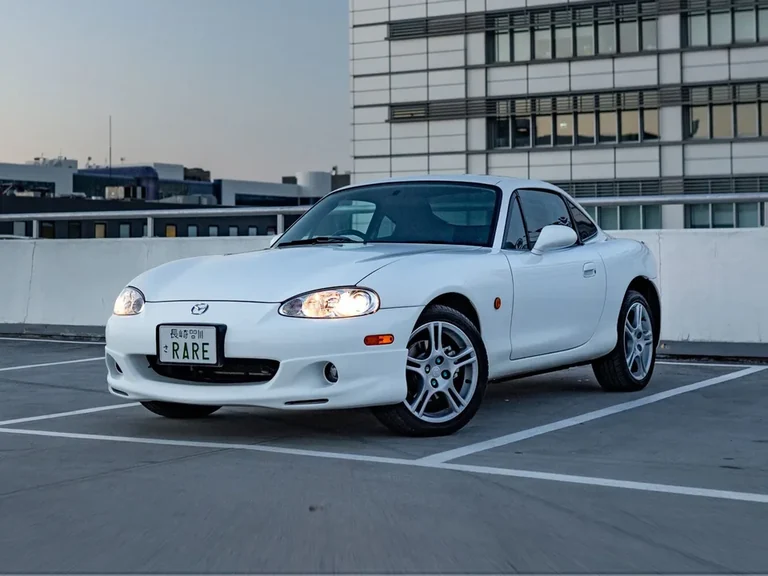
The second generation had two special versions, which could easily be confused with something else. On October 9, 2003, Mazda announced the Roadster Coupe, a two-seater coupe with a fixed roof, assembled in a small series by Mazda subsidiary E&T to order; In the release, it is called the only Japanese rear-wheel drive coupe in the dimensions of the “fifth number”, and the weight gain is estimated at about 10 kg. There were four versions: the base 1.6 liter with a five-speed manual (125 hp), the Type S and Type A 1.8 liters with a six-speed (160 hp) and the Type E 1.8 liters with a four-speed automatic transmission (154 hp), and the Type A was limited to 200 copies, and the Type E was limited to 150 copies. This roof is not removable or folded, and has nothing to do with the RF. The second rarity is the Roadster Turbo, announced on December 24, 2003 with sales from February 2004: 1.8 liters with an intercooler of 172 hp at 6000 rpm, six-speed manual, Torsen self-locking differential, 205/40R17 tyres, circulation of 350 cars; according to the catalog, its engine is recorded as BP-ZET, and the body code remains NB8C. The coupe page in the catalog is a separate line.
NC, 2005–2015: 2.0 L MZR and RHT Folding Hardtop
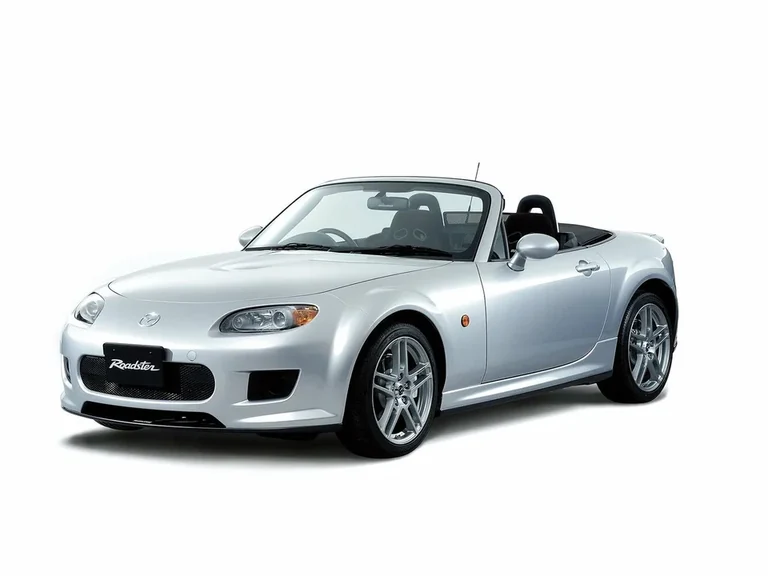
The third generation was released on August 25, 2005, seven years after the second. There was only one engine – a new 2.0 liter MZR, with a release of 125 kW (170 hp) at 6700 rpm with manual transmission and 122 kW (166 hp) with an automatic transmission; there are three gearboxes: five- and six-speed manual and six-speed Active automatic transmission. The body grew to 3995 mm in length and 1720 mm in width with a base of 2330 mm and a height of 1245 mm, weight 1090-1100 kg, trunk 150 liters; Mazda planned 360 sales per month. According to the catalog, the engine is recorded as LF-VE, the body code for all versions is NCEC. On August 23, 2006, the Power Retractable Hard Top version, abbreviated RHT, was added: the lightweight hardtop folds electrically behind the backrests of the seats in about 12 seconds and does not take away the volume of the trunk – Mazda called this scheme the first in its class. The RHT and the soft top went in parallel until the end of the generation, and both in the catalog pass under the NCEC code, so the type of roof cannot be determined by the code – only by the description of the lot and photos.
On December 9, 2008, the Roadster was updated: a pentagonal grille in the spirit of the rest of the Mazda, new headlights and lights, the manual had a rev limit raised to 7500 rpm, the automatic had Direct Mode and Active Adaptive Shift modes; The RHT received its own mesh grille in chrome. According to the catalog, the power with the automatic after the update is 162 hp. The second update on July 5, 2012 changed the front end again and separated the soft roof and RHT trim: black accents on the first, silver on the second. All three phases are in the catalog: 2005-2008, 2008-2012 and 2012-2015.
ND, since 2015: 1.5 L with soft top and RF with 2.0 L
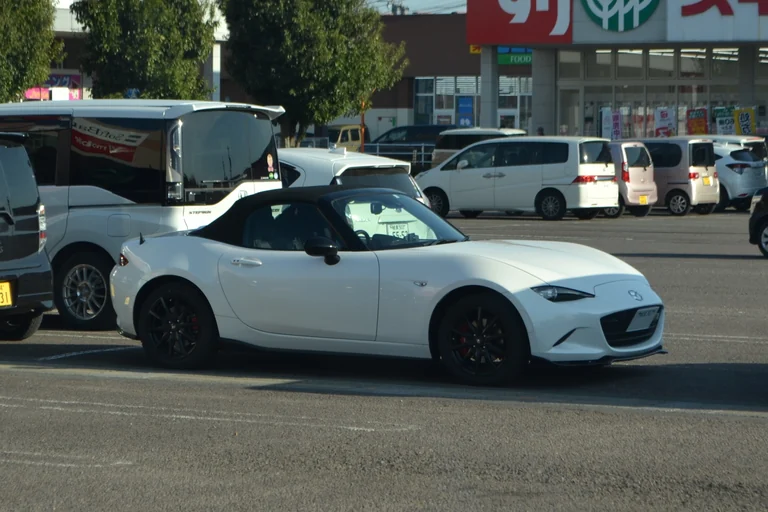
The fourth generation was released on May 21, 2015. Mazda returned the car to the lightness of the first generation: the new SKYACTIV-G 1.5 engine with direct injection is behind the front axle, the weight distribution is 50:50, the share of aluminum and high-strength steels in the body has increased to 71%, and the weight is 990-1060 kg, more than 100 kg less than its predecessor. Transmissions are a new six-speed manual SKYACTIV-MT and a six-speed automatic transmission, startup prices are 2,494,800-3,142,800 yen, the plan is 500 cars per month. According to the catalog, the engine is recorded as P5-VP, 131 hp, body code ND5RC. The serial Japanese ND with a soft top comes with 1.5 liters; two-liter cars with a soft top in the catalog are found only in a few entries of limited series. Overseas MX-5 cars are equipped differently, so specifications from foreign sources should be applied to the Japanese Roadster only after checking them against the catalog.
The RF is a standalone version that was shown on November 10, 2016 and went on sale on December 22. The name means “fastback retrocuttable”: the hardtop folds behind the seat backrests, and the rear pillars with a sloping line remain in place, hence the silhouette of the open-top coupe; it takes about 13 seconds to open. It was the RF that received the larger SKYACTIV-G 2.0 – according to the catalog PE-VPR, 158 hp, body code NDERC, – S, VS and RS trim levels, price from 3,240,000 yen. On June 7, 2018, Mazda announced an update with sales from July 26: the two-liter RF engine raised the RPM limit from 6800 to 7500 rpm, and the power at high revs increased by more than 15%, according to the catalog it is 184 hp; 1.5 liters were also modified – 132 hp; for the first time in the history of the model, an adjustable steering column appeared, and most of the i-ACTIVSENSE driver assistance complex became standard equipment in all versions. On October 5, 2023, a major update followed with sales from mid-January 2024: an asymmetrical limited-slip differential, DSC-TRACK mode for mechanics, LED optics, an 8.8-inch display, a 1.5-liter increase of 3 kW to 136 hp; in the catalog, these cars are written with the codes ND5RE and NDERE. The next improvement was announced on June 26, 2026 with sales from September, prices starting at 2,959,000 yen for the soft top and from 3,850,000 yen for the RF. Both lines are in the catalog: Roadster from 2015 and Roadster RF from 2016.
What to choose
If you need the lightest and closest to the original idea of the Roadster, this is the ND with a soft roof: 1.5 liters, mechanics and a weight of about a ton; the RF with a 2.0 liter is responsible for a calm automatic transmission and a quiet interior with a closed roof, and it is also the most expensive. The third generation NC is the only production combination of a two-liter engine and a soft roof, and its RHT gives a hardtop without losing the trunk; when choosing the NC, it is useful to clarify the type of roof from the photos, because both versions have the same code. The NB is the oldest of the options with a six-speed manual in the 1.8 liters, and the Roadster Coupe and Turbo are rares with a limited edition, for which the authenticity of the configuration is important. What the generation and market mean in the description of the Japanese lot, explains the article about the generation and market of the Japanese car; and if an open two-seater body is not necessary, it is worth looking at the rear-wheel-drive coupes Toyota GR86 and Subaru BRZ in the catalog.