Subaru Forester: generations, body codes and engines
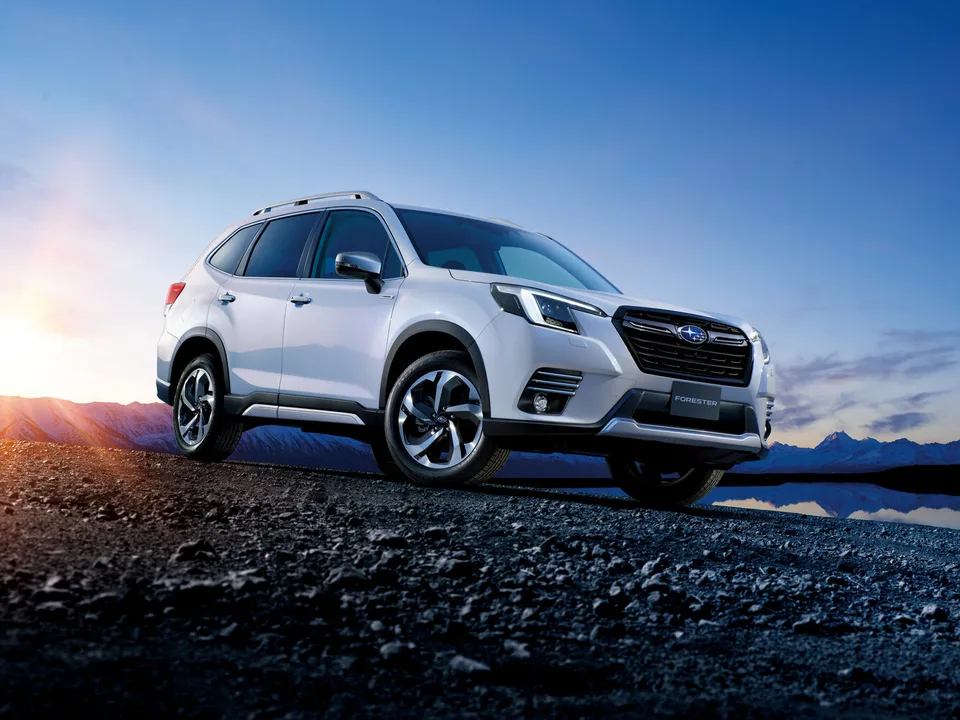
The Subaru Forester has been sold in Japan since February 1997, and during this time six generations have changed: SF (1997-2002), SG (2002-2007), SH (2007-2012), SJ (2012-2018), SK (2018-2025) and the current SL, from April 2025. All Japanese Foresters are all-wheel drive, with a boxer engine, but the similarities end there: the first three generations had the main choice between a naturally aspirated 2.0 liter and a turbo engine, the SJ turbo became a two-liter DIT with 280 hp, the SK had an e-BOXER hybrid and a 1.8-liter CB18 turbo engine, and the SL had a strong S:HEV hybrid. The body code helps to figure it out, but you need to read it according to the table of a specific generation: the same number in different series means different engines, and the atmospheric version from the turbo code in early generations does not distinguish at all. Below is what changed in terms of Subaru releases, what engines and gearboxes were in each series and what to look for in the ad. All generations, codes and versions are collected in the Forester catalog.
Forester Body Generations & Codes
| Series and years | Body codes | Engines | Boxes |
|---|---|---|---|
| SF, 1997–2002 | SF5, SF9 | 2.0 l naturally aspirated EJ20, 135-137 hp; 2.0 l turbo EJ20G/EJ205, 250 and 240 hp; 2.5 l naturally aspirated EJ25, 167 hp (T/25, 1998–present) | 5MT, 4AT |
| SG, 2002–2007 | SG5, SG9 | 2.0 l naturally aspirated EJ20, 137 → 140 hp; 2.0 l turbo EJ205, 220 hp; 2.5 l turbo EJ255, 265 hp (STI Version) | 5MT, 4AT; STI Version has 6MT |
| SH, 2007–2012 | SH5, SHJ, SH9 | 2.0 l naturally aspirated EJ204, 148 hp, from 2010 – FB20, 148 hp (SHJ); 2.0 l turbo EJ205, 230 hp; 2.5 l turbo EJ255, 263 hp (S-EDITION, tS) | 5MT, 4AT; 2.5 liter turbo – 5AT |
| SJ, 2012–2018 | SJ5, SJG | 2.0 l naturally aspirated FB20, 148 hp; 2.0 l turbo FA20 DIT, 280 hp | Lineartronic CVT; 2.0 L naturally aspirated also has 6MT |
| SK, 2018–2025 | SK9, SKE, SK5 | 2.5 l FB25 naturally aspirated, 184 hp (until the October 2020 update); 2.0 l e-BOXER FB20, 145 hp plus 13.6 hp electric motor; 1.8 l turbo CB18, 177 hp (from 2020) | Lineartronic |
| SL, since 2025 | SLG, SL5 | 2.5 l hp S:HEV FB25 hybrid, 160 hp plus 88 kW traction motor; 1.8 l CB18 turbo, 177 hp | Lineartronic |
How to read the Forester body code
In Japanese documents, the code is written with the prefix of the emission class – E-SF5, GF-SF5, TA-SG5, CBA-SG5, DBA-SH5, DBA-SJ5, 5BA-SK9, 5AA-SKE, 3BA-SL5; the prefix changes with the norms, not with the generation, so you need to compare the part after the hyphen and check it with the table above. Two letters are the series, and the third digit is responsible for the engine, but only within its series. According to the catalog, the correspondence is as follows: SF5 – 2.0 liters of the first generation, both naturally aspirated and with a turbine, SF9 – 2.5 liters; SG5 – 2.0 liters of the second generation, again both versions, SG9 – 2.5 liters turbo from the STI Version; SH5 is a third-generation 2.0 L EJ series, SHJ is a new naturally aspirated FB20 after the 2010 update, SH9 is a 2.5 L turbo; SJ5 is 2.0 L naturally aspirated, SJG is a 2.0 L turbo DIT; SK9 is 2.5 L naturally aspirated, SKE is an e-BOXER hybrid, SK5 is a 1.8 L turbo; SLG is an S:HEV hybrid, SL5 is a 1.8 L turbo. Two practical conclusions come from here. The first: the five in the SF5, SG5 and SH5 means a two-liter engine, and in the SK5 and SL5 it means a 1.8-liter turbo, so without a generation table, the number does not say anything. Second: in the first three series, the turbo and atmospheric versions share the same code, and you have to distinguish them by the name of the configuration in the lot – S/tb, XT, 2.0XT – and by the air intake on the hood. It is not worth deducing the rule for other Subaru from this: neighboring models of the brand have front-wheel drive versions and their own code schemes, and the Forester always has full drive and is not indicated in the code. Code pages in the catalog: SF5, SG5, SG9, SH5, SHJ, SJ5, SJG, SK9, SKE, SK5, SLG; a separate article explains where to look for the code field in the auction sheet.
SF, 1997–2002: first Forester, EJ20 and turbo S/tb
The first generation was released in Japan in February 1997 as an SUV with passenger manners: a high seating position and ground clearance of an SUV with the dimensions of a station wagon, a boxer engine and permanent all-wheel drive. According to the catalog, the basic 2.0 liter EJ20 naturally aspirated developed 135 hp, and after changing the engine version – 137 hp; the turbocharged 2.0 liter in the S/tb trim level is recorded as the EJ20G for 250 hp. and then the EJ205 for 240 hp. Both versions carry the SF5 code. In September 1998, Subaru added the T/25 trim level with a naturally aspirated 2.5 liter and the AVCS phase change system – according to the release, this is the third engine in the lineup, according to the catalog 167 hp. and the code SF9; The T/25 came only with a four-speed automatic transmission. On January 13, 2000, the updated NEW Forester went on sale: a new hood and bumper, multi-reflector headlights, redesigned suspensions, the S/20 and C/20 had a lean combustion engine for consumption, some versions had a Brake Assist booster; the sales plan was 3000 cars per month. On early Foresters some manual versions had the Dual Range low ratio, and the automatics differed in how they split torque – this is worth checking for a specific modification in the catalog. Catalogue pages for the phases: 1997–1999 and 2000–2002.
SG, 2002–2007: Crossover, XT and STI Version
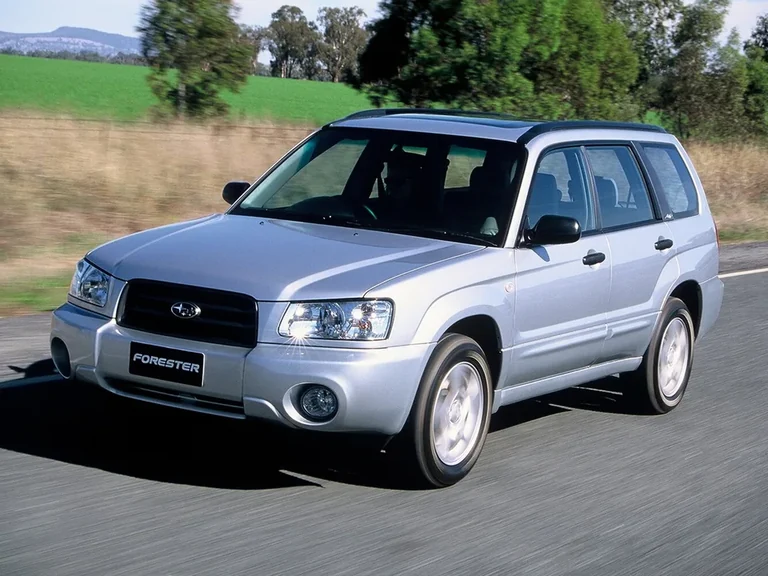
The second generation was released on February 12, 2002 under the slogan “BEST of BOTH” – a combination of the advantages of an SUV and a passenger car. The dimensions have not changed much, but the body has become about 30 kg lighter due to aluminum parts, the ground clearance is fixed at 200 mm, and the lineup consists of three versions: X and X20 with a naturally aspirated 2.0 liter SOHC and XT with a new “crossover-turbo” 2.0 liter DOHC, in which Subaru separately noted the torque at the bottom and consumption of 13.0 km/l on a 10 × 15 cycle. According to the catalog, this is 137 hp for the EJ202 and 220 hp for the EJ205, both under the code SG5; the gearboxes are a five-speed manual transmission, in the X and X20 with a reduction gear, and a four-speed E-4AT automatic transmission. On January 27, 2005, a major update followed: a new front end with four round headlight sections, water-repellent interior materials, a reinforced chassis, smoother all-wheel drive, and a naturally aspirated 2.0 liter received an equal-length production and, according to the catalog, 140 hp like the EJ203; an automatic with a sports mode appeared in the 2.0XS and 2.0XT. From May 6, 2005, the STI Version was sold – a “pure sports SUV” with its own 2.5 liter turbo, six-speed manual, 18-inch Brembo wheels and brakes, a ground clearance of 170 mm and a plan of 150 cars per month; according to the catalog, it is the EJ255 with 265 hp. and the code SG9. Phases in the catalog: 2002–2004 and 2005–2007.
SH, 2007–2012: Larger and softer, the new FB20 in 2010
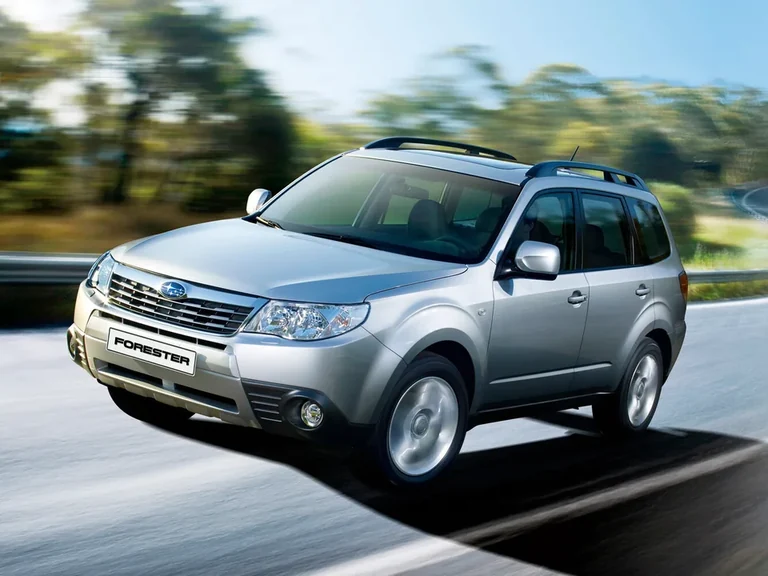
The third generation went on sale on December 25, 2007 with the “BEST BALANCE FOR ACTIVE LIFE” concept: Subaru increased length, width, height and wheelbase to add space in the cabin, and abandoned frameless doors for passive safety. There are two engines, both 2.0 liters DOHC: naturally aspirated in the 2.0X and 2.0XS and turbocharged in the 2.0XT; according to the catalog, these are the EJ204 with 148 hp. and the EJ205 with 230 hp, both under the code SH5, with a five-speed manual or a four-speed automatic transmission with a sports mode; the plan is 2000 cars per month. The update of October 25, 2010 is noticeably more important for the choice than it seems in terms of external changes: the naturally aspirated versions received a new generation FB20 engine – according to the catalog 148 hp, but with the code SHJ, and the S-EDITION trim level was added to the lineup with a 2.5-liter turbo from the Impreza WRX STI A-Line and a five-speed automatic transmission with manual mode, according to the catalog EJ255 for 263 hp. and code SH9. On its basis, STI released a limited series tS of 300 cars with sales from December 24, 2010. So SH within the same generation coexist two different naturally aspirated engines with the same power, and only the body code – SH5 or SHJ – says which of them is under the hood. Phases in the catalogue: 2007–2010 and 2010–2012.
SJ, 2012–2018: FA20 DIT for 280 hp and EyeSight
Subaru introduced the fourth generation on November 13, 2012. The naturally aspirated versions of the 2.0i, 2.0i-L and 2.0i-S retained the FB20 for 148 hp. in the catalog, but received a new Lineartronic CVT, and the six-speed manual remained only in some of the atmospheric versions; instead of the previous turbo engine, a 2.0 liter with direct injection and a dual-flow FA20 DIT turbine appeared: 206 kW, that is, 280 hp, and 350 Nm already with 2000 rpm, Paired with a reinforced CVT and its own suspension tuning. The codes went on sale by engine: SJ5 – atmospheric, SJG – turbo. For the first time, the Forester has an off-road X-MODE mode, which combines engine, transmission and stabilization system control, and the EyeSight complex of the second version became available for both atmospheric and turbo versions. A major update went on sale on November 2, 2015: a new front end, EyeSight of the third version, LED headlights with adaptive high beams and turn lights, a new steering mechanism and thicker door glass for silence. The engines and the codes did not change with it. Phases in the catalogue: 2012–2015 and 2015–2018.
SK, 2018–2025: SGP platform, e-BOXER and 1.8 CB18
The fifth generation was introduced on June 20, 2018 with sales from July 19; during the month of pre-order, Subaru collected 4119 applications, and about 40% accounted for the Advance trim level with the e-BOXER hybrid, which went on sale later, on September 14. The car switched to the Subaru Global Platform, received a driver recognition system and standard for all versions EyeSight Touring Assist and an airbag for pedestrians. At first, there are two engines: 2.5 liters with direct injection for Premium, Touring and X-BREAK – according to the FB25 catalog for 184 hp. and SK9 code – and e-BOXER for Advance, where the atmospheric 2.0 liter FB20 for 145 hp works together with an electric motor for 13.6 hp, SKE code. An update on October 22, 2020 rebuilt the lineup: the SPORT trim level appeared with a new 1.8 liter turbo with direct injection – in the CB18 catalog for 177 hp, code SK5 – and the e-BOXER extended to the X-BREAK and Touring, previously coming with 2.5 liters; in the catalog, the Japanese versions of the SK9 end with the first phase of the generation. On August 19, 2021, Subaru showed a major update with a new front end, a refined suspension and a new generation EyeSight with a wide-angle stereo camera, and on August 25, 2022, it added the STI Sport with SFRD shock absorbers for 1.8 liters turbo. For the buyer, this means that the fifth-generation Forester comes in three fundamentally different types – 2.5 liters naturally aspirated, 2.0 liters electrically supported and 1.8 liters turbo – and the body code distinguishes them unambiguously. Phases in the catalog: 2018-2021 and 2021-2025.
SL, from 2025: Strong S:HEV hybrid
Subaru introduced the sixth generation in the Japanese specification on April 17, 2025. The main version is a strong hybrid: a 2.5-liter boxer engine, 118 kW (160 hp), combined with a transaxle, where there is an 88 kW traction motor, a generator and an electronically controlled all-wheel drive clutch; in the X-BREAK and Premium trim levels, it is designated S:HEV, catalog code SLG. The second version is SPORT with the same 1.8 L turbo CB18 with 177 hp and 300 Nm, code SL5. The body has grown to 4655 mm in length and 1830 mm in width with a base of 2670 mm and a clearance of 220 mm; for the first time, the Forester got the EyeSight X complex, and the pedestrian airbag was supplemented with cyclist protection – Subaru calls it the first in the world. The sales plan is 2400 cars per month, but by the end of November 2025, more than 30 thousand orders had accumulated, and in December, the model received the title of “Car of the Year in Japan 2025-2026”. Such cars are distinguished not only by their appearance: the SL hybrid is the first Forester in which the electric motor drives the car itself, and does not pick up the engine, like the e-BOXER in SK. The page of the generation is in the catalog.
Which Forester to choose
If you need a simple naturally aspirated all-wheel drive station wagon with a high seating position, the easiest choice is SH and SJ with 2.0 liters for 148 hp: for SH until 2010 it is EJ204 with a four-speed automatic transmission, after it is FB20, for SJ it is FB20 with a CVT, and in each case the body code will tell you which engine is in front of you. Turbo versions are unevenly distributed across generations: for SF, SG and SH it is a 2.0 liter EJ205 with the same code with a naturally aspirated version, so you need to confirm the turbo by configuration and hood, and the SJ turbo FA20 with 280 hp lives under its own code SJG. The fifth generation gives a choice between 2.5 liters naturally aspirated for the first two years, an economical e-BOXER and a live 1.8 liter turbo; for cars with e-BOXER and S:HEV, the condition of the high-voltage battery is important during inspection, and for any Forester – the service history of the boxer engine and, for SH and older automatics, the condition of the all-wheel drive clutch. Neighbors in the catalog are Subaru Outback, Subaru Crosstrek and Toyota RAV4; a separate article tells how to read the generation and market in the description of the Japanese lot, and a selection of all-wheel drive cars is collected on the page of all-wheel drive from Japan.