Suzuki Hustler: generations, body codes and engines
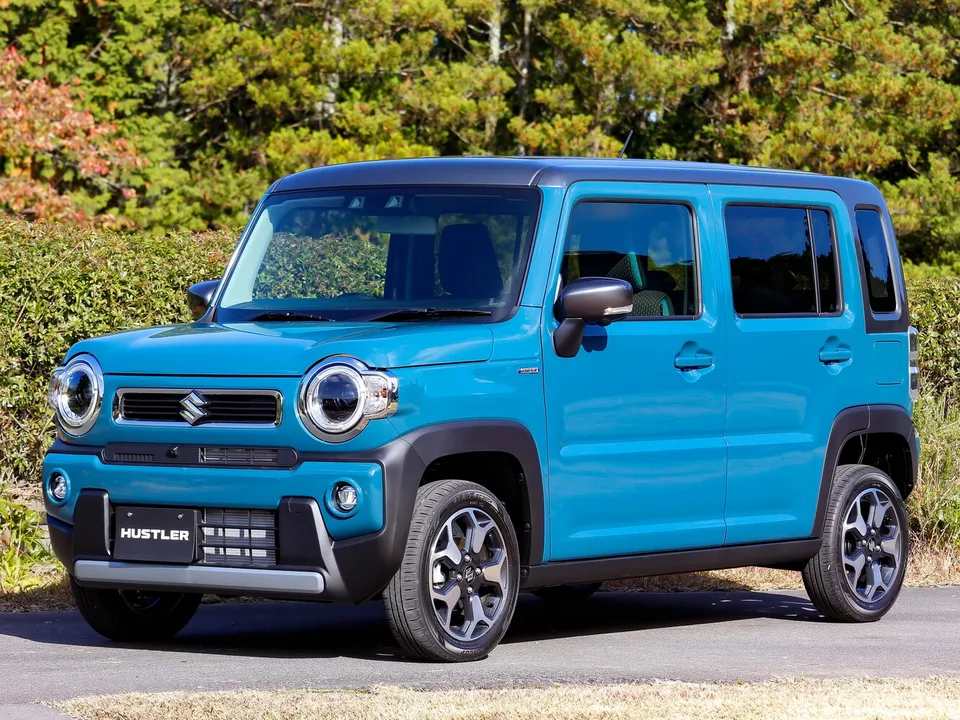
The Suzuki Hustler is a kei car that Suzuki has described from the very beginning as a mixture of a tall kei car and an SUV: sales of the first generation began on January 8, 2014, the second generation was released on January 20, 2020, and in May 2026 it was updated with a front end and electronics. We are talking further about the Japanese versions: they are described by Suzuki releases and are represented in the catalog by lines of the Japanese market, and their engine according to the kei-class standards is no more than 0.66 liters. MR31S and MR41S are the first generation, MR92S and MR52S are the second, but these pairs are read differently: in the first generation, the code shows whether the car has an S-ENE CHARGE generator motor, and the boost is not determined by it; in the second generation, the code indicates the engine. Below is what has changed by Suzuki releases, what is the difference between R06A and R06D, and what to check in the lot. All generations, codes and versions are collected in the Hustler catalog.
Hustler Generations & Body Codes
| Generation | Years | Body code | Engine | Transmission | Drivetrain |
|---|---|---|---|---|---|
| 1st | 2014–2019 | MR31S | 0.66 l R06A, 52 hp; turbo R06A, 64 hp (turbo versions – before switching to S-ENE CHARGE on December 7, 2015) | 5MT (A, G) or CVT | 2WD or 4WD |
| 1st, S-ENE CHARGE | from May 13, 2015 (turbo – from December 7, 2015) to 2019 | MR41S | 0.66 l R06A with motor-generator, 52 hp; turbo R06A, 64 hp | CVT | 2WD or 4WD |
| 2nd | since 2020 | MR92S | 0.66 l R06D, 49 hp, mild hybrid | CVT | 2WD or 4WD |
| 2nd, turbo | since 2020 | MR52S | 0.66 l turbo R06A, 64 hp, mild hybrid | CVT | 2WD or 4WD |
| 2nd after the update | since 2026 | MR92S, MR52S | The same | CVT | 2WD or 4WD |
How to Read Hustler Body Code
In Japanese documents, the code is written with the prefix of the emission class: DBA-MR31S, DAA-MR41S, 5AA-MR92S, 4AA-MR52S. The prefix speaks of the norms and the presence of an electrical part, and the generation and the engine are read in part after the hyphen. The logic of Hustler is simple, but not entirely obvious: in the first generation, the code shows not supercharging, but the presence of an S-ENE CHARGE motor-generator, and under each of the two codes there are both atmospheric and turbo cars. Until May 13, 2015, no version had a motor-generator, so the entire early release was MR31S. From May 13, 2015, the S-ENE CHARGE received naturally aspirated Gs with a CVT, X and a special version of the J STYLE – they went as the MR41S, and the turbo versions remained MR31S until December 7, 2015, when the system was added to them. In the second generation, a mild hybrid is installed on all cars, and the code already separates the engines: MR92S – naturally aspirated R06D, MR52S – turbocharged R06A. All-wheel drive in the code is not reflected in any generation, it must be looked for in the description of the lot, usually as 4WD in the version name. Code pages: MR31S, MR41S, MR92S, MR52S; where to look for the code field in the auction sheet, is discussed in a separate article.
First generation, 2014-2019: MR31S and MR41S
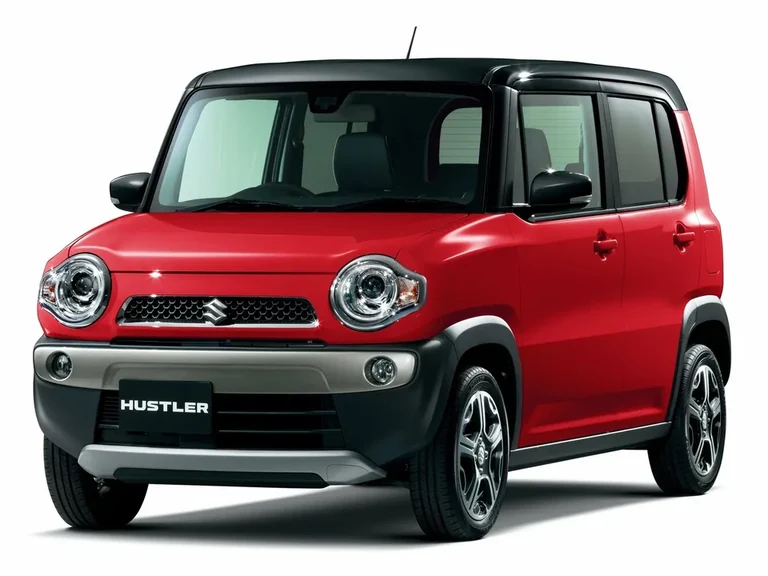
Suzuki introduced the Hustler on December 24, 2013 as a “key crossover for an active lifestyle” and went on sale on January 8, 2014. Engine one, R06A 0.66 liters, naturally aspirated or turbocharged; According to the catalog, these are 52 and 64 hp. Versions A and G with a naturally aspirated engine could be taken with a five-speed manual, the rest was a CVT. The lineup at the start: A, G, G Turbo, X and X Turbo, each 2WD or 4WD. Naturally aspirated CVT Hustler showed 29.2 km / l according to the Japanese cycle JC08, turbo – 26.8 km / l; ground clearance – 180 mm for front-wheel drive and 175 mm for all-wheel drive cars. All-wheel drive versions with a CVT, except A, the first kei cars to get a descent from a mountain with a hold of about 7 km/h and a mode for starting on a slippery surface; versions with a CVT, except for A, came with radar automatic braking. From May 13, 2015, the naturally aspirated G with a CVT, X and a special version of the J STYLE received S-ENE CHARGE – a motor-generator that helps the engine during acceleration, and consumption on the JC08 improved to 32.0 km / l for front-wheel drive cars. On December 7, 2015, S-ENE CHARGE was added to the turbo versions, which claimed 27.8 km / l, and the X and X Turbo received a stereo camera Dual Camera Brake Support system instead of a radar. Then there were special versions: J STYLE II in December 2015, F Limited II and J STYLE III in December 2017, Tough Wild with black two-tone paint in July 2018.
Second generation, from 2020: MR92S and MR52S
Suzuki showed the new Hustler on December 24, 2019, sales began on January 20, 2020. The car switched to the HEARTECT platform, the wheelbase increased by 35 mm, and the turning radius remained 4.6 m. The turbo version retained the R06A for 64 hp. The CVT is new, there is no more mechanics, and the mild hybrid is on all cars, so the word HYBRID G Turbo appeared in the names of the versions: HYBRID G, HYBRID G Turbo, HYBRID X, HYBRID X Turbo. On the WLTC cycle, Suzuki declared 25.0 km/l for the naturally aspirated 2WD and 23.4 km/l for the 4WD, for the turbo – 22.6 and 20.8 km/l. Turbo versions were the first among kei cars Suzuki to receive adaptive cruise control throughout the speed range and lane keeping; A special version of the J STYLE based on the HYBRID X was released on November 17, 2020. With the update on May 23, 2022, adaptive cruise and lane keeping became standard on all versions, the J STYLE II appeared; on May 24, 2024, LED headlights became standard, Tough Wild returned as a separate version of the lineup, and all cars received support for the Suzuki Connect service.
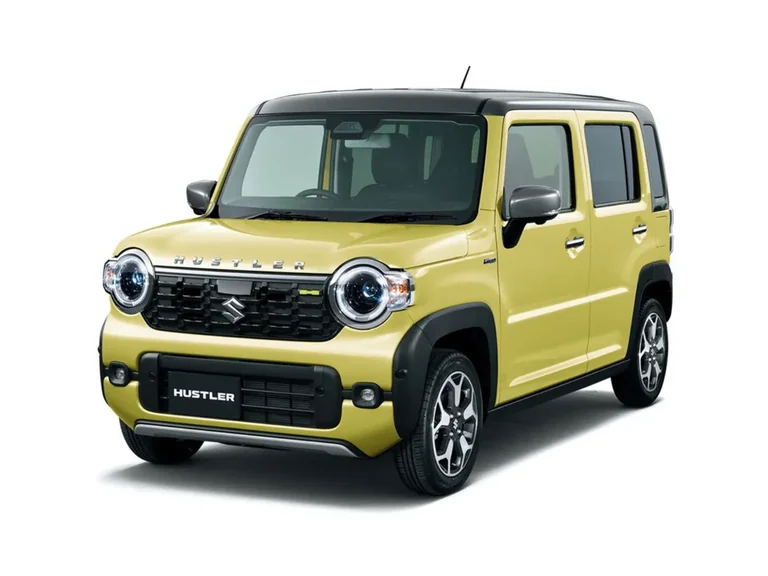
On May 27, 2026, Hustler received an update: a new grille connected to the headlights and a bumper with a larger body-colored area, Tough Wild has its own block-shaped grille with the SUZUKI inscription. From the equipment – the Dual Sensor Brake Support II braking system, an electric parking brake and, for the first time in Suzuki kei cars, blind spot control with rear cross-movement warning, all standard. The body codes have not changed, so the updated car is recognized by the date of manufacture and the front, and not by the code. By March 2026, Suzuki had sold a million Hustlers in Japan. The page of the updated generation is in the catalog.
Naturally aspirated or turbo, 2WD or 4WD
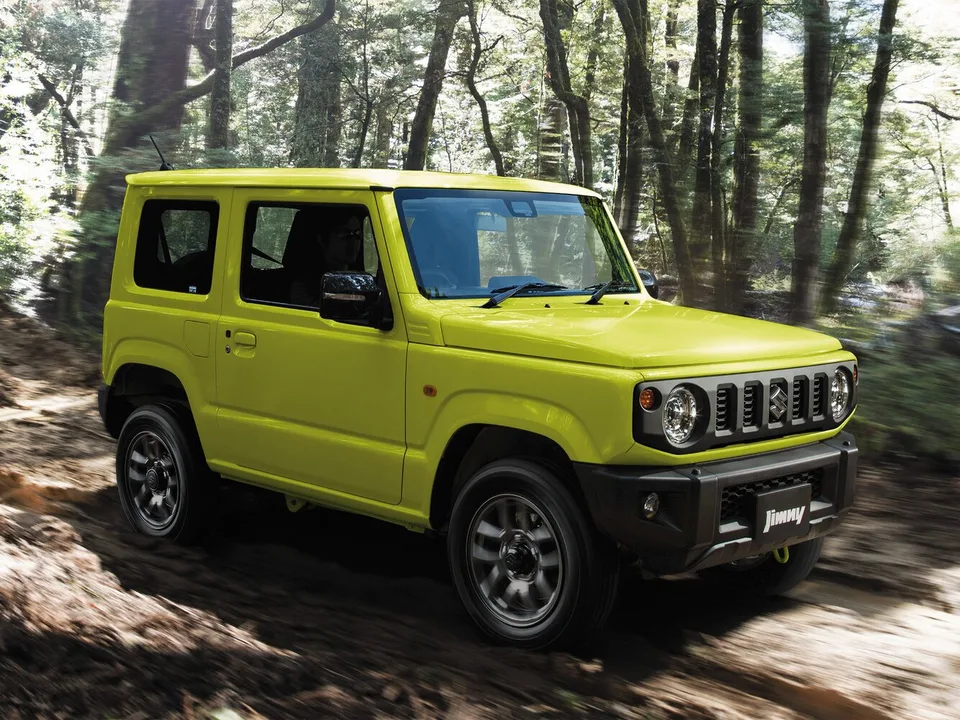
The difference between the 52 or 49 hp of a naturally aspirated engine and the 64 hp turbo for a kei car is noticeable: the turbo version is more confident on the track and with loading, and according to the 2019 release, adaptive cruise was put on the turbo version, until the 2022 update made it the standard for everyone. The price will be the consumption and the price of the lot. What sizes and motors cars of this class have in general is shown in the kei class review. The first-generation naturally aspirated Hustler should be chosen with S-ENE CHARGE (code MR41S): it has better consumption and newer electronics; cars with the MR31S code after December 7, 2015 are the base A and manual versions. In the second generation, the choice comes down to the MR92S versus the MR52S, both have a hybrid part. All-wheel drive with slippery road modes is necessary for those who really drive in the snow; for an all-wheel drive car, you should look more closely at the bottom, because such versions are taken for the sake of winter and road reagents. Neighbors in the catalog are the high kei cars Suzuki Wagon R and Suzuki Spacia, as well as Suzuki Jimny, if you need a real SUV; there is a separate analysis about it.
What to check before ordering
First, the body code in the auction sheet: it shows the generation, and in the second generation also the engine. In the first generation, the code about supercharging does not say anything – the turbo version is given out by the name of the version with the word Turbo. The date of the first registration is needed to distinguish the car before and after the 2015, 2022 and 2026 updates, because the codes did not change with them. And in the auction sheet it is worth looking for comments on them. Then there is the usual for a kei car: the condition of the CVT, mileage, traces of corrosion on the thresholds and bottom of all-wheel drive cars from the north. How to read the generation and the market in the description of the lot, a separate article tells, and the decoding of ratings and notes is on the page about the auction sheet.