Kei cars from Japan: how to choose the right model
A kei car is not a “small car in general”, but a class with given boundaries in terms of dimensions and engine capacity. Almost everything else follows from these boundaries: four seats, a 0.66-liter engine, a narrow body and its own logic of driving outside the city. Below is what the class gives, where it is convenient and where it begins to interfere, what is the difference between four different cars of the same class and where the kei ends and the usual compact begins.
What is a key-class and where do its boundaries come from?
The main restrictions are set by the rules for registering Japanese cars: a kei car is no longer than 3.40 m, no wider than 1.48 m and no higher than 2.00 m, and the displacement of the internal combustion engine does not exceed 0.660 liters. In the specifications of the Japanese market, cars from this analysis cost 657-658 cc and four seats, and the power is from 49 to 64 hp, depending on the engine and supercharging; 64 hp are found in turbo versions, but the rules themselves do not limit power. Taxes, fees and import conditions are not discussed here: this is a separate topic, and it is not worth removing it from the “default” class.
Where the kei is convenient, and where it begins to interfere
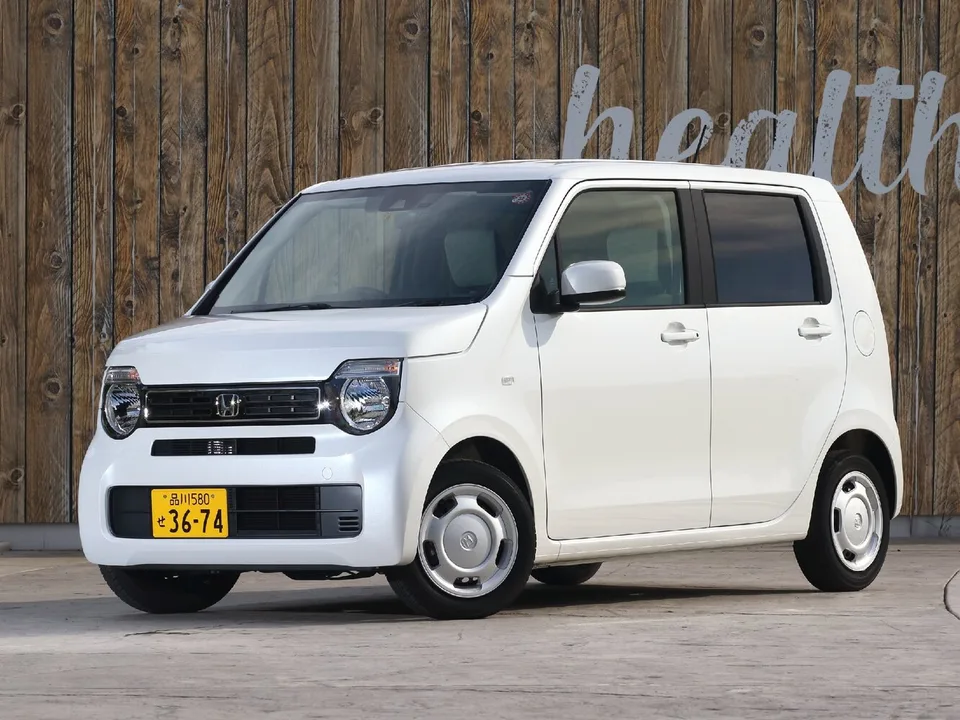
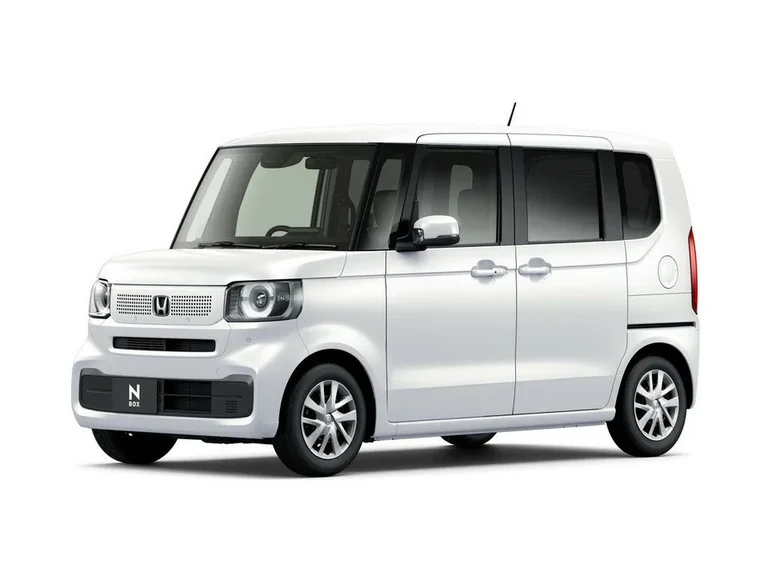
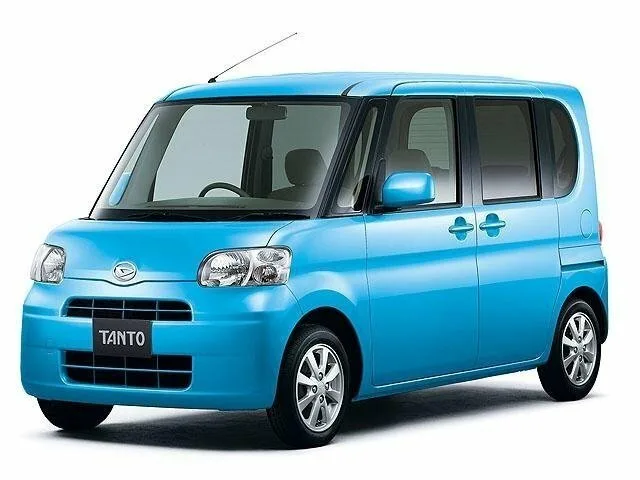
Kay wins where size and weight are decisive. A car less than one and a half meters wide drives around in a narrow yard and stands in a short place at the entrance, and tall ke-vans like Tanto and N-BOX have sliding rear doors – the rear door can be opened without opening it to the side, and this does not affect the space inside: according to Honda’s specification, the N-BOX interior is 2125 mm long with a base of 2520 mm, Tanto has the same 2125 mm.
It becomes more difficult when the car is loaded. There are four seats, including the driver, and with four adults and luggage, the 0.66-liter engine works noticeably more intensely – primarily atmospheric, primarily on ascents, overtaking and in headwinds. How much this interferes depends on the pace and how often they drive like this: in a calm rhythm with one or two passengers, there is enough reserve, and when fully loaded, on ascents and overtaking, a larger reserve of traction of the turbo version can be useful. Specific consumption or acceleration time cannot be promised according to the catalog lines, but you can estimate the scenario: if every day is a city, short hauls and tight parking, and long trips are rare, the class is suitable; if a long journey for four people happens regularly, it is worth watching at least the turbo version and honestly comparing it with a regular compact.
Turbo, all-wheel drive and ground clearance: what is really changing
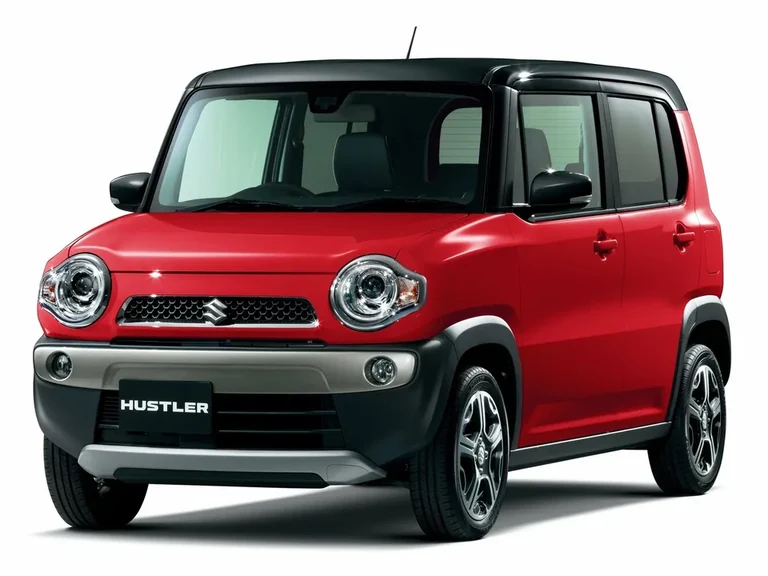
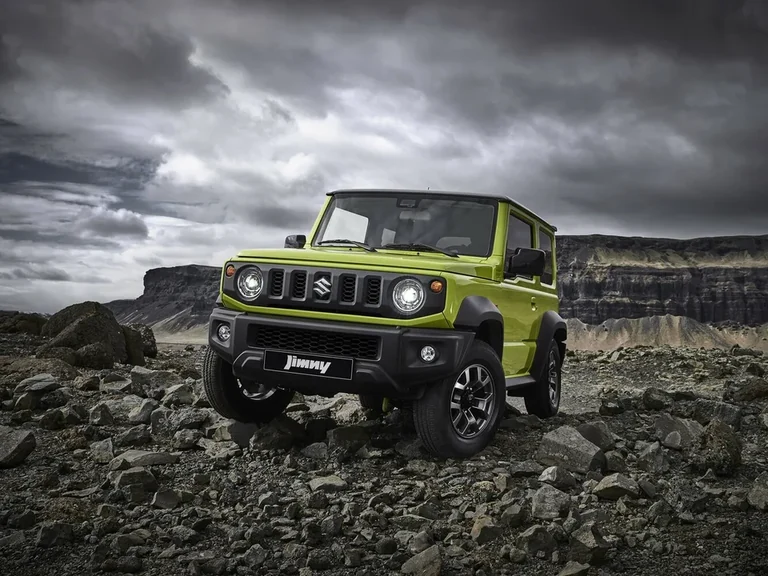
Power in specifications is divided into two groups: naturally aspirated versions with 49-58 hp. and turbocharged versions with 64 hp. In the second-generation Hustler, this can be seen directly in the engine: the naturally aspirated R06D gives 36 kW (49 hp), the supercharged R06A – 47 kW (64 hp). In the third-generation N-BOX, both variants are built on the same S07B: 43 kW (58 hp) and 47 kW (64 hp), in the Tanto on the KF – 38 kW (52 hp) and 47 kW (64 hp). The difference is felt not in the maximum speed, but on the ascent and when overtaking with passengers. The all-wheel drive of the N-BOX, Tanto and Hustler is a version: each has both front-wheel drive and all-wheel drive versions, while the transmission is a CVT. The Jimny stands apart: it has only all-wheel drive, the transmission is a five-speed manual or a four-speed automatic transmission, and the scheme, according to the Suzuki release, is part-time with a reduction gear and axles on three rods.
Ground clearance depends not only on the model, but also on the version: 145 mm for the N-BOX, 150 mm for the front-wheel drive Tanto and 165 mm for the all-wheel drive, for Hustler according to the Suzuki specification 160 mm for naturally aspirated versions and 180 mm for the turbo, 205 mm for the Jimny. The wheels are also different: the N-BOX has 155/65R14, the Custom turbocharged 165/55R15, the Hustler has 165/60R15, and the Jimny has 175/80R16 on 16-inch wheels. The size is worth looking at in advance for a specific version: different tyres are selected for the key-van and for the Jimny.
Four different machines in the same class
| Model and generation | Motor and power | Drive & Gearbox | Base, ground clearance, weight |
|---|---|---|---|
| Honda N-BOX, 3rd (JF5/JF6), sales from 10.2023 | 0.66 l S07B, 58 or 64 hp | front or full, CVT | 2520 mm, 145 mm, 910-1030 kg |
| Daihatsu Tanto, 4th (LA650S/LA660S), since 2019 | 0.66 l KF, 52 or 64 hp | front or full, CVT | 2460 mm, 150 mm for front and 165 mm for full, 880-980 kg |
| Suzuki Hustler, 2nd (MR52S/MR92S), sales since 01.2020 | 0.66 l R06D or R06A, 49 or 64 hp | front or full, CVT | 2460 mm, 160 mm naturally aspirated and 180 mm turbo, 830-900 kg |
| Suzuki Jimny, JB64, from 07.2018 | 0.66 l R06A turbocharged, 64 hp | only full, 5 manual or 4 automatic transmission | 2250 mm, 205 mm, 1060-1070 kg |
| Suzuki Jimny Sierra, JB74, from 07.2018 – no longer kei | 1.5 l K15B, 101 hp | only full, 5 manual or 4 automatic transmission | 2250 mm, 210 mm, 1100-1110 kg |
The N-BOX is built around a high body: the 2520 mm base is the longest in this five, the rear doors are sliding on both sides. At the same time, the spaciousness is not measured by the base: Hustler’s interior is longer according to the Suzuki specification – 2215 mm versus 2125 mm for the N-BOX. According to Honda, the cumulative sales of the N-BOX series in Japan at the end of April 2026 exceeded three million cars. Tanto builds the same idea around a long cabin and door design: the first generation had hinged rear doors, sliding doors appeared from the second. The Hustler of the three vans is the lightest – from 830 kg, and it also has a higher ground clearance in turbo versions; in the catalog lines of its first generation, there is a five-speed manual, while the current N-BOX, Tanto and Hustler have one gearbox – a CVT. Jimny is a separate tool in this company: a frame SUV in the dimensions of the class, the heaviest of the four and with a single drive option. Detailed analysis of generations – N-BOX, Tanto, Hustler and N-WGN; model pages in the catalog – Honda N-BOX, Daihatsu Tanto and Suzuki Hustler.
Where the kay ends: Jimny, Jimny Sierra and Nomade
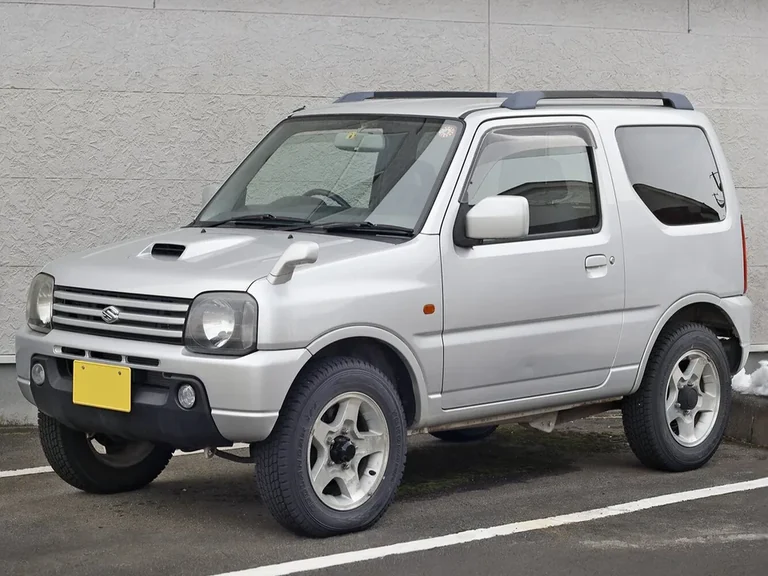
On July 5, 2018, Suzuki introduced two cars at once and in the release itself called them differently: Jimny is a kei SUV with a 0.66-liter turbocharged engine, Jimny Sierra is a small car with a new 1.5-liter K15B. They have a common design: a ladder frame, a longitudinal engine, part-time 4WD with a low gear and three-link axles; the class, engine and body width differ – the Sierra has arch extensions. In Suzuki’s specifications, this can be seen in the numbers: JB64W – 658 cm³ and 47 kW (64 hp) with a body of 3395 mm, JB74W – 1460 cm³ and 74 kW (101 hp) with 3550 mm, and even the wheels are different: 175/80R16 versus 195/80R15. Since January 2025, the JC74W has also appeared under the name Jimny in the catalog lines: the same 1.5-liter engine with a base of 2590 mm is a five-door version, in Japan it is called Nomade. For the buyer, the difference is fundamental: the ad may contain the word “Jimny”, but the car is not key. How to distinguish them by body code is discussed in a separate article; generation strings are in the Jimny directory.
What to check when choosing a specific car
The first is the full designation of the model along with the body code. The code narrows down the generation, and often the drive, but it does not always talk about supercharging: in the second-generation Hustler, the turbo version is MR52S, and the atmospheric version is as MR92S, but in the third-generation N-BOX JF5 and JF6, there is a distinction between front-wheel drive and all-wheel drive, and the S07B engine is both in the atmospheric version and in the turbo. Therefore, the supercharger is determined by the full designation and configuration in the lot documents, and not by one code, and especially not by the bumper. How to find these fields is analyzed in the article about the body code of a Japanese car. The second is drive: almost all models of the class have all-wheel drive, but this is exactly the version, and in the lot it is confirmed by documents, and not by guessing by appearance. The third is sliding doors and their electric drive for tall key-vans: the unit works every day and needs to be checked when aged. The fourth is the CVT: for key-vans, this is the main gearbox, and its condition is worth a separate question for the inspector. The fifth is the auction sheet: the ratings of the body and interior, notes on repairs and corrosion are read the same for any car, and how exactly is described on the page about the auction sheet.
What’s Next
If the class fits the scenario, it is easier to go from a specific model: see the generations and versions in the analysis, check the lines of the Japanese market in the catalog and select those body codes that fit the engine and drive. When the circle has narrowed down to several options, then there is the usual procedure for selecting and buying from Japan: checking the lot, bid, documents and delivery.