Toyota Probox: how to choose a version by body code, engine and gearbox
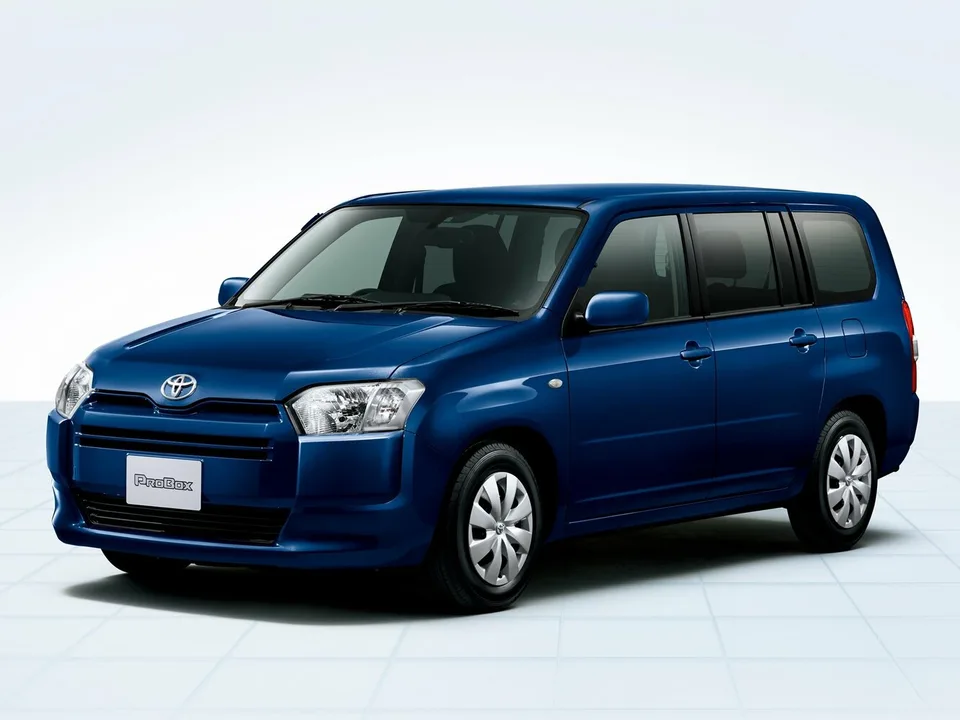
The Probox is a Toyota working car that has been produced since the summer of 2002 and is still in the Japanese lineup. Formally, this is one generation, but for more than twenty years, it has changed its engines, gearboxes, and the body type itself: both a van and a passenger station wagon were sold under the same name. Because of this, ads with the same name and close years can describe completely different cars – with a manual or CVT, with 1.3 or 1.5 liters, with or without all-wheel drive.
One model, two bodies: van and station wagon
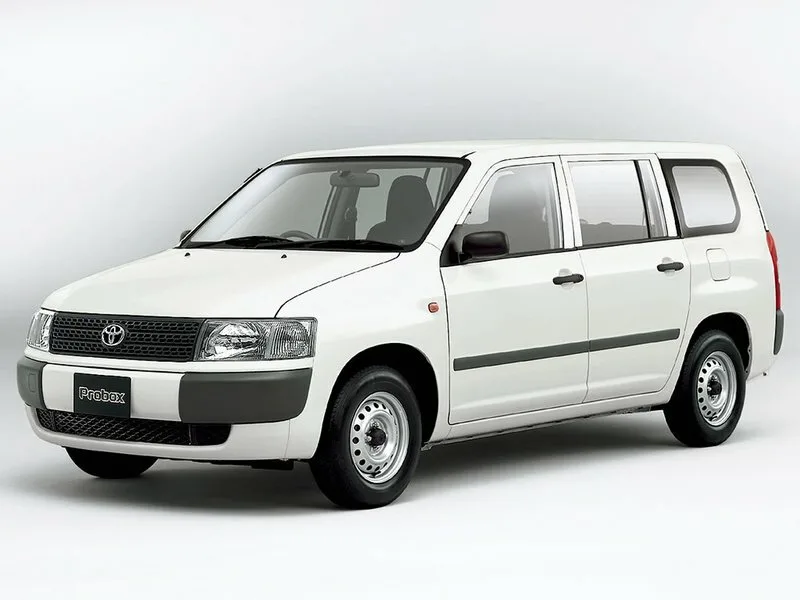
Toyota introduced the Probox on July 2, 2002, and almost immediately the model had two bodies. The difference is visible directly in the code: the van code ends with the letter V – NCP50V, NCP51V, NCP55V, the passenger station wagon on G – NCP58G and NCP59G. The station wagon in the catalog of versions is found from July 2002 to October 2013, the van is still in production.
This explains the oddity, which is often mistaken for a catalog error: Probox has records with overlapping years. There are no “extra generations” here — a van and a station wagon were sold in parallel, and each has its own set of codes. The practical difference is significant: the back row and floor of the van are designed for cargo, while the station wagon is designed for passengers, and these are different categories in the documents.
Early versions (2002–2014): two engines and two gearboxes
In the release of the model, Toyota listed three engines: petrol 1.3 liters (2NZ-FE) and 1.5 liters (1NZ-FE) and diesel 1.4 liters (1ND-TV), and as an automatic transmission – a four-speed Super ECT. The mechanics were also there: according to the catalog of versions, both 1.3 and 1.5 came in both versions, with manual and automatic transmissions. So the description “the early Probox has one 1.5 petrol engine” is doubly incorrect: there are two volumes, and there are also two boxes.
| Code | Engine | Drivetrain | Transmission |
|---|---|---|---|
| Van, code ends in V | |||
| NCP50V | 1.3 l, 87 hp | front-wheel drive | manual transmission or automatic transmission |
| NCP51V | 1.5 l, 109 hp | front-wheel drive | manual transmission or automatic transmission |
| NCP55V | 1.5 l, 105 hp | all-wheel drive | manual transmission or automatic transmission |
| NLP51V | Diesel 1.4 l, 72 hp | front-wheel drive | manual transmission |
| Passenger station wagon, code ending in G | |||
| NCP58G | 1.5 l, 109 hp | front-wheel drive | manual transmission or automatic transmission |
| NCP59G | 1.5 l, 105 hp | all-wheel drive | manual transmission or automatic transmission |
The Probox had all-wheel drive from the very beginning and did not go anywhere later – this is a rare combination for a working car of this class and one of the reasons why it is taken to Russia. It is easy to distinguish an all-wheel drive car from paper: the van has the code NCP55V, the station wagon has NCP59G, and their power is slightly lower than the front-wheel drive versions, 105 versus 109 hp.
Toyota lists the volumes themselves by codes directly: the model history guide indicates that the NCP50V is 1300, the NCP51V and NCP55V are 1500, and the NLP51V is 1400. So the table above is based not only on the version catalog.
One clarification where we did not think for the manufacturer: in the early lineup there is a separate code NCP52V – a 1.5 liter engine, 92 hp. and only an automatic. How exactly it differs from the NCP51V, we did not find official confirmation, so we will limit ourselves to the fact that such a code really exists and this is not a typo in the ad.
2014 update: CVT only
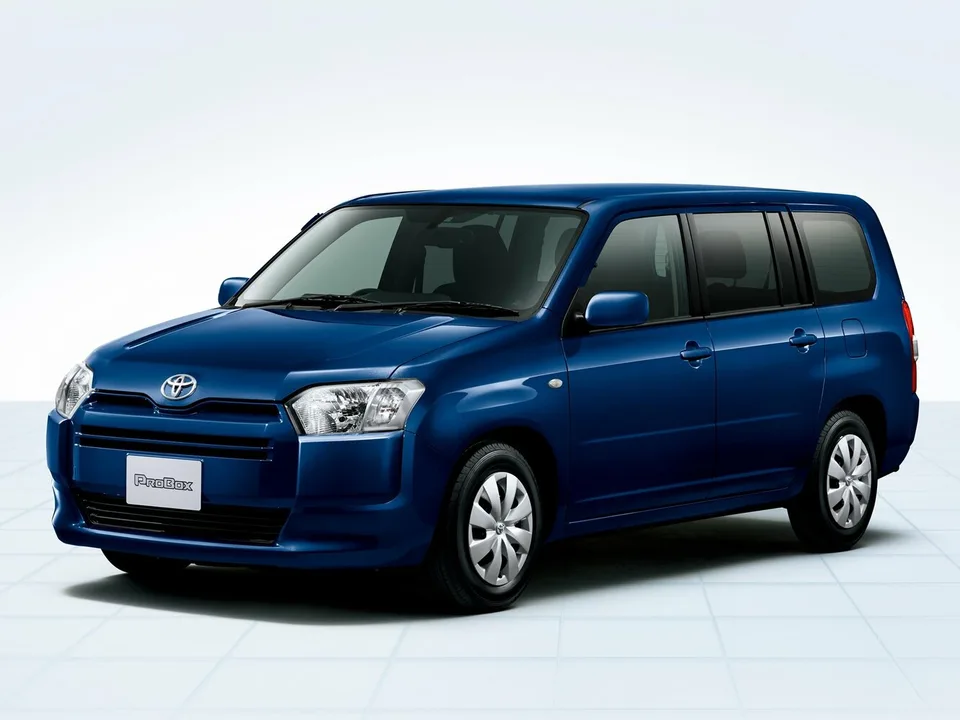
On August 6, 2014, Toyota announced a partial change to the Probox, and this is the most noticeable milestone in the history of the model. Instead of a manual and a four-speed automatic transmission, the Super CVT-i CVT was installed – according to the catalog of versions, after September 2014, the model has no other gearboxes at all. The 1.3-liter version received a new 1NR-FE engine. At the same time, the body codes also changed: the 1.3-liter version became NSP160V (95 hp), the front-wheel drive 1.5 – NCP160V (109 hp), the all-wheel drive 1.5 – NCP165V (103 hp).
For the buyer, this means a simple fork in the road. If you need a manual, you need to look for a car before 2014, and no “fresh” years will give it. If the resource and consumption in the urban cycle are more important, look at the versions after the update, but then the gearbox will be a CVT, and its condition is checked separately.
Hybrid: from December 2018
The hybrid version of the Probox went on sale on December 3, 2018: a one-and-a-half-liter 1NZ-FXE engine and a full hybrid Toyota THS II installation NHP160V petrol NCP165V.
This is an important detail when choosing: “hybrid Probox with all-wheel drive” in the ad is a reason to double-check the body code in the documents, and not to rejoice at a successful find. How hybrid schemes of Japanese cars work in general and which of them is checked before buying, is analyzed in the article “Types of hybrids from Japan“.
What has changed in 2024 and 2025
Probox continues to be updated: Toyota announced improvements to the model on April 5, 2024 and November 25, 2025. A separate period opens in the version catalog from November 2025 with three codes – 6AE-NHP160V (hybrid), 5BE-NCP160V (1.5 liters, front-wheel drive, 109 hp) and 3BE-NCP165V (1.5 liters, all-wheel drive, 98 hp). The gearbox of petrol versions is still CVT, and the hybrid has a THS II hybrid transmission with a gearbox, rather than a belt CVT.
| Code | Engine | Drivetrain | Period |
|---|---|---|---|
| NSP160V | 1.3 l, 95 hp | front-wheel drive | from 09.2014 |
| NCP160V | 1.5 l, 109 hp | front-wheel drive | from 09.2014 |
| NCP165V | 1.5 l, 103 hp; from 11.2025 — 98 hp | all-wheel drive | from 09.2014 |
| NHP160V | Hybrid 1.5 l | front-wheel drive | from 12.2018 |
Pay attention to the prefixes before the code: DBE-, 5BE-, 3BE-, 6AE- refer to the environmental classification and the date of type approval, and the base code does not change. They are also not equal to the period: 5BE-NCP160V and 3BE-NCP165V are found in the catalog until November 2025, and in the auction sheet of our disassembled 2022 order, it is just 5BE-NCP160V. NCP160V is the same on both the 2015 and 2026 cars, so the year of manufacture is not determined by the code – it must be looked at by the date of the first registration. A detailed analysis of the Japanese code is in the article “Japanese car body code“.
Probox and Succeed are one machine with two names
Together with the Probox, Toyota released the Succeed, a twin model that was sold through another dealer network. Succeed was discontinued earlier – the Japanese periods in Toyota’s manuals end in May 2020 – so there will be no fresh cars under this name, but there will be as many suitable used ones as you like, and when selecting, it is logical to look at both models at once: technically, they match. Japanese versions of Succeed by year and code are collected on a separate page of the catalog.
What to check in the ad
Start with the body code, not the year. The ending V stands for van, G for passenger station wagon. The NCP50 starts with 1.3 L, NCP51 and NCP58 with 1.5L front-wheel drive, NCP55 and NCP59 with 1.5L all-wheel drive, NSP160 with 1.3L with an update, NCP160 and NCP165 with 1.5L with an update, NHP160 with a hybrid, and NLP51 with diesel.
Then the gearbox: until September 2014 – a manual or four-speed automatic transmission, after – only a CVT. Then the drive: both early and late petrol versions have a full drive, but the hybrid does not have it. And finally, the condition: the Probox was almost always bought as a working car, so the mileage and wear of the interior are noticeably greater than that of a sedan peer. What exactly we look at in the auction sheet and at the inspection is described in the article “What we check before bidding“.
Where to look next
All Japanese versions by year, body code and trim level are collected on the Probox catalog page; the twin is Toyota Succeed. If you need a station wagon for your family instead of a van, look at the analysis “Toyota Corolla Fielder: petrol or hybrid“. The service of ordering a car from Japan helps to choose a specific car and take it from the auction to your city, and the turnkey cost is calculated in the calculator; terms and routes are on the delivery page.
Version, body code, and power data — GTYRES version catalog; model, update, and hybrid release dates — Toyota publications.