Toyota Sienta: how to choose a generation, engine and number of seats
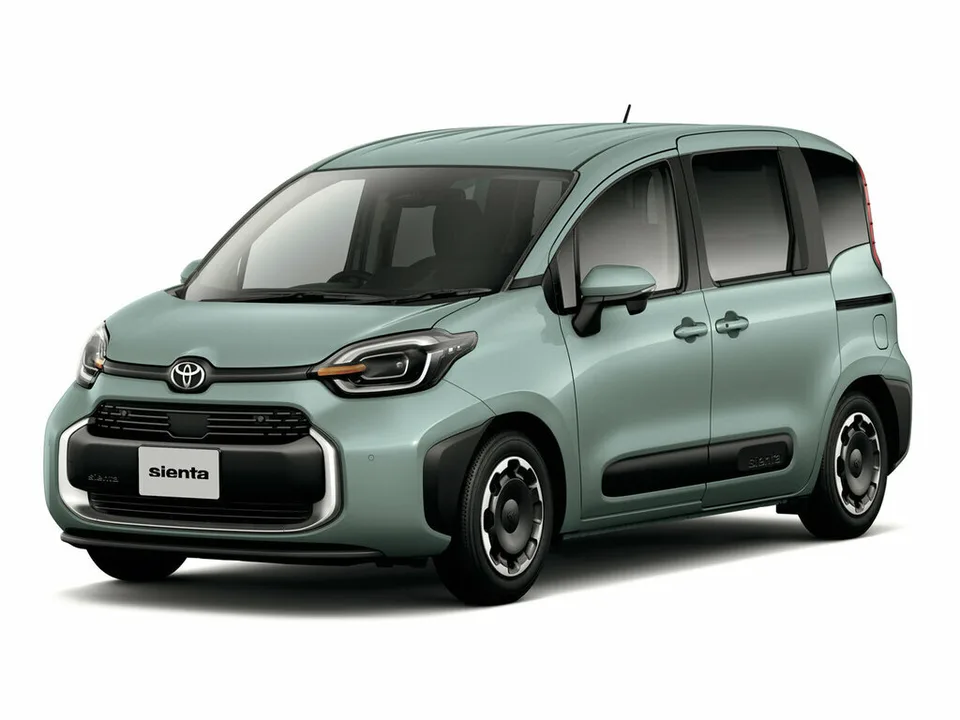
The Sienta appeared in September 2003 as Toyota’s answer to a simple request: seven seats in the body about four meters long, with sliding doors and a low floor. The name itself is collected from the Spanish siete – “seven” – and the English entertain. In more than twenty years, three generations have changed, and they differ more than they seem in appearance: the first drove only on petrol, the second brought a Toyota hybrid and a flat low floor, the third was built on a new platform with three-cylinder engines and electric all-wheel drive. For the family, the practical choice comes down to three questions: five or seven seats, hybrid or petrol, and whether the all-wheel drive is needed, which the new Sienta only has with a hybrid.
First generation XP80 (2003-2015): twelve years of one design
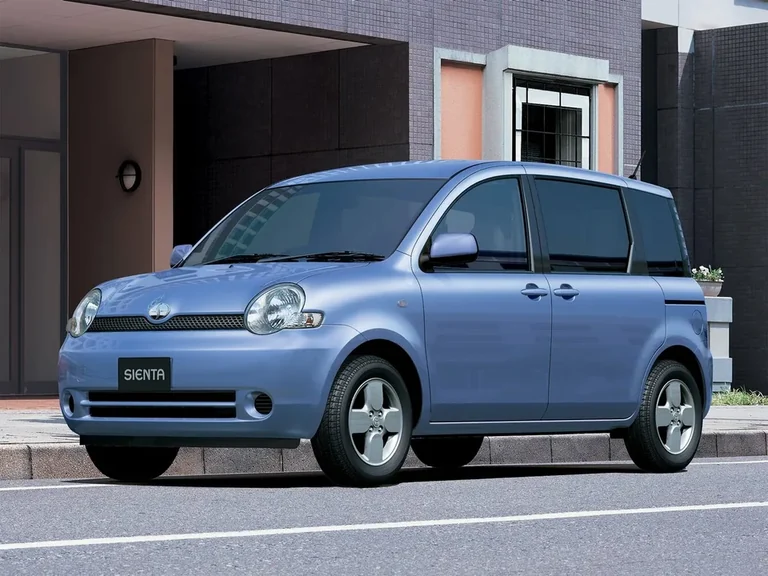
The first Sienta has been on the assembly line for twelve years, with an update in May 2006, and therefore comes in a wide variety of conditions. The technique is simple: 1.5-liter 1NZ-FE, front-wheel drive cars – 81 kW (110 hp) at 6,000 rpm and 141 Nm with a Super CVT CVT, all-wheel drive – 77 kW (105 hp) and 138 Nm with a four-speed automatic transmission. The body is 4,100 mm long with a base of 2,700 mm and a turning radius of 5.2 m, the interior is seven-seater, with a distance from the first to the third row of 1,605 mm – Toyota then emphasized, that adults are placed in the third row. Consumption on the old cycle of 10 · 15 for the front-wheel drive version is 19.0 km/l.
Today it is the most affordable Sienta and at the same time the oldest: it makes sense to choose it by the condition of a particular copy, and not by year. The body codes NCP81G and NCP85G separate the front and all-wheel drive, and with it the gearbox.
Second generation XP170 (2015-2022): hybrid, low floor and then five-seater FUNBASE
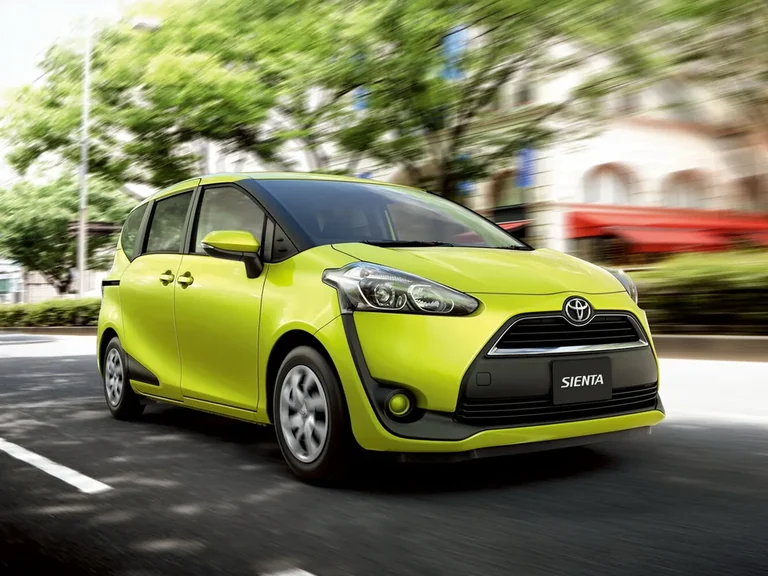
Since July 9, 2015, the Sienta has changed completely – Toyota compared the new design with trekking shoes, and most importantly did it inside. Flat floor with a sliding door sill height of 330 mm, 55 mm lower than the previous one, a door opening 665 mm wide, seats rising to the third row like an amphitheater, and the third row are 70 mm wider. Six-seater included all all-wheel drive petrol versions.
The hybrid here is a classic Toyota: 1NZ-FXE engine with 54 kW (74 hp) at 4,800 rpm and 111 Nm, an electric motor with 45 kW (61 hp) and 169 Nm, a nickel-metal hydride battery under the floor in the legs of the second row, and the total power of the system, which Toyota cites separately, is 73 kW (100 hp). It is this figure, and not the sum of the other two, that should be looked for in the documents when it comes to calculations: why the numbers do not add up is analyzed in the article on the power of the hybrid from Japan. The consumption of the hybrid according to the JC08 is 27.2 km/l, after the update – 28.8. Petrol front-wheel drive cars received a new 2NR-FKE engine (20.6 km / l according to JC08), all-wheel drive retained the 1NZ-FE; the gearbox of all is a CVT, and the hybrid was produced only with front-wheel drive. The Toyota Safety Sense C complex was an option in 2015.
The update of September 11, 2018 added something that many were missing: a two-row five-seater version of FUNBASE with a flat cargo floor, which Toyota addressed to fans of trips and overnight stays in the car. At the same time, Toyota Safety Sense learned to recognize pedestrians during the day, and sonar learned to brake in front of an obstacle in case of a pedal error. According to the body code, cars of this generation are read through the engine index: NHP170G is a hybrid, NSP170G is a petrol with front-wheel drive, NCP175G is petrol with all-wheel drive.
Third generation XP210 (from 2022): GA-B platform, three cylinders and E-Four
The new Sienta has been on sale since August 23, 2022. The body remained the same 4,260 mm long and 1,695 mm wide with a base of 2,750 mm, but the platform is now TNGA GA-B, shared with Yaris, and the turning radius has been reduced to 5.0 m. In the M15A-FXE hybrid, it produces 67 kW (91 hp) at 5,500 rpm and 120 Nm, the front electric motor is 59 kW (80 hp) and 141 Nm, the battery is still nickel-metal hydride. The E-Four’s all-wheel drive is a separate rear electric motor with 2.2 kW (3 hp) and 44 Nm without a driveshaft: Toyota describes it as a start-off assist in snow and wet roads, rather than an off-road system. Petrol version with 88 kW (120 hp) M15A-FKS at 6,600 rpm and 145 Nm received a Direct Shift-CVT CVT with a gear first gear and is available only with front-wheel drive.
According to the WLTC cycle, the hybrid fits into 27.6-28.4 km / l with front-wheel drive and 24.6-25.2 with E-Four, a petrol car – about 18. Inside, Toyota has increased the distance between the landing points of the first and second rows to 1,000 mm, 80 mm more than before, raised the opening of the sliding door to 1,200 mm and retained the threshold of 330 mm (350 for the E-Four). There are now either five or seven seats: there is no six-seater layout in the third generation. Ground clearance – 140 mm, tank – 40 liters, tyres 185/65R15. Toyota Safety Sense is on all versions, and Advanced Park automatic parking from the Toyota Teammate package was offered as an option for the hybrid version of the Z. Updates were made annually: in May 2024, a digital key and a large display were added, in August 2025 – an electric parking brake with hold, adaptive cruise control throughout the speed range and Proactive Driving Assist assistant, in August 2026 – a new color and black mirror housings. Body codes: 6AA-MXPL10G – 2WD hybrid, 6AA-MXPL15G – E-Four hybrid, 5BA-MXPC10G – petrol.
What it looks like from the point of view of the family
The width of 1,695 mm is common for the entire class, and it sets the main limitations. In the reviews of owners of the third generation, it is the cramped width that is most often noted, especially with a child seat in the second row, hard seats and noticeable noise when accelerating; the third row is called a place for children there, and it is not easy to get on it. The seven-seater Sienta is a car for cases where seven people ride sometimes, and usually the third row is tucked under the seats of the second and there are things in its place; this folding is an advantage over the Freed, which has seats that recline to the sides. If the third row is not needed at all, you should seriously look at the five-seater version: it has a flat cargo floor, and the trunk height has increased by 50 mm compared to the previous two-row one.
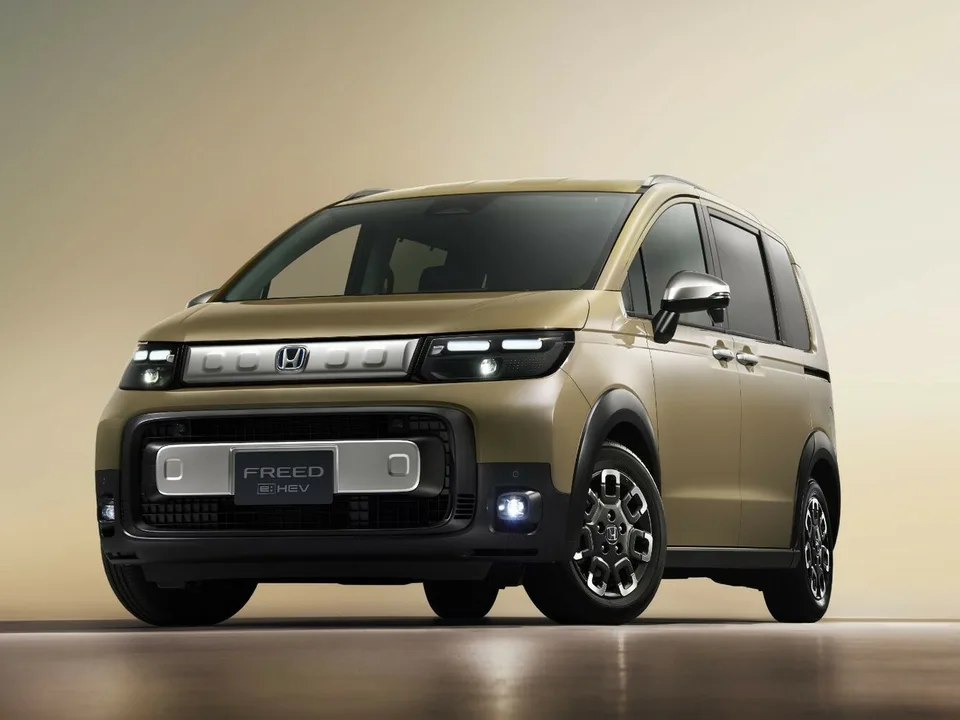
The new Sienta does not have separate second-row seats, only a sofa; for those who care about the passage between the seats to the third row, it is more logical to look at the six-seater Honda Freed – there is a separate article about it. Hybrid vs. petrol is a matter of mileage and city: the difference in WLTC consumption is one and a half times, while the petrol version exists only with front-wheel drive, so the winter region almost automatically leads to a hybrid with the E-Four.
What to check for a specific Sienta
First – the body code and the number of seats according to the documents: five- and seven-seater cars of the third generation are the same on the outside, and in the second generation, six seats can mean an all-wheel drive petrol version. How to read the code and where to look for it, is shown in a separate article. Next is the drive: the second-generation hybrid did not have it, the third E-Four has only the hybrid. Then the equipment according to the version: the electric sliding doors could stand on one side, on both or not, the Toyota Safety Sense on the XP170 depended on the version and year, on the XP210 it is always there, and the touch opening of the door with a movement of the foot and a 100 V outlet are not found in everyone.
For a hybrid, it is worth finding the power of the system in the documents, not the engine: for the XP170, Toyota announced 100 hp, for the XP210, only the engine and engine are listed separately in the characteristics table, and you need to take the value from the documents of a particular car. It is convenient to check the versions on the pages of the catalog for the years of manufacture – 2003, 2006, 2015, 2018 and 2022. The order in which GTYRES looks at the selected lot before bidding is described in the article on checking the car before bidding.