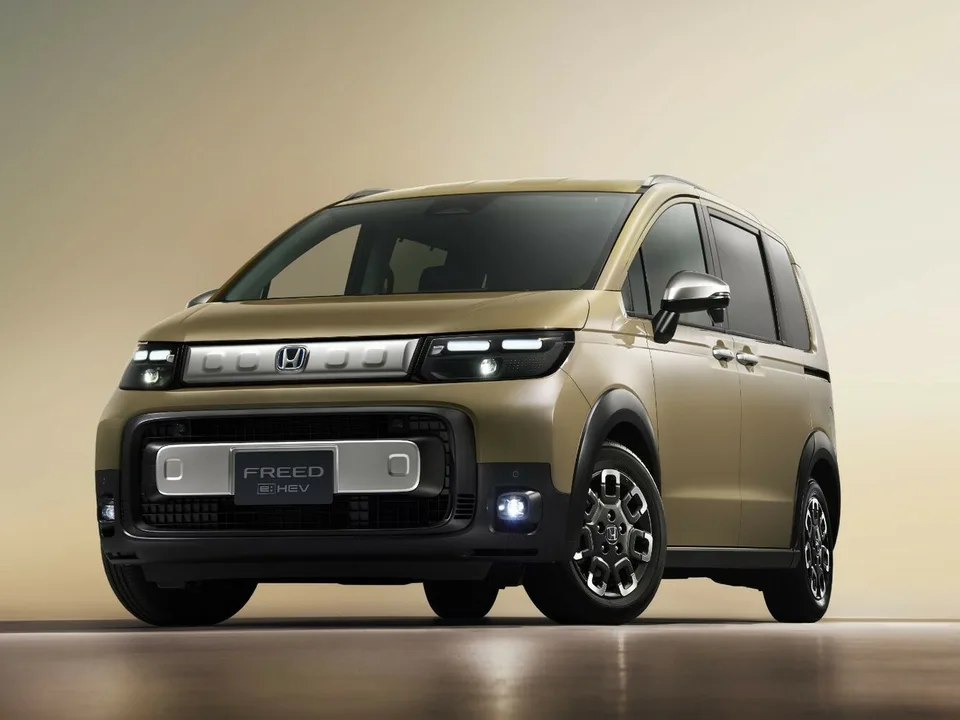
Honda Stepwgn: what is the difference between the generations and which one to choose
Stepwgn has been sold in Japan since May 1996, and over six generations it has changed not so much the purpose itself, but the answers to everyday questions: how many sliding doors, how the rear one opens, where the third row is removed, seven seats or eight, a petrol turbo engine or a hybrid. It is these answers that distinguish cars in ads more than the year of manufacture. The letters in the body code – RF, RG, RK, RP – name the generation, and the number behind them answers the question about the drive and version.
RF, 1996–2005: One sliding door and four-speed automatic transmission
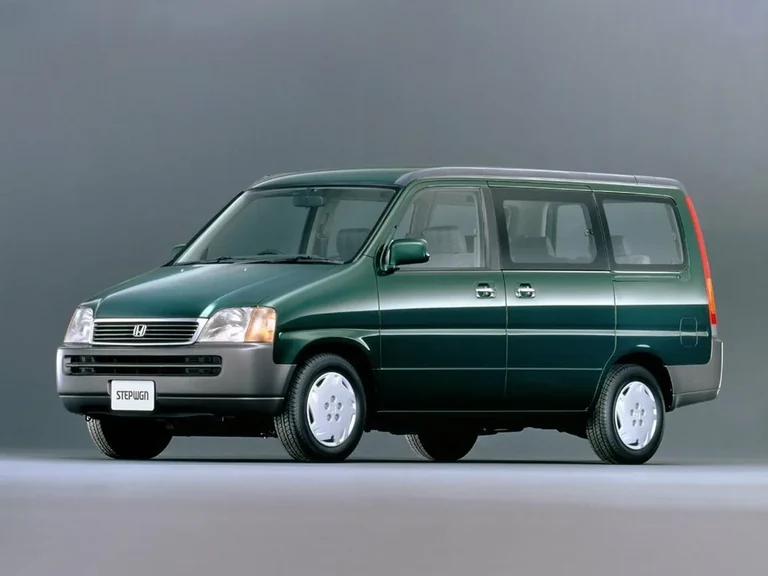
The first Stepwgn Honda went on sale on May 10, 1996 as a front-wheel drive single-displacement car with a front engine and a single engine – a two-liter B20B with 125 hp. with all versions on a four-speed automatic transmission. All-wheel drive was offered from the very beginning; body codes RF1 and RF2 separate front-wheel drive and all-wheel drive. The base line had eight-seater W and G and five-seater N, the second row of eight-seater cars was either swivel, facing the third row, or folding. Since the 1999 update, the same B20B produces 99 kW (135 hp) and 184 Nm, and the code prefix has changed from E- to GF-.
The second generation came out on April 6, 2001 with a new K20A engine with 118 kW (160 hp) and 191 Nm, still with a four-speed automatic transmission and codes RF3 and RF4. Both early generations have a single sliding door, on the left, and only from the second generation did the higher trims get it powered. The update of June 6, 2003 added two things which later became permanent: the Spada version with its own bumpers and grille and a 2.4-liter engine with a five-speed automatic transmission. The 2.4 has its own codes – RF7 with front-wheel drive and RF8 with full-wheel drive, and Spada with a two-liter engine – RF5 and RF6.
RG, 2005–2009: Low floor and two sliding doors
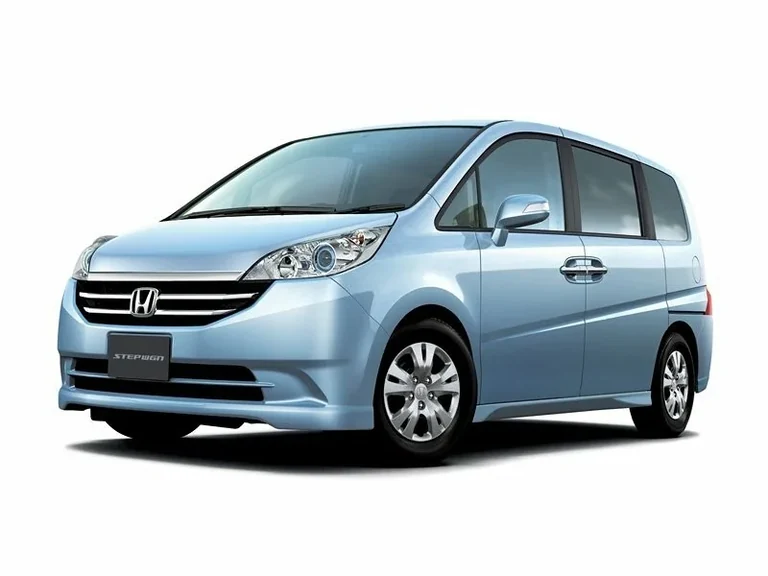
The third generation went on sale on May 27, 2005 and was built on a new low platform: the floor of the second row dropped to 390 mm from the ground, the roof was lower by 75 mm, and the body was 45 mm shorter. Sliding doors are now on both sides. There are two engines: 2.0 for 114 kW (155 hp) and 188 Nm with a four-speed automatic transmission and 2.4 for 119 kW (162 hp) and 218 Nm, and the 2.4 gearbox depends on the drive – a CVT with a seven-speed mode and paddles on the front wheel drive and a five-speed automatic transmission on full drive. At the rear, front-wheel drive cars have a torsion beam, all-wheel drive cars have a De Dion suspension; this pair will be retained in all future generations. Codes: RG1 and RG2 for two-liters, RG3 and RG4 for 2.4.
After the update on November 1, 2007, the 2.4 remained only with the Spada in the 24SZ and 24SZi versions, and the second row could be ordered in the form of two separate seats with armrests – this is how the eight-seat cabin turned into a seven-seater with a pass-through. The third row in this generation still reclines to the sidewalls, and is not hidden in the floor.
RK, 2009–2015: Third row retracted under the floor for the first time
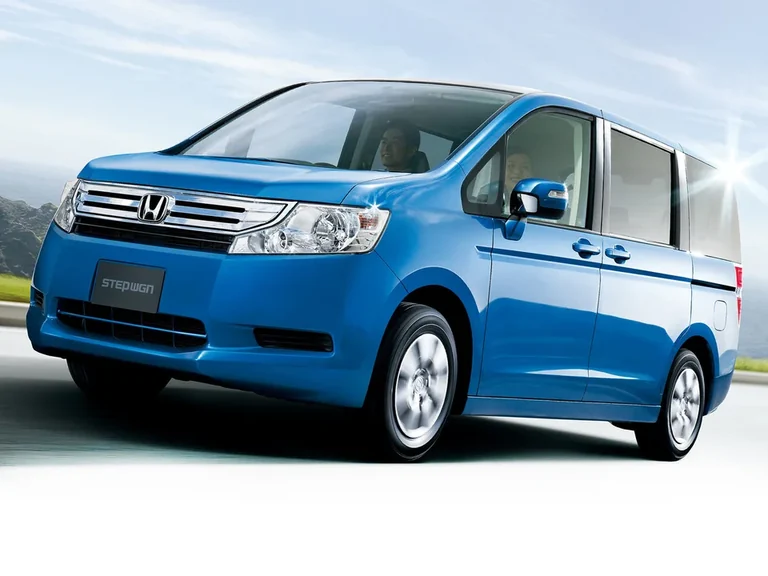
The fourth generation was released on October 9, 2009 with one engine – a two-liter R20A with 110 kW (150 hp) and 193 Nm. Prior to the update, the transmission depended on the drive: a CVT with a torque converter on the front, a five-speed automatic transmission on the full one. The main household news is that for the first time in the Stepwgn, the third row folds into the floor, and not to the sidewalls, so the trunk with the retracted row is flat. The interior has become longer (3,095 mm) with the same body width of 1,695 mm, there are eight seats; a seven-seater version with separate seats in the second row appeared only after the 2012 update.
On April 12, 2012, the updated front-wheel drive cars received a new CVT and a start-stop system, the all-wheel drive ones were updated next, and according to the list of characteristics of 2012-2015, the CVT is already on all-wheel drive – the five-speed automatic transmission for all-wheel drive RKs remained only for cars before the update. Codes: RK1 and RK2 for regular versions, RK5 and RK6 for Spada.
RP, 2015–2022: 1.5 turbo engine, Waku Waku Gate and the first hybrid
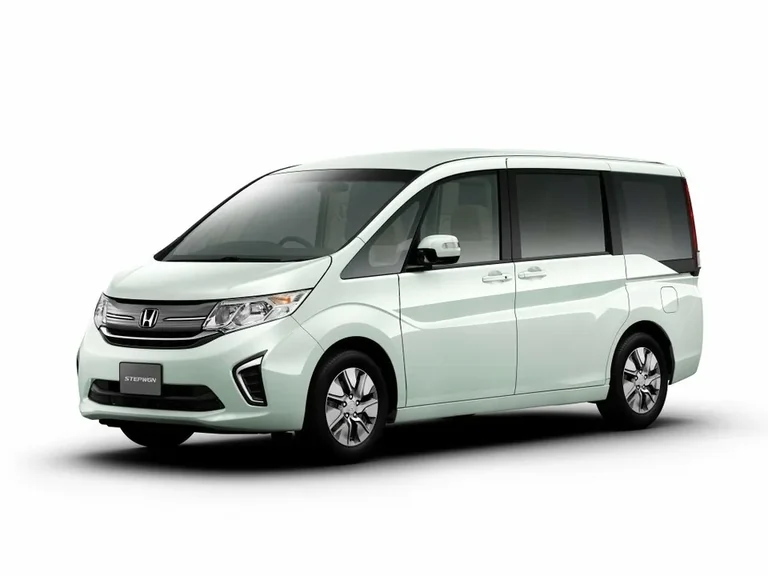
The fifth generation went on sale on April 24, 2015 and replaced two-liter engines with a one-and-a-half-liter turbocharged L15B with direct injection – 110 kW (150 hp) and 203 Nm with 1,600 rpm; Honda wrote that in normal modes it pulls like a naturally aspirated 2.4. The gearbox is only a CVT, front or full wheel drive, seven seats as standard and eight with a custom second-row sofa. The rear door received a mechanism that Honda called Waku Waku Gate: the entire door rises up, and its left part separately opens sideways, like a gate, and through it you can sit in the third row or put things without lifting the entire sash. An easy detail to miss: the base version B does not have this door, it has an ordinary one. The third row folds flat separately (Magic Seat). Honda Sensing in this generation was optional equipment: on cars of 2015–2017 it was an option, on some versions of 2017–2019 Honda still offered trims without it, and only from 2020 is it fitted to all of them.
The September 2017 update brought the first hybrid Stepwgn – only from the Spada and only with front-wheel drive, body code RP5. The installation was called SPORT HYBRID i-MMD, since 2020 Honda has called it e:HEV: a two-liter LFA with 107 kW (145 hp) and 175 Nm mainly turns the generator, and the wheels are driven by an electric motor of 135 kW (184 hp) and 315 Nm, the engine is connected directly on a flat run. The battery is lithium-ion, 72 cells. The hybrid of this generation has only a seven-seater interior, and the petrol versions remained with the codes RP1 to RP4 (RP3 and RP4 – Spada) and a choice of seven or eight seats. Another detail of the last years of production: according to the 2020-2022 catalog, the Spada could also be ordered with a regular tailgate without a Waku Waku Gate, so the presence of a “gate” in a particular car should be looked at by photos, not by year.
RP6–RP8, from 2022: AIR and SPADA, conventional tailgate
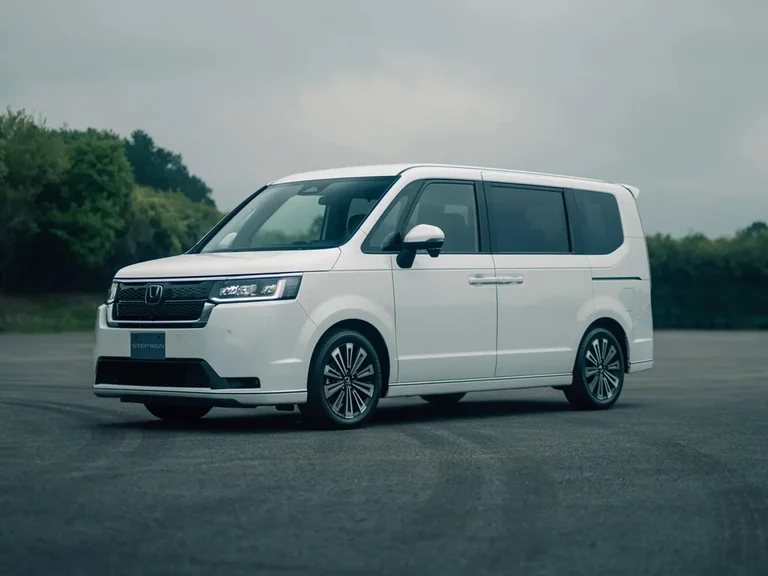
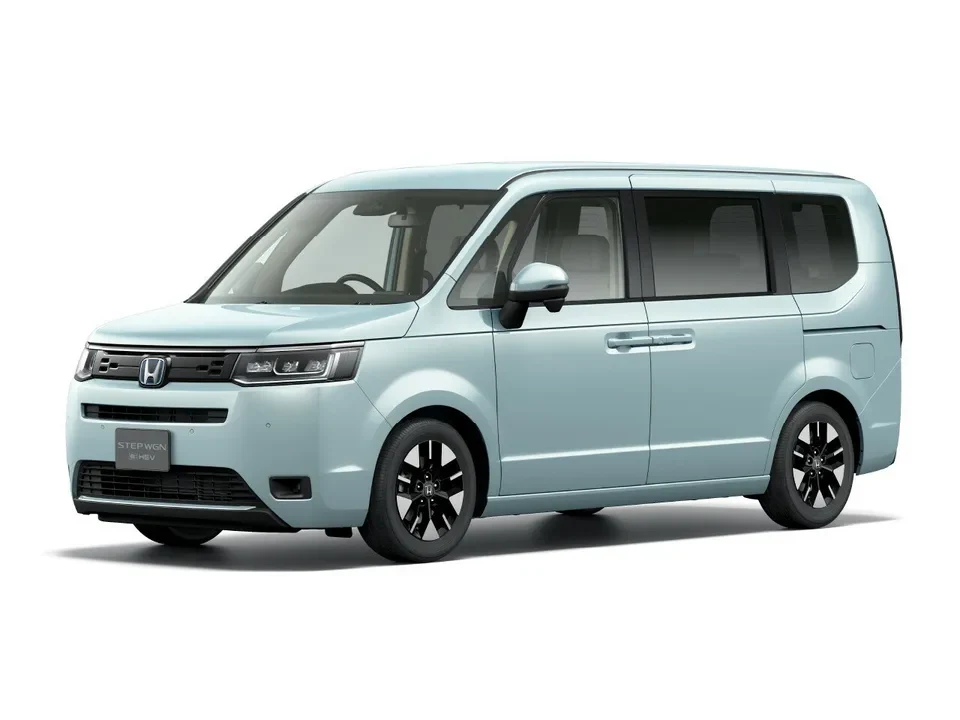
The sixth generation went on sale on May 27, 2022 in two designs – the calm AIR and SPADA with a large grille and chrome on the bottom of the body, plus the SPADA PREMIUM LINE. The body has grown to 4,800-4,830 mm in length and 1,750 mm in width with the same base of 2,890 mm. There is no Waku Waku Gate in this generation. Petrol version – the new L15C with the same 110 kW (150 hp) and 203 Nm, CVT, front-wheel drive or all-wheel drive, RP6 and RP7 codes. The e:HEV hybrid with the same numbers – 107 kW (145 hp) engine, 135 kW (184 hp) and 315 Nm – only front-wheel drive, code RP8, but now it is also eight-seater; PREMIUM LINE in both versions is only seven-seater. The third row is still retracted under the floor, individual seats in the second row are moved not only forward and backward, but also sideways, sliding doors open with a touch of the handle, Honda Sensing is installed on all versions.
From May 16, 2025, the AIR EX with an electric tailgate and second-row ottomans and e:HEV SPADA PREMIUM LINE BLACK EDITION with a black finish appeared in the lineup; according to the price list of this edition, the petrol AIR without the EX prefix remained only a front-wheel drive seven-seater. In the Japanese catalog image, on which the GTYRES catalog is based, the 30th Anniversary versions of the end of 2025 are also noted.
Hybrid or turbo engine
The choice between them is primarily a choice of drive and seats. Stepwgn all-wheel drive is only with a petrol engine: both the fifth generation and the sixth have a front-wheel drive hybrid. Eight seats for the hybrid appeared only in the sixth generation; the hybrid RP5 of 2017-2022 is always seven-seater. The installation of e:HEV itself is not designed like the usual “hybrid with an assistant”: the car is carried by an electric motor, and when accelerating, it is its 184 hp. and 315 Nm that work, and the engine works for a generator and connects directly to the wheels only at a steady speed. In the Honda specification sheets, the engine and engine power are written in separate lines, there is no total value, so you can’t add 145 and 184 – why, explained in the article “Hybrid power from Japan”. The turbo engine has its own peculiarity: both generations are recorded with the same 150 hp. and 203 Nm, but in the sixth generation L15C, Honda redesigned the exhaust and turbine for the sake of response, so the same numbers do not mean the same engine.
What to check for a specific car
The body code is immediately readable. The letters name the generation: RF – 1996-2005, RG – 2005-2009, RK – 2009-2015, RP – from 2015. Inside the pair, the smaller number means front-wheel drive, the larger number means full-wheel drive: RF1/RF2, RG1/RG2, RK1/RK2, RP1/RP2, RP6/RP7. Hybrids stand apart: RP5 in the fifth generation and RP8 in the sixth, both only with front-wheel drive. Spada has its own indexes – RF5/RF6, RK5/RK6, RP3/RP4 – and 2.4-liter cars from 2003 to 2009 are recognizable from RF7/RF8 and RG3/RG4. The prefix before the index (E-, GF-, LA-, DBA-, 6AA-, 5BA-) indicates the environmental category; how the code works as a whole is analyzed in the article “Japanese car body code”.
Next is what is not visible from the code. Number of seats: seven or eight are recorded in the documents, and not guessed by generation – in RK and RG, seven-seater cars with separate seats exist on a par with eight-seaters, in RP, on the contrary, eight seats were a custom-made option. Rear door for cars of 2015-2022: with or without a “gate”, the B version never had it, it was not possible to order it from later Spada. Sliding doors: one on the left for the RF, two for all subsequent generations, the electric drive depends on the version. Third row: folds to the sides of the RG and hides in the floor starting with the RK. Honda Sensing: in the sixth generation, it is installed on all cars, in the fifth until 2020 it depended on the version and order. Versions by year are collected in the Honda Stepwgn catalog: 2010 – fourth generation, 2016 – turbo engine and Waku Waku Gate, 2018 – first hybrid, 2022 – AIR and SPADA; summary characteristics – on the characteristics page. The condition of the selected car is checked separately, the procedure is described in the article “What we check before the bid”, and the service of ordering a car from Japan helps you choose a car.