Nissan Teana: generations, engines and body codes
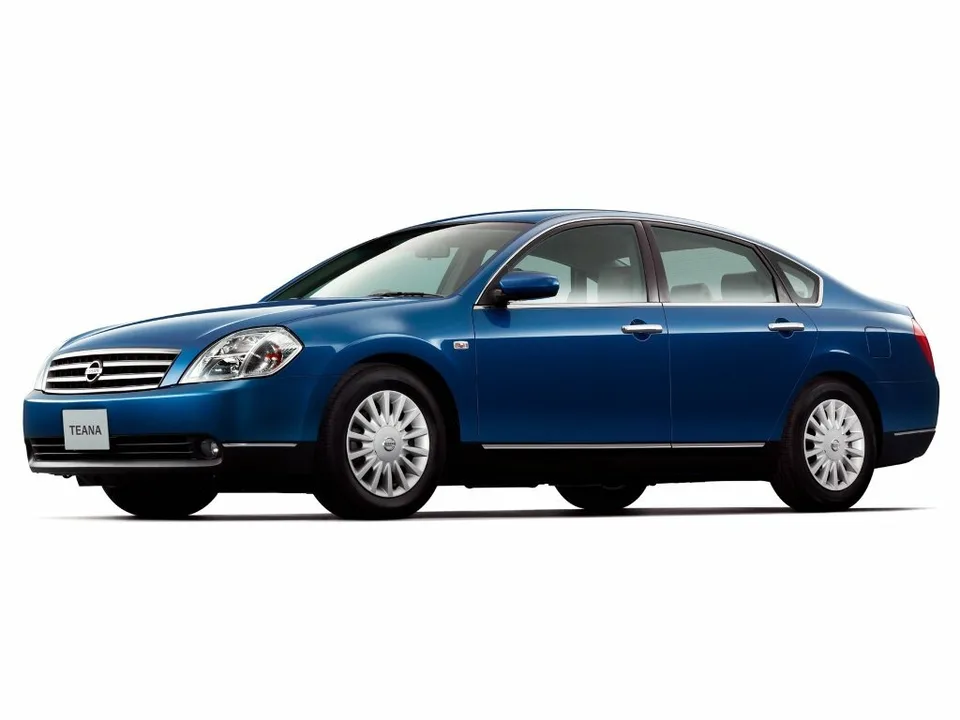
The Teana is a large Nissan sedan that was sold in Japan from 2003 to 2020. There are three generations, and in the ads they are indicated not by words, but by the code: J31, J32 or L33. The code is convenient because it sets the generation, the engine, and the drive at once. Below is what the Japanese line consisted of according to the price lists of Nissan itself, what the prefixes TN and P mean, where there is all-wheel drive and by what signs they distinguish an updated car from an earlier one.
Three generations and five periods
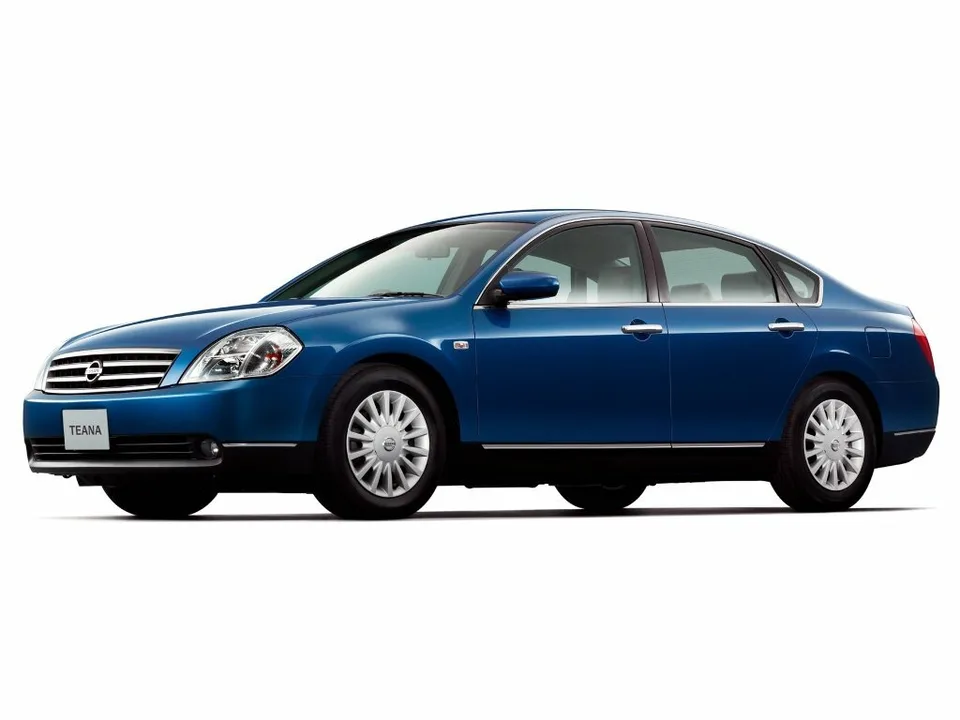
The first generation, the J31, has been in the catalog since February 2003. The second, the J32, was released by Nissan on June 2, 2008 – this date is in its own message about the generation change. The third, the L33, was introduced by the company on January 20, 2014 and scheduled sales for February 5; in the catalog, the L33 period begins in the same February and ends in January 2020.
At the same time, there are five periods, not three: each of the first two generations was updated once without changing the code. For the J31, the updated period in the catalog data begins in December 2005. For the J32, it is from June 2012, and here the date coincides with Nissan’s announcement of a minor update on June 27, 2012. The code itself in the ad does not answer the question of whether it is an early or updated car; about what this is determined by is a separate section below.
| Generation | Period | Engines | Transmission | All-wheel drive |
|---|---|---|---|---|
| J31 | 02.2003 – 05.2008 | VQ23DE (2.3), QR25DE (2.5), and 3.5 | Automatic transmission, 4 speeds; 3.5 has a CVT | Yes, only with 2.5 |
| J32 | 06.2008 – 01.2014 | VQ25DE (2,5), QR25DE (2,5), VQ35DE (3,5) | Xtronic CVT on all versions | Yes, only with QR25DE |
| L33 | 02.2014 – 01.2020 | QR25DE (2,5) | Xtronic CVT | Not listed in price lists |
The engine designations and gearbox type in this table are taken from Nissan price lists. Version 3.5 of the first generation and period boundaries – except June 2008, June 2012 and February 2014 – are given in the GTYRES catalog.
J31 (2003–2008): the only generation with conventional automatic transmission
From Nissan’s Japanese documents on the first generation, the article included a price list dated November 20, 2007. It has two versions: “230JK” with front-wheel drive and a VQ23DE engine and “250JK FOUR” with all-wheel drive and a QR25DE engine – the number in the name of the trim level repeats the volume. The transmission is the same for both, and Nissan immediately deciphers it as a full-range four-speed electronically controlled automatic transmission.
This is the only generation with a classic automatic transmission: only the CVT remains further in the lineup. Version 3.5 of the J31 is known from catalog data – there it comes with a CVT; there is no Japanese price list for it in the sources of this article, so its composition should be checked against the documents of a particular car.
J32 (2008–2014): CVT on the entire range
The second generation went on sale on June 2, 2008. There are three engines on the price list of that day: the VQ25DE and VQ35DE with front-wheel drive and the QR25DE with full-wheel drive. The two-liter engine is not on any of the Japanese price lists on which this article is based.
The main difference from the J31 is the gearbox. Nissan writes that the new Xtronic CVT with adaptive shift control (ASC) received all versions; the 3.5 has a six-speed manual mode added to it. Second-generation all-wheel drive cars also come with a CVT – they no longer have a conventional automatic transmission.
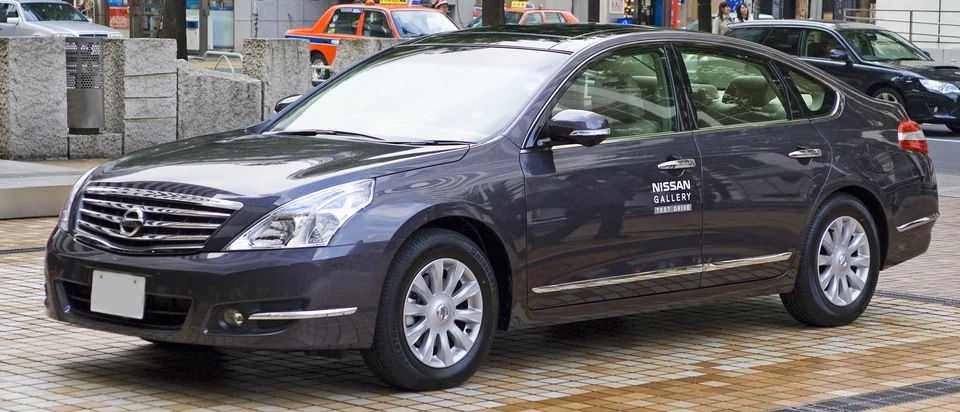
In the summer of 2012, the model was updated: Nissan announced this on June 27, and the period after the update in the catalog begins in the same month.
L33 (2014-2020): one engine and auto braking
The third generation is the simplest of all. The price list at the start of sales includes three trim levels – XE, XL and XV – and all have one QR25DE engine, Xtronic CVT and front-wheel drive; the all-wheel drive version is not on this list. Nissan itself describes the L33 as a global model: it was sold in more than 120 countries, and in the United States and parts of other markets under the name Altima.
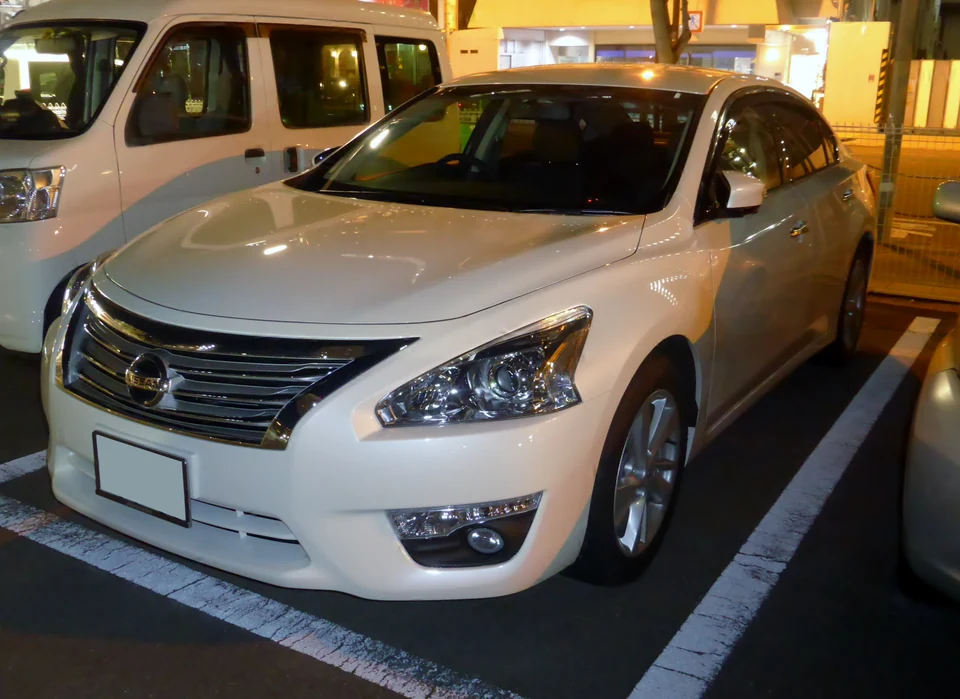
Further, the line was supplemented with electronics. On February 10, 2015, Nissan announced that Emergent Break automatic braking and assistance in case of erroneous gas pedal pressing had become standard for the main trim levels – XL and XV; sales of such cars began on February 19. On December 17 of the same year, the company announced that the same set would become standard for all trim levels, and sales would begin on January 6, 2016. Therefore, in early L33s, the presence of autobraking depends on the configuration and it is checked for a specific car.
How to read code: TN and P prefixes
The Japanese Teana has seven codes in the catalog data, and they are transparent. The basis is J31, J32 or L33, that is, the generation. The prefix before the base clarifies the version: TN is all-wheel drive with a 2.5 engine, P is a 3.5 senior engine. The code without the prefix is the basic front-wheel drive version.
| Code | Engine | Power | Drivetrain | Transmission |
|---|---|---|---|---|
| J31 | 2.3 (2349 cm³) | 173 hp | Front-wheel drive | Automatic transmission, 4 speeds |
| TNJ31 | 2.5 (2488 cm³) | 160 hp | All-wheel drive | Automatic transmission, 4 speeds |
| PJ31 | 3.5 (3498 cm³) | 231 hp | Front-wheel drive | CVT |
| J32 | 2.5 (2495 cm³) | 185 hp | Front-wheel drive | CVT |
| TNJ32 | 2.5 (2488 cm³) | 167 hp | All-wheel drive | CVT |
| PJ32 | 3.5 (3498 cm³) | 252 hp | Front-wheel drive | CVT |
| L33 | 2.5 (2488 cm³) | 173 hp | Front-wheel drive | CVT |
Volumes and capacities are summarized here from catalog data; in three versions of the second generation, they coincide with the numbers that Nissan gave in its message about the release of the J32. The code itself is preceded in the documents by a prefix such as: Teana has UA-, CBA- and DBA-. It refers to the environmental classification and the date of type approval, and not to a specific car, and the year of manufacture is not readable by it. How the Japanese body code works in general is analyzed in the article “Japanese Car Body Code“.
Where is the all-wheel drive and what is the difference between its engine
Only the codes with the TN prefix – TNJ31 and TNJ32 – have all-wheel drive. Both cars have a 2.5 engine, but this is not the same engine as the front-wheel drive ones: in Nissan’s price lists, all-wheel drive versions of both generations come with QR25DE, while the front-wheel drive 2.5 of the second generation is VQ25DE. The families are different, and you can’t tell them apart by one number “2.5”: you need to look at the body code or the engine designation in the documents.
The third generation has no choice at all: in the price lists of the L33 there is only front-wheel drive.
How to distinguish an updated car from an old one
The date of the first registration is not suitable for this: registration is not equal to production, and the car could be registered much later. They check the date of manufacture, model code, equipment and signs of a specific update – those that Nissan listed in its own messages.
The J32 update on June 27, 2012 is described in detail: a new alloy wheel pattern and new taillights, redesigned instrument graphics and a white backlit information display, a different color for the navigation, audio and climate keys, a different wood finish for cars with a black interior, and new exterior colors, including Steel Blue and Brilliant White Pearl.
The L33 was externally affected by an update on February 10, 2015: part of the radiator grille received a piano lacquer finish. This also coincides with the equipment – it was with this update that the XL and XV had standard automatic braking.
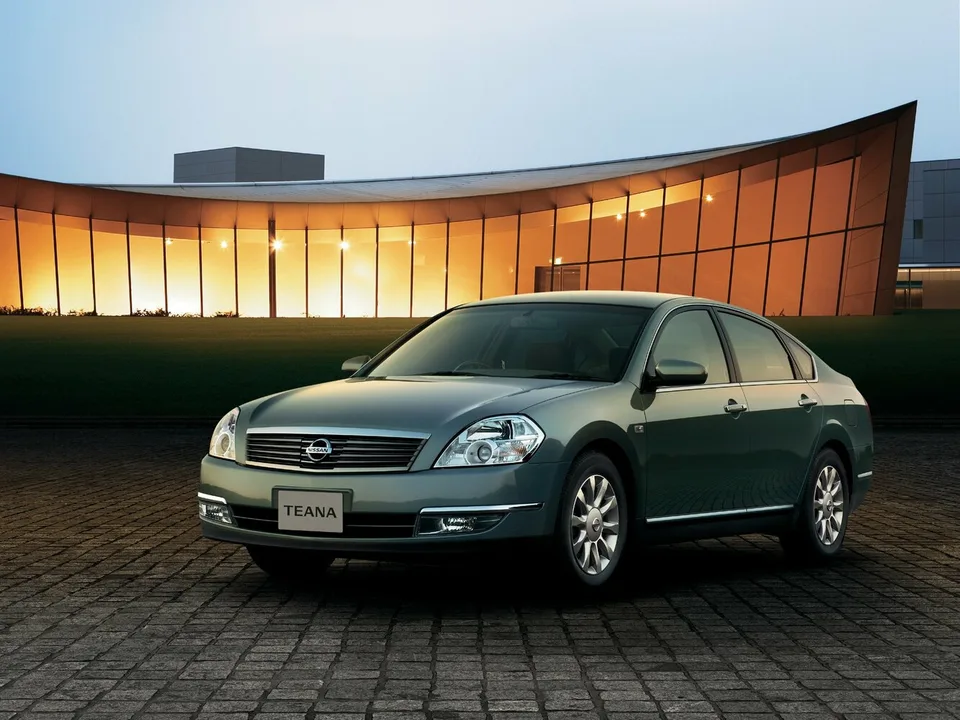
With the first generation, it is more difficult. The catalog draws the boundary of periods according to December 2005, but there is no list of changes from Nissan in the sources of this article, so it is more reliable to distinguish between early and updated J31s by date of manufacture and documents, and not by a list of features.
Teana is not only Japanese
Nissan used the name Teana not only in Japan, and he says it himself: the third generation was developed as a global model for Japan, the USA, China and more than a hundred other countries, and in America and in some other markets the same car was sold under the name Altima. Each market has its own lineup: the set of engines, equipment and the steering side are determined by the market, and not by the name of the model.
Hence the practical conclusion: the characteristics found by the word “Teana” should be checked with the body code and the market, and not mistaken for Japanese by default. Why the cars of the same name from different markets differ in engines and equipment is analyzed in the article “One generation, different markets“.
What to check before ordering
Four lines are enough. Body code – it sets the generation, engine and drive at once; it also contains pages J31, J32 and L33 in the catalog. Engine designation – it is this that distinguishes front-wheel drive and all-wheel drive “2.5”. Date of manufacture and equipment – they determine whether the car is early or updated. And the type of transmission: only the first generation has a four-speed automatic transmission, everything else is a CVT.
What exactly is checked in the auction sheet and during the inspection is described in the article “What we check before the bid“.
Where to look next
All Japanese versions by year and body are collected on the Teana catalog page. Other models of the same brand are disassembled: “Nissan X-Trail from Japan” and “Nissan Note: in which generation which engine“. The service of ordering a car from Japan helps to choose a specific car.
Dates, lineup and engine and transmission designations are Nissan reports about Teana in 2007, 2008, 2012, 2014 and 2015. Body codes, volumes, powers and period boundaries – GTYRES catalog.