Suzuki Escudo: generations, bodies and all-wheel drive
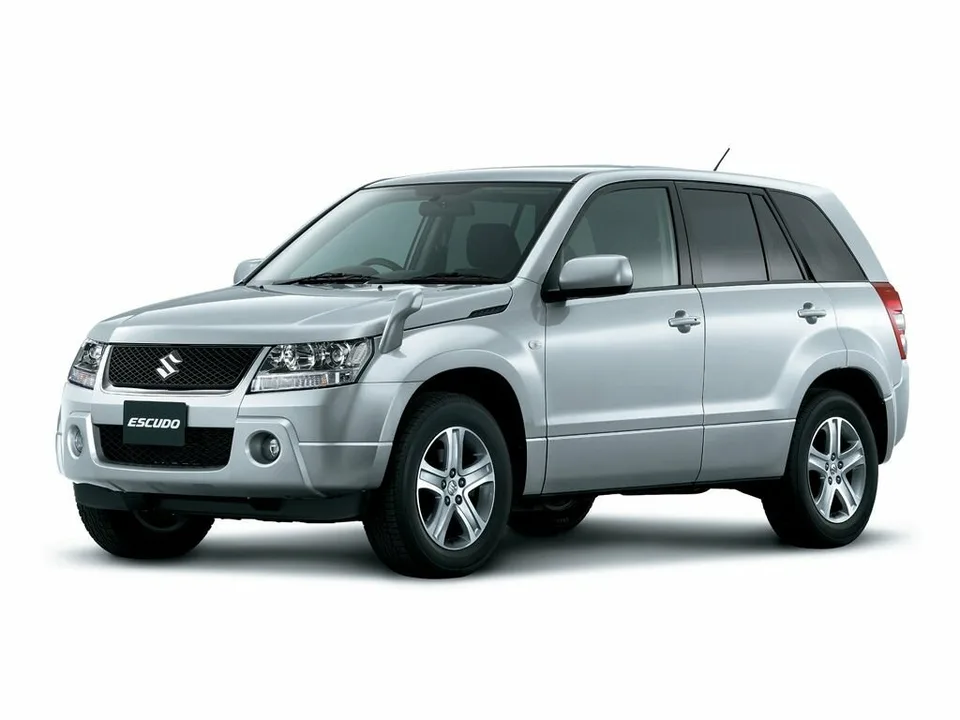
Under the name Escudo, there are very different cars in Japanese ads: an angular three-door SUV of the late eighties with a spare tire on the tailgate, a family five-door Nomade, a heavy SUV with an inside frame and a V6 engine – and a compact crossover, in which the petrol version is front-wheel drive, and the hybrid version is only all-wheel drive. This is one model, and the year of manufacture is not enough to choose: it narrows down the generation, but the engine, body and drive are read in the body code. Below are the four generations of Escudo, their motors and drives, and which versions are behind similar lines in the ads.
Where did the name come from and why is Vitara always nearby?
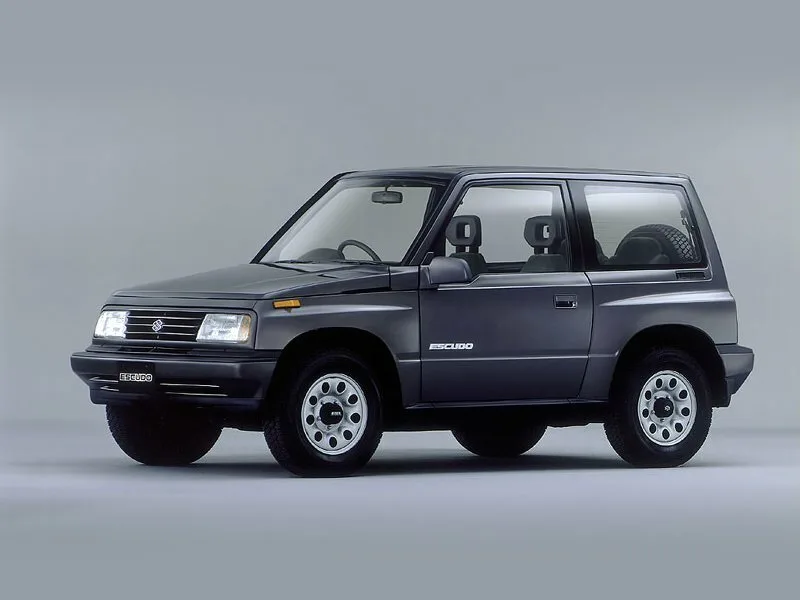
Sales began in 1988, and this is what Suzuki itself says: introducing the third generation in May 2005, the company calls it the third in a row from the 1988 car, with which the compact SUV began. By April 2000, according to the same manufacturer, worldwide sales of the model exceeded 1.75 million cars.
The name Escudo is Japanese. Outside of Japan, the same cars were sold under different names, and Suzuki says this directly: in the release about the fourth generation, it is said that the car, which was called Escudo in Japan, is sold as Vitara in Europe and Oceania. The practical conclusion is simple: the European description, the European test and the European configuration do not prove anything about a specific Japanese lot – you need to check the Japanese version and its body code.
A separate story is the Grand Escudo. On December 12, 2000, Suzuki brought it out as an independent model: the body is 485 mm longer than the five-door Escudo (overall length 4575 mm), the wheelbase is 320 mm (2800 mm) longer, three rows of seats for seven seats, a new V6 with a volume of 2.7 liters and its own frame. This is not a configuration and not a long version in the Escudo price list, but another car with its own card in the catalog – the Grand Escudo.
Four generations: 1988–2023
There are four generations, and they differ not in cosmetics, but in design: the first two have a rear-wheel drive layout with a lowering row, the third has a body with a built-in ladder frame, the fourth is a crossover assembled in Europe. Within each generation, there are periods before and after the update, and the bodies have changed from a two-door with a soft top to a single five-door in recent years.
| Generation | Periods | Body | Base Codes |
|---|---|---|---|
| First | 05.1988–11.1994, updated 12.1994–10.1997 | 3-door hardtop, 2-door open-top, 5-door Nomade from 09.1990, van | TA01W, TA01R, TA01V, TD01W, TA11W, TD11W, TA51W, TD51W, TD61W, TA31W, TD31W |
| Second | 11.1997–03.2000, updated 04.2000–04.2005 | 3-dv., 5-dv. | TA02W, TD02W, TA52W, TL52W, TD52W, TD62W, TD32W |
| Third | 05.2005–05.2008, updates 06.2008–06.2012 and 07.2012–04.2017 | 5-dv., 3-dv. in version 1.6 XC | TD54W, TD94W, TA74W, TDA4W, TDB4W |
| Fourth | 10.2015–11.2018, updated 12.2018–12.2023 | 5-two. | YD21S, YE21S, YEA1S, YEH1S |
First generation (1988–1997): frame, lowering range and 1.6 engine
The first Escudo is a small SUV with a rear-wheel drive layout and a lowering row in the transfer case. This device is known from a later publication by Suzuki: introducing the third generation, the company lists that it inherited the rear-wheel drive base and downshift “from the first generation”, that is, they have been in the model since 1988.
There were several bodies at once. The three-door hardtop is coded TA01W, the two-door open-top version is TA01R, and in the early years there is also a truck version with the code TA01V in the catalog. The five-door body appeared later: since September 1990, it has been Nomade with the code TD01W. The name Nomade is attached to the long version not only here – years later it was also given to the five-door Jimny, so the “Nomade” in the ad itself does not say anything about the model.
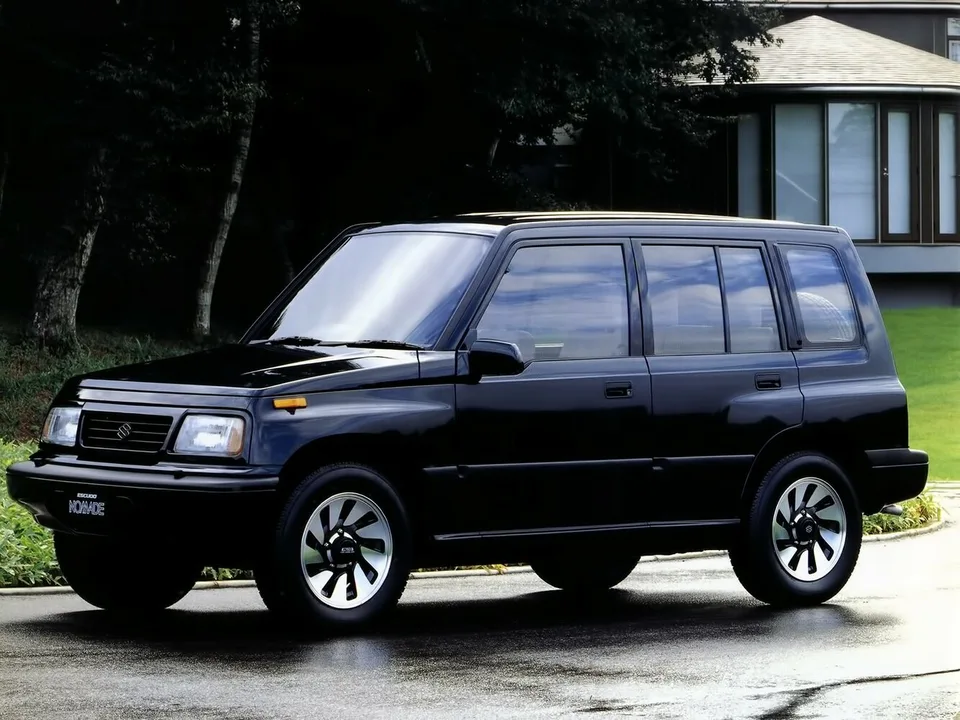
The engine at the beginning was one – petrol 1.6 liters of the G16A series. In early versions, the catalog shows 82 hp, since August 1990 – 100 hp; the gearboxes are first a five-speed manual and a three-band automatic, later the automatic became a four-speed. There is no choice of drive here: all lines of the catalog of the first generation are all-wheel drive.
After the December 1994 update, the line expanded significantly. Two-liter versions appeared, and two different families at once: under the codes TA11W and TD11W there is an H20A engine with an output of 140, and later 145 hp, under the codes TA51W and TD51W – J20A with 140 hp. At the same time, the lineup includes a 2.0-liter RF diesel (codes TA31W and TD31W, 76 and 92 hp), and since October 1996 – 2.5 liters V6 of the H25A series with 160 hp. in a five-door body under the code TD61W.
Second generation (1997–2005): diesel, V6 and only rear-wheel drive
The second generation in the catalog of versions has been going on since November 1997. There are still two bodies: a three-door (codes TA02W and TA52W) and a five-door (TD02W, TD52W, TL52W, TD62W). Engines – 1.6 liter G16A with 107 hp, 2.0 l J20A with 140 hp, 2.5 l V6 H25A with 160 hp. and diesel RF with 92 hp. under a separate code TD32W.
On April 13, 2000, Suzuki updated the model: a new grille and bumpers, reduced emissions, improved consumption. In the same release, there is a line that is worth reading the original for: then the 2WD version appeared in the range for the first time – and it was rear-wheel drive, only on a three-door body and only with a four-speed automatic transmission. In the catalog, this version is the TA02W with rear-wheel drive, and it does not last long: from April to November 2000.
Why so little is also evident from Suzuki’s publications. On December 12, 2000, along with the release of the Grand Escudo, the company changed the regular Escudo: on a three-door body, the 1.6-liter SOHC engine was replaced by a two-liter DOHC. So the rear-wheel drive Escudo is a bottleneck of the Japanese lineup: one body, one engine, one type of gearbox and less than a year in the price list. In all other Japanese versions of the first three generations, the wheel drive is full.
Third generation (2005–2017): in-body frame and permanent all-wheel drive
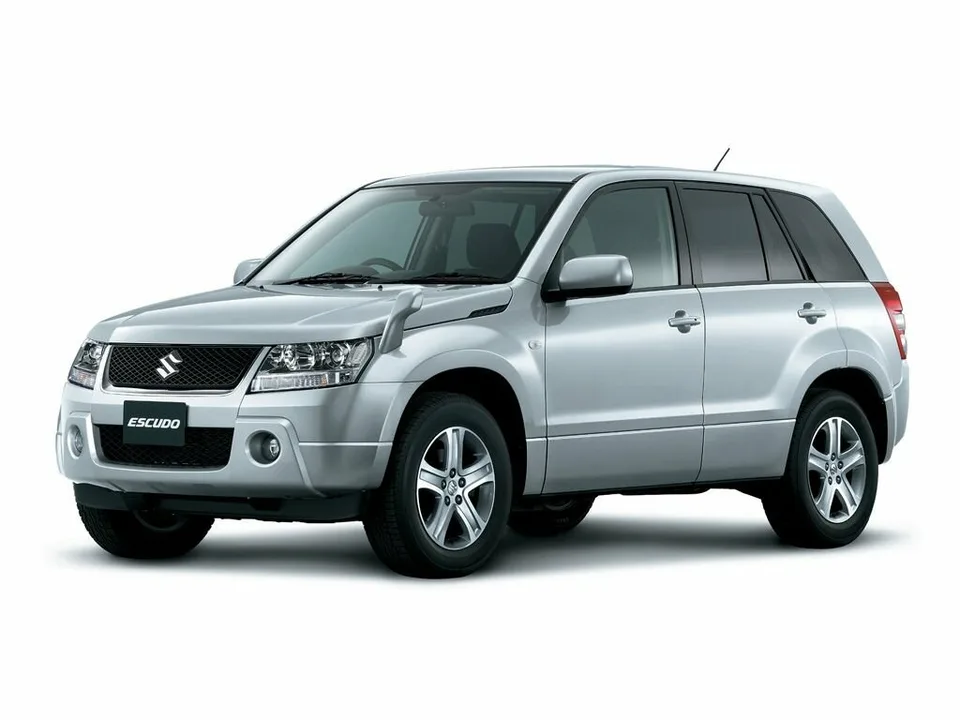
The third generation went on sale on May 16, 2005 – first with a two-liter engine, and the version with a V6 with a volume of 2.7 liters was released on June 13. The main thing has changed: Suzuki used a body with a built-in ladder frame – in its description this is a combination of a light load-bearing structure and a strong frame – left the rear-wheel drive layout with a weight distribution of about 50:50 and added independent suspension of all wheels.
The all-wheel drive has also changed. Suzuki describes the permanent all-wheel drive with a center differential and cam self-lock as a new development, and from the first generation, the third got a rear-wheel drive layout and a lowering row in the transfer case. The lock refers to this new center differential, and not to the previous schemes: since the differential itself appeared here for the first time, it is impossible to transfer its lock to earlier cars. The five-door versions presented at the release have four driving modes, they are switched with a rotary washer. There is a reduction gear in this generation – it is confirmed by the publication of Suzuki in 2008, which describes downhill at a constant speed: about 10 km/h in 4H LOCK mode and about 5 km/h in 4L LOCK.
Engines at the beginning: 2.0 L J20A with 145 hp code TD54W and 2.7 L V6 H27A with 184 hp code TD94W; body – only five-door, five seats. The three-door version returned in a separate release: on June 12, 2006, Suzuki added the 1.6 XC version – a 1.6 L M16A engine, all-wheel drive and only a five-speed manual. In the catalog, this is the code TA74W, and there are very few such lines. In the three-door 1.6 XC, the transfer case device and the presence of a reduction row are checked separately according to the configuration of a particular car.
On June 26, 2008, the model underwent a major update, and the engine range changed entirely. Suzuki delivered a new 2.4 liter with 122 kW (166 hp) at 6000 rpm with a torque of 225 Nm and a new 3.2 liter V6 with 165 kW (224 hp) at 6200 rpm with a torque of 284 Nm. In body codes, these are TDA4W and TDB4W. Two-liter and 2.7-liter cars are no longer in the catalog of versions after this update.
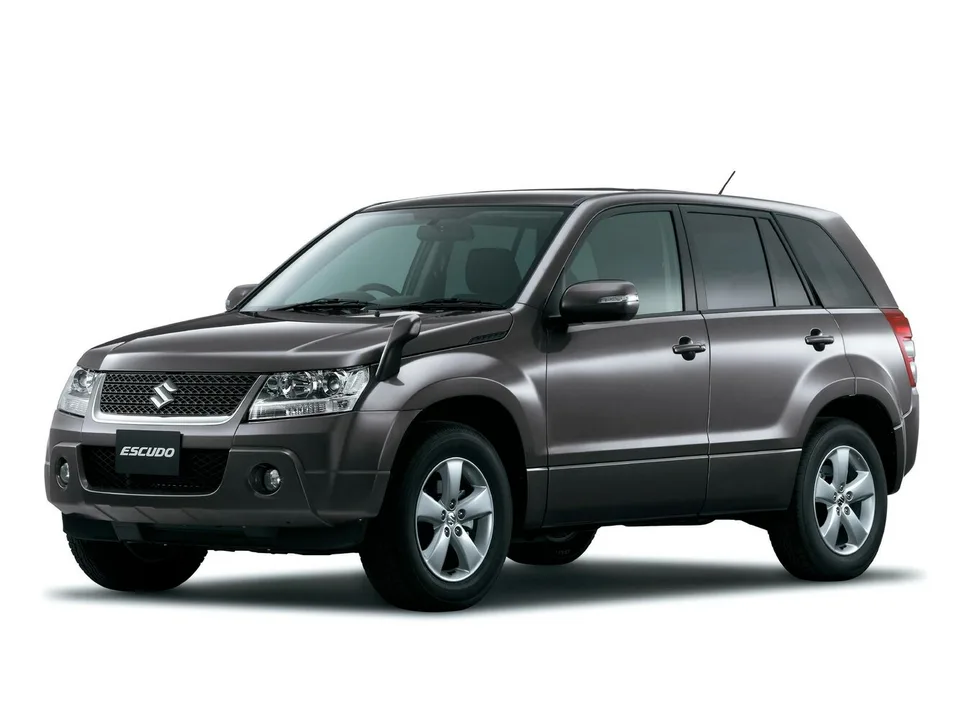
Then the third generation lived long and quietly: on July 11, 2012, Suzuki announced another change in trim levels, and in the catalog of versions, 2.4-liter cars with the code TDA4W go until April 2017. That is, the third generation was sold in parallel with the fourth – and this is not an announcement error, but a real coincidence of periods.
Fourth generation (2015–2023): Hungary, front-wheel drive and hybrid
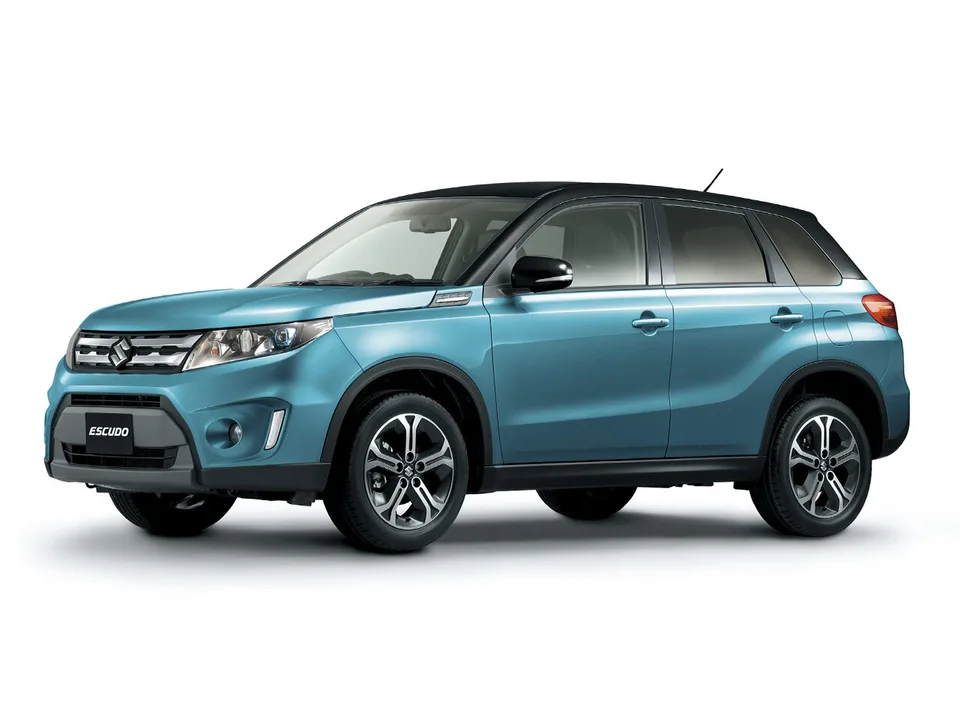
On October 15, 2015, a car of a different class was released. The fourth generation Suzuki is produced at the Hungarian plant Magyar Suzuki and sold in Japan as an imported car; in Europe and Oceania, the same model is called Vitara. The body is one – five-door, the curb weight is 1140 kg for the front-wheel drive version and 1210 kg for the all-wheel drive, the wheels are 17 inches.
There is only one engine at launch: a 1.6 liter DOHC VVT with a new six-speed automatic transmission. But the drive here is offered for the first time, and the word “2WD” means not at all what it did in 2000: in a note to the price list, Suzuki separately explains that 2WD is front-wheel drive. In the body codes, the difference is immediately visible: YD21S is a front-wheel drive car, YE21S is an all-wheel drive. ALLGRIP controls traction distribution and driving modes; this is not a downshift.
On July 26, 2017, the “Escudo 1.4 Turbo” was added to the lineup: 1.4 liters with direct injection and turbocharging of the Boosterjet family, six-speed automatic transmission, all-wheel drive only. Suzuki describes its output as comparable to a two-liter naturally aspirated engine; in the catalog of versions, this is the code YEA1S with 136 hp. On December 3, 2018, the model received a change in configurations with an expanded set of safety systems – from this month the last generation period begins in the catalog.
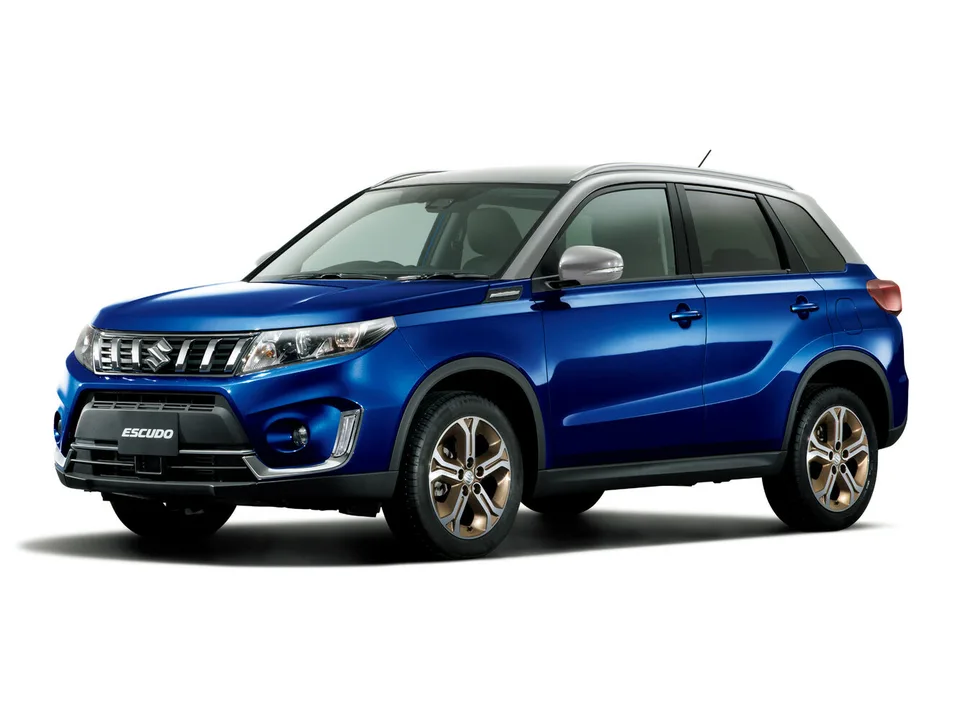
On April 21, 2022, a hybrid version appeared, and it should be distinguished from petrol ones especially carefully. Suzuki puts a 1.5-liter K15C Dual Jet engine and a 6AGS gearbox here – both units, according to its own words, are used in Japan for the first time; in the catalog of versions, such a box is marked as robotic, and not as automatic. The hybrid has only full drive, consumption according to the WLTC cycle is declared at 19.6 km/l. Suzuki compares not with the former Escudo, but with the Swift HYBRID SZ hybrid system: relative to it, the voltage, capacity of the lithium-ion battery, power and torque of the electric motor have increased. There is regenerative braking in conjunction with conventional braking and reversing on electric traction – the latter does not always work: Suzuki stipulates that when the engine is already running, a strong press on the pedal or a low battery charge, the EV mode may not be available when reversing. The body code of the hybrid is separate – YEH1S, and it is he who distinguishes a hybrid car from a petrol car faster than any description in the ad. How Japanese hybrids work in general and what of them is checked before purchase is analyzed in the article “Types of hybrids from Japan“.
What is read in the body code
| Code | Engine | Drivetrain | Body and gearbox |
|---|---|---|---|
| First generation, 1988–1997 | |||
| TA01W | 1.6 l G16A, 82 or 100 hp | all-wheel drive | 3-door; manual or automatic transmission |
| TA01R | 1.6 l G16A, 82 or 100 hp | all-wheel drive | 2-door open-top |
| TD01W | 1.6 L G16A, 100 hp | all-wheel drive | 5-dv. Nomade, since 09.1990 |
| TA11W / TD11W | 2.0 l H20A, 140 or 145 hp | all-wheel drive | 3rd and 5th doors, from 12.1994 |
| TA51W / TD51W | 2.0 l J20A, 140 hp | all-wheel drive | 3rd and 5th doors, from 11.1996 |
| TD61W | 2.5 L V6 H25A, 160 hp | all-wheel drive | 5-dv., from 10.1996 |
| TA31W / TD31W | 2.0 l RF diesel, 76 or 92 hp | all-wheel drive | 3- and 5-door, automatic transmission |
| Second generation, 1997–2005 | |||
| TA02W | 1.6 l G16A, 107 hp | all-wheel drive, and from 04.2000 to 11.2000 also rear-wheel drive | 3-door; rear-wheel drive with automatic transmission only |
| TD02W | 1.6 l G16A, 107 hp | all-wheel drive | 5-two. |
| TA52W / TL52W / TD52W | 2.0 l J20A, 140 hp | all-wheel drive | TA52W – 3-door, TL52W and TD52W – 5-door. |
| TD62W | 2.5 L V6 H25A, 160 hp | all-wheel drive | 5-door, automatic transmission |
| TD32W | 2.0 l RF diesel, 92 hp | all-wheel drive | 5-door, automatic transmission |
| Third generation, 2005–2017 | |||
| TD54W | 2.0 l J20A, 145 hp | Constant all-wheel drive | 5-door; manual or automatic transmission |
| TD94W | 2.7 l V6 H27A, 184 hp | Constant all-wheel drive | 5-door, automatic transmission |
| TA74W | 1.6 l M16A, 106 hp | Constant all-wheel drive | 3-door, mechanics only, from 06.2006 |
| TDA4W | 2.4 l J24B, 166 hp | Constant all-wheel drive | 5-door, from 06.2008; manual or automatic transmission |
| TDB4W | 3.2 L V6 N32A, 224 hp | Constant all-wheel drive | 5-door, automatic transmission, from 06.2008 |
| Fourth generation, 2015–2023 | |||
| YD21S | 1.6 l M16A, 117 hp | front-wheel drive | 5-door, automatic transmission |
| YE21S | 1.6 l M16A, 117 hp | all-wheel drive, ALLGRIP | 5-door, automatic transmission |
| YEA1S | 1.4 l turbo K14C, 136 hp | all-wheel drive, ALLGRIP | 5-door, automatic transmission, from 07.2017 |
| YEH1S | Hybrid: 1.5 L K15C, 101 hp plus electric motor | all-wheel drive, ALLGRIP | 5-door, robotic box 6AGS, from 04.2022 |
In the listed Escudo codes, you can see a clear pattern – this is a description of this line, and not the general rule of Suzuki. For cars before 2015, the code begins with T, the second letter is associated with the length of the body: A – short versions (three-door, truck and open-top), D – five-door; the next two signs are responsible for the engine and are the same throughout the line: 01 and 02 are 1.6 liters G16A, 11 – H20A, 51, 52 and 54 – J20A, 61 and 62 – 2.5 liters H25A, 31 and 32 – RF diesel, 74 – 1.6 liters M16A, 94 – 2.7 liters H27A, A4 – 2.4 liters J24B, B4 – 3.2 liters N32A. The last letter is the body type: W for closed, R for the open-top version, V for truck. The fourth generation has a different system: the code starts with Y and ends with S, and the drive is distinguished by the second letter – YD21S front-wheel drive, YE21S all-wheel drive.
The year of manufacture is not readable by the code. The prefixes before the code – E-, GF-, LA-, KD-, CBA-, DBA-, 4BA-, 5AA- – refer to the environmental class and the date of type approval, and not to a specific car: the same TA01W is on both the 1989 and 1994 cars. How the Japanese body code works in its entirety is analyzed in the article “Japanese Car Body Code“.
What to check before the bet
First, the body code, not the year or the name. It immediately answers three questions: which generation, which engine and which body. Next is the drive: in the Japanese lineup of the first three generations, all versions were all-wheel drive, except for a short episode with rear-wheel drive for the TA02W from April to November 2000, and the fourth generation has a real choice – the YD21S front-wheel drive, YE21S, YEA1S and YEH1S all-wheel drive.
Separately, it is worth checking what is written in the same way in the ads, but in fact it is different. Two different two-liter engines of the first generation – H20A and J20A – look the same with the line “2.0”, but these are different units with different body codes. The transmission of the fourth-generation hybrid is 6AGS, robotic mechanics, and the seller may well call it just an automatic. The lowering range is confirmed by Suzuki’s publications for five-door versions; the fourth generation has ALLGRIP, which controls the distribution of traction and driving modes, but is not a lowering row, and the three-door 1.6 XC remains a separate case. If the reduction gear is fundamental, the year of manufacture is not enough: the transfer case and its control are looked at on a specific car.
And finally: the date of the first registration limits the production period more accurately than the name of the generation in the ad, and the condition of the load-bearing structure of the body of cars of the eighties and nineties is checked only by inspection. What exactly is looked at in the auction sheet and at the inspection is described on the page “Deciphering the auction sheet” and in the article “What we check before bidding“.
Where to look next
Japanese versions of the Escudo by year, body code, and trim level are collected on the Escudo catalog page. If you need a smaller and simpler SUV, there is an analysis of “Suzuki Jimny, Jimny Sierra and Nomade“; if you are interested in a crossover of the same size, but of a different brand, there is “Subaru Forester: Generations, Body Codes and Engines“. How the Japanese version of the model differs from the version for another market and why it is important when ordering is analyzed in the article “One generation, different markets“. The service of ordering a car from Japan helps to choose a specific car, the turnkey cost is calculated in the calculator, and the timing and routes are on the delivery page to the regions.
Dates, drive structure and engine characteristics – publications of Suzuki Motor Corporation 2000-2022. Distribution of versions by body codes, periods and gearboxes – GTYRES version catalog.